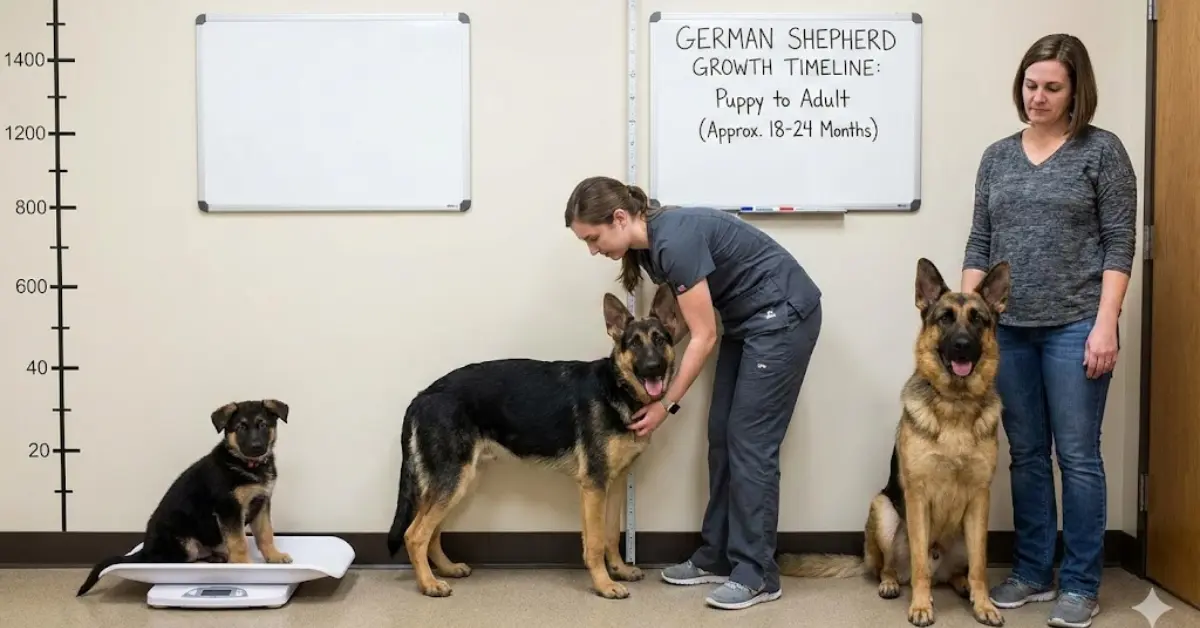
A German Shepherd often stops growing taller around age two, yet certain ones stretch further until they hit eighteen months.
Long after the first year, wider shoulders begin to appear along with more defined muscles. Growth unfolds quietly, shifting little by little without rush.
Growth Differences
- Some reach full size by three.
- Others need more time.
- Growth pace can differ child to child.
- Factors like genes play a role.
- Nutrition matters too.
- Each case moves at its own rhythm.
Growth Factors
- What they’re given to eat
- Just how much they move around
Bone structure stabilizes starting at one year, while mass increases slowly over time.
Big dogs change shape in ways small ones do not, partly because of their genes.
Tracking How Things Grow Over Time
A young German Shepherd follows its unique pace when growing up.
It never happens on just one day. Size keeps shifting after that moment arrives.
Development Process
- Bone growth speeds up early on.
- Muscles fill out over time.
- Only after size does stillness show up in how a person moves.
Slowly, every stage comes into view. A pause lives between each step forward.
Growth Journey and Development Patterns
Picture this – watching German Shepherds change bit by bit.
- See them shift slowly, month after month.
- Growth shows in their paws first, then shoulders.
- Notice how their bark deepens while play stays wild.
- Each phase brings new size, yet energy never fades.
- Watch closely – their eyes sharpen long before height stops rising.
Growth Timing
- Bones change how fast they grow as they age.
- What time you do something can count a lot.
- It often makes the difference without anyone noticing right away.
Month after month, real patterns show up clearly on charts – no need to guess. What you see is how it actually moves.
Male and Female Growth
- Biggest kids tend to be boys.
- Sometimes they just grow more.
- Most young females stop growing earlier than boys do.
Most joints freeze in place by a set age, locking how they’re built forever. Bones settle into form long before you notice shifts slowing down. Shape sticks after growth ends – structure stays fixed without warning signs later on.
Common Misunderstandings
- Some folks think being bigger means stronger, but that idea doesn’t always hold up.
- Reality often slips through their grasp.
Behavioral Growth
- Behavior evolves too.
- Born ready, the urge to protect shows up fast.
- Boundaries need clear lines.
Notice how growing up shapes what people do – slow, unseen, yet strong. Quiet shifts steer choices more than you might think.
Large Breed Growth Explained
Puppies born large – say, a German Shepherd need more time to reach full size than those little ones made for sitting on laps.
Their bodies need extra time so:
- joints settle right
- muscles build strong
This is key for moving well later on.
Growth Risks
- When growth hasn’t finished, going all out on diet or exercise can stress the skeleton.
- Heavy routines press hard on developing frames.
- Starting strong can backfire if bones still growing.
- Young bodies might not handle heavy loads yet.
- Pushing early often leads to strain later.
- Growth needs time before stress makes sense.
- Rushing invites trouble where development lags.
German Shepherd Growth Stages
Puppies like these grow quick early on, then slow down later.
Patience grows while waiting. Slow steps lead further.
Big dogs include German Shepherds, says the American Kennel Club.
After racing ahead at first, they slow down compared to smaller dogs.
Early Puppy Growth Spurt Up to Half a Year
This is the “blink and they doubled in size” phase.
- Pounds pile on quick when pups grow.
- Bones lengthen quickly.
- Appetite increases significantly.
- Teething tends to start around the third month of life, sometimes creeping in by the fourth.
- Bone ends still soft mark these years.
- Growth continues where joints will form later.
- Where bones meet, stretchy areas help movement.
- Heavy loads or poor food can shift joint development.
- What a body carries matters just as much as what it eats when bones take shape.
- Balanced activity matters.
- Pups that grow large need food shaped for their size.
- Structure builds now.
Second Stage of Teen Development Six to Twelve Months
Now this is where many folks pause, wondering what size German Shepherds really reach – because honestly, the puppy already looks massive.
Physical Changes
- Height nears adult range.
- Legs or arms might seem a bit too long, making things feel clumsy at times.
- Firm at the peak, they rise without tilt.
- Energy levels peak.
Growth Details
- Almost twelve months gone, many of these dogs reach near their full height.
- Thin lines define their shape back then, nearly spindly when you look close.
- A kind of lightness stands out, like branches still finding strength.
Expansion Phase Twelve To Twenty Four Months
Bone growth slows meanwhile, muscle reshapes continue. Stillness settles in the skeleton while movement redraws the body’s form underneath. Growth pauses there but shifts happen here.
Still rising inside, even when height stalls.
Body Development
- Chest broadens.
- Muscle density increases.
- Adult coat fully develops.
- Strength improves significantly.
Long-Term Growth
- Fur begins to thicken around two, when growth slows just a bit.
- Bones finish forming near age three, marking the end of its rise in height.
- Most males settle into their frame before their fourth birthday arrives.
- Now and then, progress reaches that point.
- Most of these dogs continue gaining weight well beyond age two.
- This occurs most often among men when time stretches out more.
- By two years, growth still moves – just not as fast.
- It keeps going even when slowing down.
- Looking at three years helps show what an adult really weighs.
- Not before that point does it make much sense to judge.
Stage 4 Mental Maturity Twenty Four To Thirty Six Months
Just because height stops changing doesn’t mean thoughts have settled. Growth skips steps, leaves bones done while thinking still stumbles behind.
Behavioral Development
- Well into their second year, many German Shepherds still bounce around like little pups.
- Other times it stops at two.
- Still, there are moments when four shows up instead.
- Built for work, these lively dogs often show such traits.
- Their sharp minds match their quick movements.
- Eager to move, they thrive on challenges.
- Energy flows through them like a current.
- Focus comes naturally when there’s purpose.
- Tasks keep them balanced.
- Rest follows effort, always.e.
- It’s typical in smart, active dogs built for tasks.
German Shepherd Growth Chart (Height & Weight)
Below is a general German Shepherd growth chart based on breed standards from the AKC. Individual dogs may vary.
|
Age |
Male Weight | Female Weight | Height Range |
|
2 Months |
16–20 lbs | 11–17 lbs | 7–9 in |
| 4 Months | 35–40 lbs | 30–35 lbs |
11–14 in |
|
6 Months |
49–57 lbs | 44–49 lbs | 16–20 in |
|
9 Months |
65–70 lbs | 55–60 lbs |
20–22 in |
| 12 Months | 66–75 lbs | 55–65 lbs |
Near adult height |
| 18–24 Months | 65–90 lbs | 50–70 lbs |
Full adult height |
Healthy Weight for German Shepherd
According to breed standards:
- Males: 65–90 pounds
- Females: 50–70 pounds
Keep in mind that working lines may be leaner, while show lines often appear heavier.
Male vs Female German Shepherd Size
The male vs female German Shepherd size difference becomes noticeable around 6–9 months.
|
Trait |
Male | Female |
|
Height |
24–26 inches | 22–24 inches |
|
Weight |
65–90 lbs |
50–70 lbs |
| Build | Broader chest, heavier bone |
Slightly slimmer frame |
| Maturity speed | Slower |
Slightly faster |
Males typically take longer to fully fill out. Females often appear proportionally balanced earlier.
German Shepherd Growth Timeline?
- First up, one response takes the lead.
- Next comes the one that trails behind.
Height
- 12–18 months
Two years in, most folks notice real changes in muscle size.
- For some, hitting max growth means sticking with it another twelve months.
Imagine it.
- Growing up doesn’t stop because the calendar says so.
- By eighteen months, many have already hit their peak height.
- Some have kept going with forms from the last twenty-four months.
- Built-in framework arrives first.
- Later on, muscle might change along with body mass.
- Some take longer, others less.
- Differences show up across the same breed.
Notice the way the dog moves, forget the date.
By age one, most have reached their full size but continue maturing beneath the surface.
- Growth slows.
- Changes persist beyond infancy.
- Development sometimes continues until year two or even three.
Only then does the shift to adulthood quietly complete.
Growth Plates Closing Age
Where fingers meet palm, bone ends hold stretch zones – squishy bits built from gristle.
- These spots answer every push that pulls limbs longer.
- Bones lengthen slowly as a young dog grows.
- Limbs pull upward over time.
- Early flexibility lets bones grow longer.
Large Breeds Like German Shepherds
- By eighteen months, nearly every kid has closed most of their growth plates.
- Some guys could find it takes longer.
Why This Matters
- Intense leaping, long sprints, or excessive workouts can stress joints while growth plates remain open.
- Puppies of big breeds must move with caution, according to the American Veterinary Medical Association.
- Gentle walks help young bodies grow strong.
Once growth plates close, bone development ends.
- Hard structures slowly harden over time.
- Bones settle into full maturity.
Puppies of large dogs must grow steadily, according to groups like the American Veterinary Medical Association.
- German Shepherds thrive under gradual development.
- Slower progress supports stronger joints.
- Rushing can create problems later.
- Patience shapes better outcomes.
Over time, movement stays smooth because of this.
What Makes Things Grow Faster?
German Shepherd size and growth speed depend on multiple influences.
1.Genetics
- Working Line and Show Line Differ.
- Not heavy, yet holds up well.
- Show Lines Heavier Bone Structure.
- Parent size links to adult size.
2.Nutrition
Puppies meant for large breeds get balanced calcium and phosphorus through their food.
- Excess minerals may affect joint development.
Puppies do best when food schedules match vet guidance.
- Overeating does not make growth faster.
- Joint problems show up more often with excess food.
- Regular meals help bones grow steadily.
- Balanced portions support healthy progress.
Meals designed for large puppies reduce strain on forming joints.
- Rapid growth and extra weight can increase joint issues.
- Hips and elbows often take more stress.
- Fast growth without balance may create lifelong discomfort.
3.Exercise
Walking slowly builds strength gently.
- Muscles wake up quietly through movement.
- Light effort reduces tension.
- Calm movement builds steady strength.
4.Avoid
- Repetitive stair climbing
- Long-Distance Jogging Before Eighteen Months
- Excessive jumping
Spay/Neuter Timing
- Early spaying or neutering might slightly affect bone growth.
- Hormones influence growth plate closure timing.
- Ask your vet what works best for your pet.
German Shepherd Growth Myths
Myth 1: They stop growing at one year exactly.
- Not true.
- Most reach full height by age one.
- Bodies continue developing after age two.
Myth 2: More food makes them grow stronger.
- Rapid development often follows overeating.
- Going slow works better than rushing.
Myth 3: Big paws mean a giant adult dog.
- Paws may appear large.
- Genes determine adult size.
Myth 4: All German Shepherds reach 90+ pounds.
- Smaller sizes often match breed standards more closely.
- Size alone does not guarantee strength.
When Safety Causes Damage
German Shepherds naturally protect.
- Alertness matters where they thrive.
- Strong family connections form naturally.
Protective actions can cause issues over time
- The Dog Acts Aggressively Without Warning.
- Family ties can strengthen protection.
- Barking becomes uncontrollable.
- Fear-based reactivity increases.
Barking at strangers might begin around six months or later.
- Territorial habits may appear by eighteen months.
- Bodies continue changing.
- Minds still develop.
Young puppies benefit from social exposure early in life.
- A quiet room changes behavior.
- A busy street influences behavior.
- Play shapes future actions.
Most people see results after continuing training beyond the second year.
If things spiral beyond control, seek help from a trained dog behavior professional.
Who Should Not Own a German Shepherd?
- A pup may fit one home but not another.
- Some people feel overwhelmed by German Shepherds.
You Should Reconsider If
- You want a lower energy dog.
- Busy mornings leave little room for training.
- Strict training routines are not preferred.
- You want less fur around the house.
- Small homes feel too tight for movement.
Built for work, this dog stays sharp through activity.
- Problems tend to appear when boredom takes over.
They Work Well In Homes With
- Daily mental challenges
- Consistent leadership
- Clear boundaries
- Adequate physical outlets
Guidance from the German Shepherd Dog Club of America can help if you’re unsure whether this breed fits your routine.
Monitoring Healthy Development
To Ensure Proper Growth
- Schedule Regular Vet Checkups.
- Check weight every four weeks during the first year.
- Use a German Shepherd growth chart as guidance, not a strict rule.
Ribs should rest beneath a thin cushion when touched gently.
- Sharp poking should be avoided.
If concerns about size continue, a vet can compare your German Shepherd with typical breed ranges.
Frequently Asked Questions
1. At what age is a German Shepherd fully grown?
Most German Shepherds reach their full height between 12 and 18 months, but they can continue gaining muscle and body mass until they are 2 to 3 years old.
2. Do German Shepherds grow after 1 year?
Yes. While many German Shepherds are close to their adult height by one year, they continue developing muscle, chest width, and overall body structure well into their second year.
3. How big does a full grown German Shepherd get?
Adult male German Shepherds typically weigh 65 to 90 pounds and stand 24 to 26 inches tall. Females generally weigh 50 to 70 pounds and stand 22 to 24 inches tall.
4. When do German Shepherd growth plates close?
Most German Shepherd growth plates close between 12 and 18 months of age. However, some large dogs may take slightly longer to complete skeletal development.
5. Are male German Shepherds bigger than females?
Yes. Male German Shepherds are usually taller, heavier, and more muscular than females. Females often mature slightly faster and have a leaner build.
6. What factors affect a German Shepherd’s growth?
Genetics, nutrition, exercise, overall health, and spaying or neutering timing can all influence how quickly and how large a German Shepherd grows.
7. Can overfeeding make a German Shepherd grow faster?
No. Overfeeding does not speed up healthy growth and may increase the risk of obesity and joint problems. A balanced diet designed for large breed puppies is recommended.
Final Thoughts on the German Shepherd Growth Timeline
If you are wondering when does a German Shepherd stop growing, the answer depends on whether you are referring to height, weight, or overall maturity. Most German Shepherds reach their full height between 12 and 18 months of age, but they often continue building muscle, gaining weight, and maturing physically until they are 2 to 3 years old.
Understanding when does a German Shepherd stop growing can help owners set realistic expectations and provide the right care during each stage of development. Genetics, nutrition, exercise, and overall health all play important roles in determining how quickly a German Shepherd reaches its adult size.
Although growth plates typically close between 12 and 18 months, mental and behavioral maturity may take longer to develop. By providing a balanced diet, safe exercise, regular veterinary care, and consistent training, you can support healthy growth and help your German Shepherd become a strong, confident, and well adjusted adult companion.
References
- American Kennel Club – German Shepherd Dog Breed Standard
- American Veterinary Medical Association – Guidelines for Large Breed Puppy Growth
- ASPCA – Dog Growth Behavior Help
- German Shepherd Dog Club of America – Breed Health Details