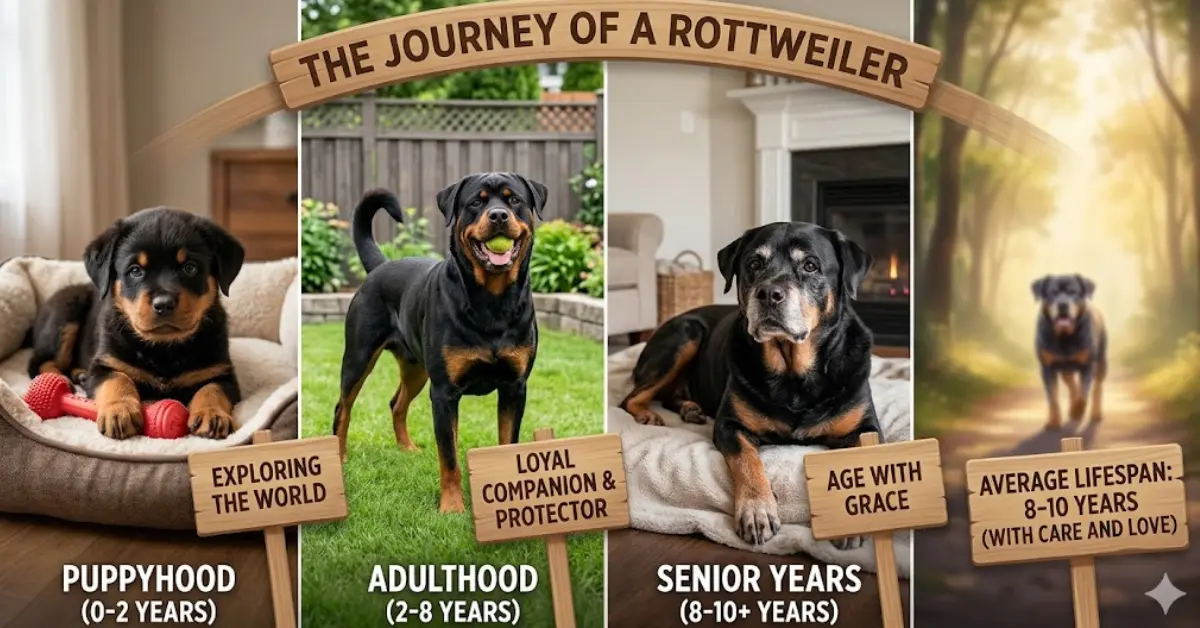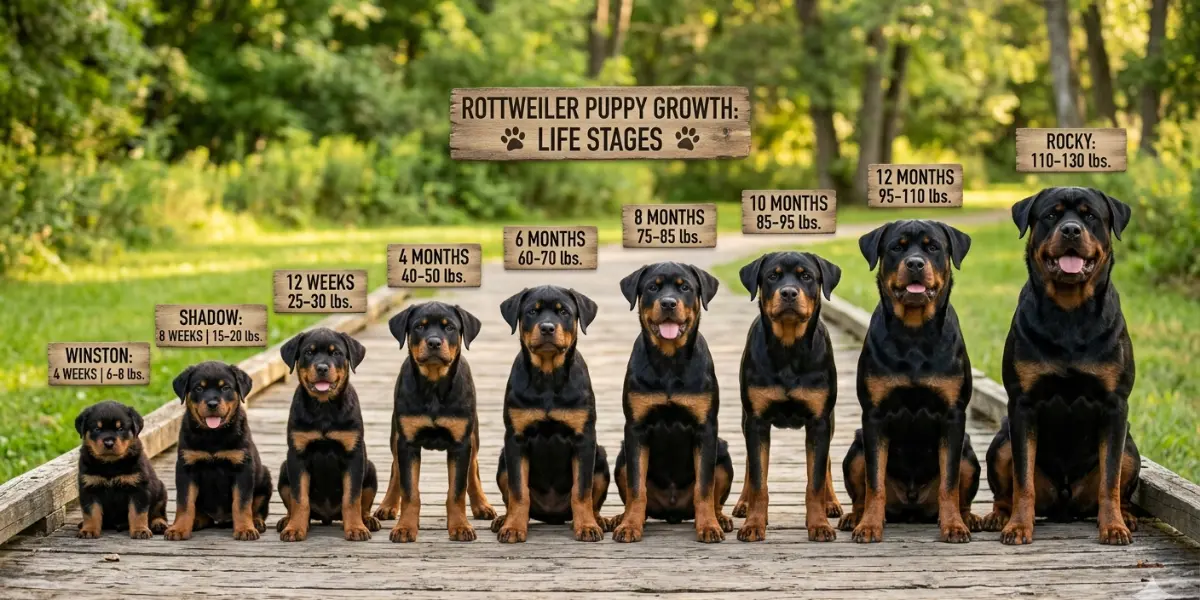
A Rottweiler puppy grows rapidly during its first year and continues developing until approximately 18 to 24 months of age. Most puppies reach around 60% to 75% of their adult size by six months. Male Rottweilers typically grow larger and heavier than females. While weight and height can vary based on genetics, nutrition, and activity levels, monitoring a Rottweiler puppy growth chart helps owners track healthy development. Proper canine nutrition, exercise, veterinary care, and attention to growth plates are essential to support safe growth in this large breed. Understanding your puppy’s growth milestones can help you identify potential concerns early and ensure they mature into healthy, well balanced adults.
Bringing home a Rottweiler puppy is exciting. One week they look like a chunky little teddy bear, and before you know it, they are big enough to make visitors think twice before ringing the doorbell.
As one of the world’s most recognized working breeds, the Rottweiler is known for strength, intelligence, loyalty, and confidence. However, these traits do not appear overnight. They develop gradually through carefully managed puppy growth stages.
Understanding a Rottweiler puppy growth chart allows owners to monitor progress, provide proper nutrition, and avoid common mistakes that can affect long term health. Since Rottweilers belong to the category of large breed dogs, their growth pattern differs significantly from smaller breeds.
This guide covers weight expectations, height milestones, puppy development stages, nutrition, exercise requirements, common myths, and answers to frequently asked questions.
Understanding Rottweiler Growth
Why Growth Monitoring Matters
Tracking your puppy’s growth is not about chasing a specific number on a scale. Instead, it helps you determine whether development remains healthy and consistent.
Growth monitoring helps:
- Identify nutritional deficiencies
- Detect growth abnormalities early
- Prevent excessive weight gain
- Support proper bone development
- Protect developing joints and growth plates
A healthy Rottweiler should show steady progress rather than sudden spikes or prolonged stagnation.
Factors That Influence Growth
Several variables affect how fast Rottweiler puppies grow:
Genetics
Genetics play a major role in determining adult size. Puppies from larger parents often mature into larger adults.
Nutrition
Proper canine nutrition directly impacts muscle development, bone growth, and overall health.
Exercise
Moderate activity supports healthy growth, while excessive impact can stress developing joints.
Health Conditions
Parasites, illness, hormonal disorders, and orthopedic issues may affect growth rates.
Gender
Males generally grow larger and heavier than females, which is why separate male Rottweiler growth chart and female Rottweiler growth chart references are often useful.
Rottweiler Puppy Weight Chart
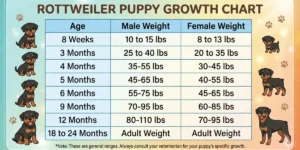
The following Rottweiler puppy weight chart provides general guidelines. Individual puppies may vary.
|
Age |
Male Weight | Female Weight |
|
8 Weeks |
10 to 15 lbs | 8 to 13 lbs |
|
3 Months |
25 to 40 lbs | 20 to 35 lbs |
|
4 Months |
35 to 55 lbs | 30 to 45 lbs |
|
5 Months |
45 to 65 lbs |
40 to 55 lbs |
| 6 Months | 55 to 75 lbs |
45 to 65 lbs |
| 9 Months | 70 to 95 lbs |
60 to 85 lbs |
| 12 Months | 80 to 110 lbs |
70 to 95 lbs |
| 18 to 24 Months | Adult Weight |
Adult Weight |
These values represent averages rather than strict standards.
Male Rottweiler Growth Chart
Male Rottweilers generally develop larger frames and more muscle mass.
Adult males typically:
- Reach 24 to 27 inches in height
- Weigh between 95 and 135 pounds
- Continue filling out until 24 months
Growth often appears rapid during the first year, followed by slower muscular development.
Female Rottweiler Growth Chart
Female Rottweilers mature slightly earlier than males.
Adult females typically:
- Reach 22 to 25 inches in height
- Weigh between 80 and 100 pounds
- Complete physical maturity around 18 to 24 months
Females generally maintain a leaner appearance while still displaying impressive strength.
Rottweiler Puppy Size Chart
While weight receives most attention, height is equally important.
Rottweiler Height and Weight by Age
|
Age |
Approximate Height |
|
2 Months |
8 to 10 inches |
|
3 Months |
12 to 15 inches |
|
6 Months |
18 to 22 inches |
| 9 Months |
21 to 24 inches |
| 12 Months |
22 to 26 inches |
| Adult |
22 to 27 inches |
Height growth slows considerably after the first year, while muscle development continues.
According to the AKC Rottweiler breed standard, balance and structure matter more than simply achieving maximum size.
Rottweiler Puppy Development Stages
Growth involves much more than weight gain.
Stage 1: Newborn to 8 Weeks
During this period, puppies:
- Depend entirely on their mother
- Learn basic social behaviors
- Develop sensory awareness
- Begin exploring their environment
Breeders typically handle most care during this stage.
Stage 2: 8 to 16 Weeks
This period represents a critical socialization window.
Puppies begin:
- Learning commands
- Exploring new environments
- Meeting people and animals
- Developing confidence
Positive experiences are extremely important.
Stage 3: 4 to 6 Months
Many owners notice rapid physical growth.
Characteristics include:
- Increased curiosity
- Teething behavior
- Growing independence
- Higher energy levels
Training consistency becomes essential.
Stage 4: 6 to 12 Months
Adolescence begins.
Common behaviors include:
- Testing boundaries
- Increased strength
- Enhanced protective instincts
- Greater exercise needs
This stage often challenges first time owners.
Stage 5: 12 to 24 Months
Physical growth slows while mental maturity develops.
Most Rottweilers become:
- More stable
- Better focused
- More predictable
- Physically mature
Many owners describe this stage as finally seeing the adult dog emerge.
How Fast Do Rottweiler Puppies Grow?
One of the most common questions is: how fast do Rottweiler puppies grow?
Growth occurs most rapidly during the first six months. During this period, puppies may gain several pounds each week.
After six months:
- Height growth gradually slows
- Weight gain becomes steadier
- Muscle development increases
- Skeletal maturity progresses
Large breed puppy growth requires patience. Attempting to accelerate growth through overfeeding can increase orthopedic risks.
When Do Rottweilers Stop Growing?
Many owners wonder when do Rottweilers stop growing.
The answer depends on which aspect of growth you’re measuring.
Height Growth
Most height growth concludes around 12 to 18 months.
Weight Growth
Weight and muscle development often continue until 18 to 24 months.
Mental Maturity
Behavioral maturity may not fully develop until approximately two to three years.
Therefore, at what age is a Rottweiler fully grown? Most experts consider full physical maturity to occur between 18 and 24 months.
Rottweiler Lifespan and Long Term Health
Rottweilers typically live between 9 and 10 years, although some individuals may live longer with proper care, responsible breeding, and regular veterinary attention. Genetics, diet, exercise, weight management, and preventive healthcare all play important roles in determining lifespan. Because Rottweilers are a large breed, they may be more susceptible to certain health conditions, including joint disorders, heart disease, and some forms of cancer. Supporting healthy growth during the puppy years is particularly important, as excessive weight gain and improper nutrition can place additional stress on developing bones and joints. By providing balanced canine nutrition, appropriate exercise, routine health screenings, and consistent preventive care, owners can help their Rottweiler enjoy a healthier and more active life throughout adulthood.
Rottweiler Nutrition for Healthy Growth
Importance of Canine Nutrition
Proper canine nutrition forms the foundation of healthy development.
The right diet supports:
- Bone strength
- Muscle growth
- Immune health
- Joint protection
- Healthy weight maintenance
Large breed puppies require carefully balanced nutrition rather than excessive calories.
Protein
Protein supports muscle development and tissue repair.
Calcium and Phosphorus
Balanced levels promote healthy skeletal growth.
Healthy Fats
Fats provide energy and support brain development.
Vitamins and Minerals
These contribute to overall health and proper growth.
Owners should consult their veterinarian when selecting food designed specifically for large breed dogs.
Growth Plates and Joint Health
What Are Growth Plates?
Growth plates are areas of developing cartilage located near the ends of bones.
These structures:
- Control bone growth
- Remain vulnerable during development
- Eventually harden into solid bone
Because growth plates are still developing, excessive jumping or intense exercise can increase injury risk.
Protecting Developing Joints
To safeguard growth plates:
- Avoid repetitive high impact activities
- Limit excessive stair climbing
- Maintain healthy body weight
- Use age appropriate exercise
Healthy growth today reduces orthopedic problems later.
Rottweiler Exercise Requirements by Age
Exercise for Puppies Under 4 Months
Focus on:
- Short walks
- Play sessions
- Socialization experiences
Exercise for Rottweilers Aged 4 to 12 Months
Gradually increase:
- Walking distance
- Training activities
- Mental enrichment
Exercise After 12 Months
Introduce more demanding activities gradually.
Mental Exercise Matters Too
Rottweilers are highly intelligent working dogs.
Mental stimulation can include:
- Obedience training
- Puzzle toys
- Scent games
- Problem solving activities
A tired brain often creates a calmer puppy than endless physical exercise.
Comparison: Rottweiler vs Other Large Breed Dogs
|
Feature |
Rottweiler | German Shepherd | Labrador Retriever |
| Adult Maturity | 18 to 24 Months | 18 to 24 Months |
18 to 24 Months |
|
Protective Instinct |
High | High | Moderate |
| Muscle Mass | Very High | High |
Moderate |
|
Training Needs |
High | High | Moderate |
| Exercise Needs | High | High |
High |
Although all three belong to large breed dogs, Rottweilers typically develop greater muscle mass and stronger guarding instincts.
When Protective Behavior Becomes Problematic
Protectiveness is a hallmark of the breed. However, healthy protection differs from problematic behavior.
Healthy Protective Behavior
Healthy behavior includes:
- Alertness to unusual situations
- Confidence around strangers
- Calm observation
- Response to owner guidance
Warning Signs
Protective instincts may become problematic when a dog:
- Displays uncontrolled aggression
- Reacts excessively to visitors
- Guards family members obsessively
- Ignores owner commands
- Shows fear based aggression
The ASPCA and veterinary behavior experts emphasize early socialization and positive reinforcement training to help prevent these issues.
Professional training should be sought if concerning behaviors emerge.
Common Myths About Rottweiler Growth
Myth 1: Bigger Is Always Better
Reality: Oversized puppies may face increased joint stress and orthopedic challenges.
Myth 2: More Food Creates a Healthier Dog
Reality: Overfeeding often contributes to obesity and skeletal issues.
Myth 3: Rottweilers Stop Growing at One Year
Reality: Most continue developing physically until 18 to 24 months.
Myth 4: Heavy Exercise Builds Better Bones
Reality: Excessive exercise can damage developing growth plates.
Myth 5: Every Puppy Must Match Growth Charts Exactly
Reality: Puppy growth charts provide guidelines, not guarantees.
Signs Your Rottweiler Is Growing Properly
Healthy development typically includes:
- Steady weight gain
- Good energy levels
- Shiny coat
- Strong appetite
- Appropriate muscle tone
- Normal mobility
Consult your veterinarian if you notice:
- Sudden weight loss
- Persistent limping
- Extreme lethargy
- Failure to gain weight
- Significant growth delays
Frequently Asked Questions
1. How much should a Rottweiler puppy weigh at 6 months?
Most male puppies weigh approximately 55 to 75 pounds, while females typically weigh 45 to 65 pounds. Individual variation is normal.
2. When do Rottweilers stop growing?
Most Rottweilers reach full physical maturity between 18 and 24 months, although height growth slows earlier.
3. How fast do Rottweiler puppies grow?
Growth is fastest during the first six months. Puppies may gain several pounds weekly during this stage.
4. At what age is a Rottweiler fully grown?
Most Rottweilers are fully grown physically between 18 and 24 months, though mental maturity may continue beyond that age.
5. Why is my Rottweiler puppy smaller than the growth chart?
Genetics, nutrition, and individual development influence growth. A puppy can be healthy while remaining outside average chart ranges.
6. What food is best for large breed puppy growth?
A veterinarian approved large breed puppy formula with balanced protein, calcium, and phosphorus supports healthy development.
Rottweiler Puppy Growth Chart: Key Takeaways
A Rottweiler puppy growth chart is a valuable tool for tracking development, but it should never be viewed as a rigid rulebook. Every puppy grows at its own pace based on genetics, nutrition, activity levels, and overall health.
The key is consistency. Focus on balanced canine nutrition, proper exercise, regular veterinary care, and positive training. Monitor weight, height, and behavior rather than obsessing over exact numbers.
Rottweilers are remarkable dogs that combine intelligence, strength, and loyalty. With patience and informed care during their puppy development stages, owners can help them mature into healthy, confident companions that thrive for years to come.
References
- American Kennel Club. Rottweiler Breed Information. Available at: https://www.akc.org/dog-breeds/rottweiler/
- American Veterinary Medical Association. Pet Owner Resources and Canine Health Information. Available at: https://www.avma.org
- American Society for the Prevention of Cruelty to Animals. Dog Care, Training, and Behavior Resources. Available at: https://www.aspca.org
- Rottweiler Club of America. Breed Education and Responsible Ownership Guidelines. Available at: https://www.amrottclub.org
- World Small Animal Veterinary Association. Global Nutrition Guidelines for Dogs. Available at: https://wsava.org