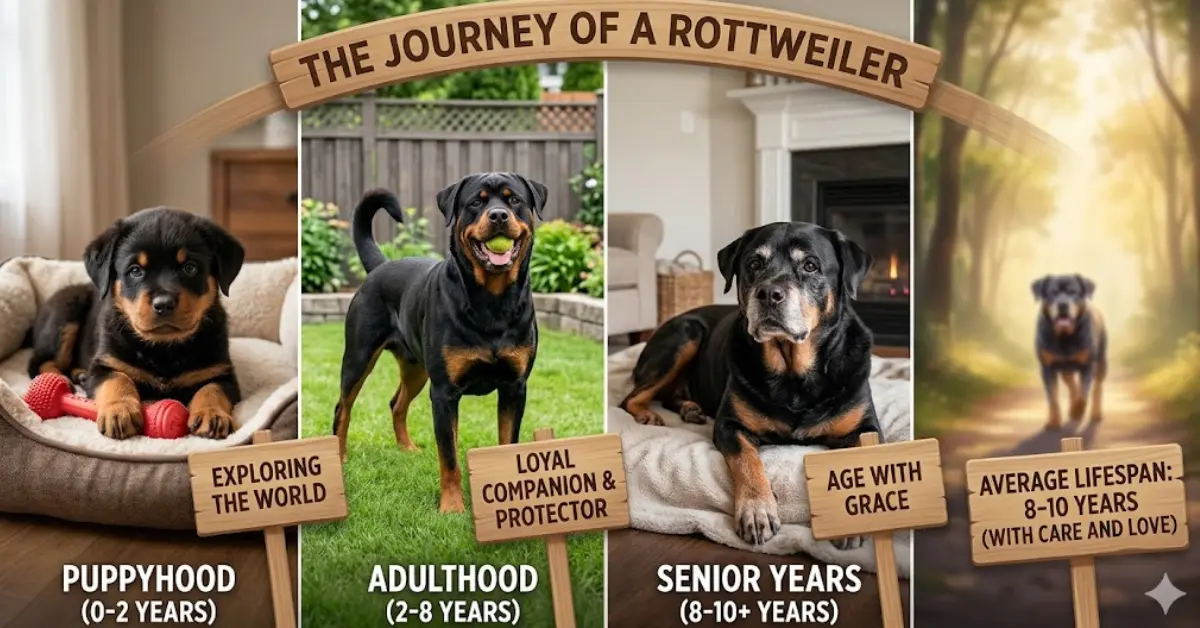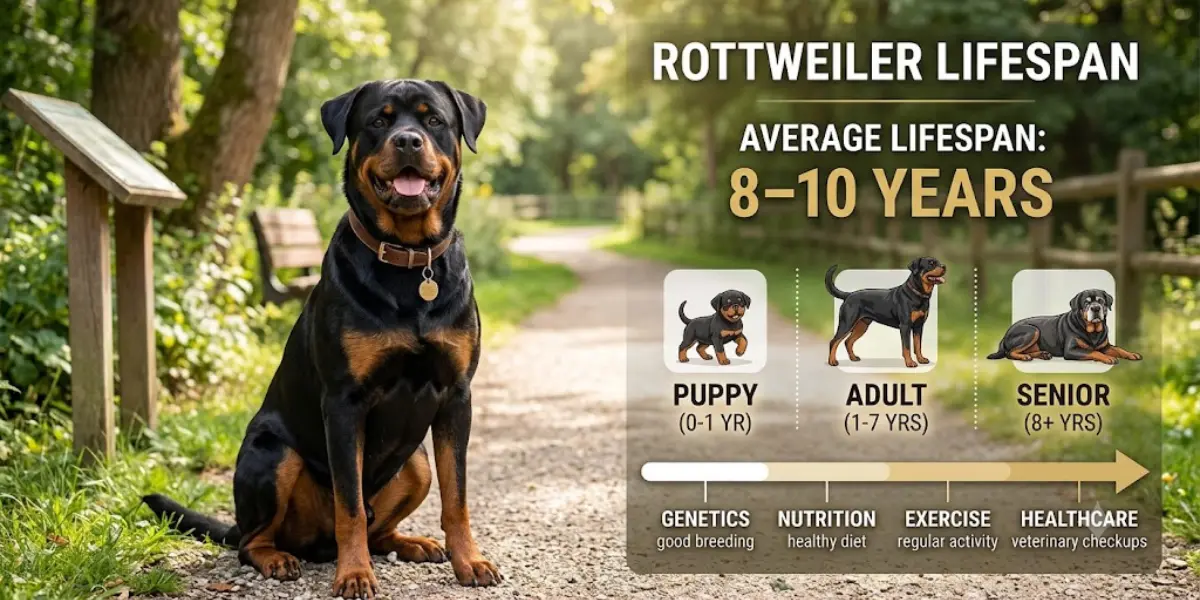
The average lifespan of a Rottweiler is typically between 8 and 10 years. Some Rottweilers live beyond 10 years with excellent genetics, proper nutrition, regular exercise, preventive veterinary care, and a healthy lifestyle. While the Rottweiler lifespan is shorter than that of many smaller dog breeds, responsible ownership can significantly improve both lifespan and quality of life.
If you’ve ever wondered, how long do Rottweiler dogs live, the answer depends on several factors including genetics, weight management, health conditions, diet, and overall care. Understanding these factors can help you give your Rottweiler the best chance at a long, happy, and healthy life.
Rottweilers are powerful, loyal, and intelligent dogs known for their confidence and protective instincts. Originally developed as working dogs, they have earned a reputation as dependable family companions, guardians, and service dogs.
One question many current and prospective owners ask is: what is the average lifespan of a Rottweiler?
The answer is not always straightforward. Like many large breed dogs, Rottweilers generally have shorter lifespans than smaller breeds. However, lifespan is influenced by much more than size alone.
From genetics and nutrition to exercise habits and preventive healthcare, many factors contribute to a dog’s longevity. Understanding these influences can help owners make informed decisions throughout every stage of their dog’s life.
In this guide, we’ll explore the lifespan of a Rottweiler dog, common health concerns, factors that affect longevity, myths about aging, behavioral considerations, and practical steps you can take to help your Rottweiler thrive.
What Is the Average Lifespan of a Rottweiler?
The average lifespan of a Rottweiler generally falls between 8 and 10 years.
Some dogs may live only 7 years due to serious health conditions, while others can reach 11, 12, or even older with exceptional care and favorable genetics.
Rottweiler Lifespan at a Glance
|
Factor |
Typical Range |
| Average lifespan |
8 to 10 years |
|
Senior stage begins |
Around 7 years |
| Exceptional longevity |
11 to 13+ years |
|
Puppy stage |
Birth to 18 months |
| Adult stage |
18 months to 7 years |
Although the Rottweiler life expectancy may seem short compared to some breeds, many owners report that their dogs remain active, playful, and affectionate well into their senior years.
Why Do Large Dogs Typically Live Shorter Lives?
Many people ask, why do Rottweilers have a short lifespan compared to smaller breeds.
Scientists continue to study this phenomenon, but several factors appear to contribute.
Faster Growth Rates
Large breed dogs grow rapidly during puppyhood. This accelerated growth places significant demands on bones, joints, organs, and metabolic systems.
Increased Risk of Certain Diseases
Larger breeds tend to face higher risks of conditions such as:
- Bone cancer
- Joint disorders
- Heart disease
- Orthopedic issues
Greater Physical Stress
A muscular dog weighing over 100 pounds naturally places more strain on joints, ligaments, and internal systems than a smaller dog.
This does not mean large dogs are unhealthy. It simply means they age differently and often have different health challenges.
How Long Do Purebred Rottweilers Live?
A common question among owners is: how long do purebred Rottweilers live?
Purebred Rottweilers generally have a lifespan similar to the breed average of 8 to 10 years.
However, genetics plays a major role.
Responsible breeders often perform health screenings to reduce the risk of inherited conditions. Dogs from carefully selected breeding programs may have better long term health outcomes than dogs bred without proper health testing.
When searching for a puppy, ask breeders about:
- Hip evaluations
- Elbow evaluations
- Cardiac screenings
- Family health history
- Longevity records within the bloodline
These factors can provide valuable insight into a puppy’s future health prospects.
Factors That Affect Rottweiler Lifespan
The lifespan of a dog is influenced by numerous variables.
Genetics
Genetics forms the foundation of a dog’s health.
Even with excellent care, inherited conditions can impact longevity. Choosing a puppy from health tested parents can reduce certain risks.
Nutrition
A balanced diet helps support:
- Healthy body weight
- Muscle development
- Immune function
- Organ health
Poor nutrition can contribute to obesity and chronic health problems that shorten lifespan.
Exercise
Rottweilers require regular physical activity.
Consistent exercise helps maintain:
- Healthy joints
- Strong muscles
- Cardiovascular health
- Mental stimulation
Moderation is important, especially for puppies whose growth plates are still developing.
Weight Management
Excess body weight places significant strain on:
- Joints
- Heart
- Respiratory system
Maintaining an ideal body condition may improve both longevity and quality of life.
Preventive Veterinary Care
Routine veterinary visits allow early detection of health problems.
Preventive care often includes:
- Vaccinations
- Wellness exams
- Dental care
- Bloodwork
- Parasite prevention
Early intervention frequently leads to better outcomes.
Common Health Problems That Affect Rottweiler Life Expectancy
Several health conditions can influence the Rottweiler age expectancy.
Hip Dysplasia
Hip dysplasia occurs when the hip joint develops improperly.
Symptoms may include:
- Limping
- Reduced mobility
- Difficulty standing
- Pain during movement
Maintaining a healthy weight can help reduce joint stress.
Elbow Dysplasia
Similar to hip dysplasia, elbow dysplasia affects joint development and mobility.
Early diagnosis can improve long term management.
Osteosarcoma
Rottweilers have a higher risk of osteosarcoma, a form of bone cancer that commonly affects large breeds.
Veterinary evaluation is essential whenever unexplained limping or swelling occurs.
Heart Conditions
Some Rottweilers may develop heart related issues that affect stamina and overall health.
Regular veterinary monitoring helps identify problems early.
Obesity
Obesity is one of the most preventable health risks.
Excess weight increases the likelihood of:
- Arthritis
- Diabetes
- Heart strain
- Reduced mobility
How to Help Your Rottweiler Live Longer
Although genetics cannot be changed, many lifestyle factors are within an owner’s control.
Feed a High Quality Diet
Choose a nutritionally balanced diet appropriate for:
- Age
- Activity level
- Weight
- Health status
Consult your veterinarian regarding dietary recommendations.
Maintain a Healthy Weight
One of the simplest ways to improve longevity is preventing obesity.
You should be able to feel your dog’s ribs without excessive fat covering them.
Exercise Consistently
Daily activity supports both physical and mental health.
Good activities include:
- Walks
- Structured play
- Obedience training
- Hiking
- Interactive games
Schedule Routine Veterinary Exams
Annual or semiannual checkups help detect issues before they become serious.
Senior dogs may benefit from more frequent monitoring.
Prioritize Dental Health
Dental disease can affect more than the mouth.
Chronic oral infections may impact overall health and quality of life.
Regular brushing and professional cleanings can help.
Provide Mental Enrichment
Rottweilers are intelligent working dogs.
Mental stimulation can reduce stress and improve overall well being.
Try:
- Puzzle toys
- Scent games
- Obedience exercises
- Advanced training activities
Male vs Female Rottweiler Lifespan
Many owners wonder whether male or female dogs live longer.
Research across various breeds often suggests females may have a slight longevity advantage. However, individual health, genetics, and lifestyle typically play a much larger role than gender alone.
Comparison Table
| Characteristic | Male Rottweiler | Female Rottweiler |
| Average lifespan | Similar | Similar |
| Typical size | Larger | Slightly smaller |
| Growth rate | Faster | Slightly slower |
| Longevity difference | Minimal | Minimal |
For most owners, focusing on health management is far more important than gender when considering lifespan.
Signs Your Rottweiler Is Entering Its Senior Years
The Rottweiler average age for entering senior status is around seven years.
Common signs include:
- Reduced energy
- Gray hair around the muzzle
- Slower movement
- Joint stiffness
- Increased sleeping
- Changes in hearing or vision
Aging itself is not a disease. Many senior Rottweilers continue enjoying active, fulfilling lives when supported with proper care.
Protective Behavior: When Does It Become Problematic?
Rottweilers are naturally protective dogs. This trait is one reason they are respected as guardians.
However, protective behavior can become problematic when it crosses into fear, anxiety, or aggression.
Healthy Protective Behavior
Healthy protection often involves:
- Alert barking
- Awareness of surroundings
- Confidence around family members
- Appropriate responses to unfamiliar situations
Problematic Protective Behavior
Warning signs include:
- Excessive barking
- Lunging at strangers
- Resource guarding
- Territorial aggression
- Inability to relax around visitors
Prevention Strategies
Early socialization is essential.
Expose puppies to:
- Different people
- Various environments
- New sounds
- Positive experiences
Consistent training helps develop confidence and emotional stability.
A well socialized Rottweiler should be calm, controlled, and capable of distinguishing genuine threats from everyday situations.
Common Myths About Rottweiler Lifespan
Myth 1: Rottweilers Never Live Beyond 10 Years
False.
While the average lifespan is 8 to 10 years, some Rottweilers exceed this range.
Myth 2: Genetics Are the Only Thing That Matters
False.
Genetics is important, but nutrition, exercise, veterinary care, and weight management also play significant roles.
Myth 3: Bigger Rottweilers Are Better
False.
Excessive size may increase stress on joints and organs.
Maintaining a healthy body condition is more important than maximizing size.
Myth 4: Senior Dogs Should Avoid Exercise
False.
Most senior dogs benefit from regular low impact activity.
Exercise helps preserve muscle mass, mobility, and mental health.
Myth 5: Purebred Dogs Always Have Shorter Lives
False.
Many purebred dogs live long, healthy lives when bred responsibly and cared for properly.
Understanding the Aging Process in Rottweilers
As Rottweilers age, their needs evolve.
Nutrition Changes
Senior dogs often require:
- Controlled calorie intake
- Joint support nutrients
- Easily digestible protein
Exercise Adjustments
Activity remains important, but intensity may need modification.
Shorter walks and low impact activities often work well.
Increased Health Monitoring
Regular blood tests and wellness exams become increasingly valuable during senior years.
Early detection frequently improves treatment options.
How Old Do Rottweilers Get?
Many owners ask, how old do Rottweilers get?
Most Rottweilers live between 8 and 10 years, but some reach 11 to 13 years or more.
Longevity often depends on:
- Genetics
- Body condition
- Medical history
- Diet quality
- Veterinary care
- Lifestyle management
While there is no guaranteed formula for a long life, healthy habits can significantly improve outcomes.
Frequently Asked Questions
What is the average lifespan of a Rottweiler?
The average lifespan of a Rottweiler is generally between 8 and 10 years, though some dogs live longer with excellent care and favorable genetics.
How long do Rottweiler dogs live as family pets?
Most family Rottweilers live between 8 and 10 years. Proper nutrition, exercise, and preventive healthcare can help maximize longevity.
Why do Rottweilers have a short lifespan?
Large breed dogs tend to age faster and face increased risks of certain health conditions, including joint disorders and some cancers.
How long do purebred Rottweilers live?
Purebred Rottweilers typically live 8 to 10 years, though health tested bloodlines may improve the likelihood of longer lifespans.
Can a Rottweiler live longer than 10 years?
Yes. Many Rottweilers exceed 10 years when provided with excellent veterinary care, healthy nutrition, and proper weight management.
What is the best way to increase a Rottweiler’s lifespan?
Maintaining a healthy weight, feeding a balanced diet, providing regular exercise, and scheduling routine veterinary care are among the most effective ways to support longevity.
Rottweiler Lifespan: Final Thoughts
So, how long do Rottweilers live? Most Rottweilers have an average lifespan of 8 to 10 years, although some can live longer with excellent care and favorable genetics. The Rottweiler lifespan is influenced by several factors, including breeding, nutrition, exercise, weight management, and regular veterinary care.
While the lifespan of a Rottweiler dog may be shorter than that of some smaller breeds, responsible ownership can have a significant impact on both longevity and quality of life. Providing a balanced diet, maintaining a healthy weight, encouraging daily physical activity, and addressing health concerns early can help your dog enjoy more healthy and active years.
Ultimately, the goal is not simply to increase your Rottweiler’s life expectancy but to ensure every stage of life is comfortable, fulfilling, and rewarding. With proper care, love, and attention, your Rottweiler can remain a loyal companion and cherished family member for many years.
References
- American Kennel Club (AKC). Rottweiler Dog Breed Information. Available at: https://www.akc.org/dog-breeds/rottweiler/
- American Kennel Club Canine Health Foundation (AKC CHF). Health Concerns in Large Breed Dogs. Available at: https://www.akcchf.org/
- American Veterinary Medical Association (AVMA). Pet Health Resources. Available at: https://www.avma.org/resources-tools/pet-owners
- American Animal Hospital Association (AAHA). Preventive Care Guidelines for Dogs. Available at: https://www.aaha.org/
- ASPCA. Dog Care and Health Information. Available at: https://www.aspca.org/pet-care/dog-care