German Shepherd Puppy Potty Training Guide

By HINDHUJA VAKADA

Updated On:

german shepherd puppy potty training

Join WhatsApp

Join Now

German Shepherd Puppy Potty Training Guide

Out of nowhere, tiny paws tap across the floor. A warm bundle curls up on your shoe. This fragile thing somehow weighs heavy in your arms. One blink later, there is pee near the wall. Not just once. Each mess brings silence – then doubt creeps in. Could I be messing things up already? Why isn’t it clicking yet?

Breathe and Reset the Expectation

Breathe deep if this feels like your life right now. Training a German Shepherd pup to pee outside? Forget shortcuts or rigid schedules. This journey means guiding a youngster to tune into their instincts while living our way. Success arrives suddenly when trust replaces stress – yet showing up every day matters most.

Why Consistency Matters More Than Space

Puppies thrive when life feels predictable. Homes differ – some have open lawns, others just a single room; some filled with children, others quiet with first time owners. What matters most isn’t space or experience. It’s pace. Rushing leads to messes, frustration. Slowing down changes everything. Consistency beats speed every time. Training clicks when habits build slowly, day after day.

German Shepherd Puppies Each Learn Potty Training In Their Own Way

Watch a German Shepherd closely. Patterns come first, long before any word makes sense. Where they can go becomes clear through repetition. Eyes follow them in some spots, not others. Quiet corners reveal what slips past attention.

German Shepherd Puppy Potty Training Guide

A home I visited had a young dog who always stayed clean in the main areas – yet kept leaving messes in the spare bedroom. Noticing this pattern, the owners assumed it liked the space more. Truth was, that room sat at the back of the house, away from noise, hardly anyone went inside. Over time, the pup figured out nobody reacted fast if something happened there. Blocking entry to the room, along with keeping an eye on every corner, changed things quickly. Within seven days, the behavior vanished.

A familiar scene with a German Shepherd unfolds like this. Not driven by defiance do they push limits. Instead, their actions mirror daily patterns around them.

What Helps Potty Training Work

German shepherd housebreaking works best when:

• The schedule is predictable
• Supervision is consistent
• Feedback is calm and immediate
• Freedom is earned gradually

If even one part is missing, accidents tend to continue, even with clever pups.

When German Shepherds Learn Bathroom Habits

Most times, it is fear driving the question, not wonder. People who just got started stress about being late.

Potty training begins right when your pup walks through the door – yet holding it in develops slowly.

A rough guide runs like this:

Early Weeks

By week eight or nine, tiny pups still wobble through life without much control. Messy moments are expected. Bodies are simply not ready yet.

10 to 12 Weeks

Puppies begin recognizing routines. With supervision, they start holding it slightly longer, though mistakes still happen.

5 to 6 Months

Most begin responding more consistently inside the home. Routine becomes clearer and accidents reduce with steady practice.

Around 6 Months and Beyond

With consistent training, habits start stabilizing. Progress depends heavily on repetition and daily structure.

A Real Life Pattern That Changes Everything

A tiny pup, just twelve weeks old, had someone who thought lessons were going nowhere. Mornings stayed clean, yet evenings brought messes every time. It turned out the little one wasn’t confused – just worn out. Shifting things around helped fast: one more bathroom stop at night, less roughhousing before bed. Soon enough, the floor stayed dry. What looked like failure was really fatigue.

What Potty Training Really Depends On

Potty training is not just routine. It depends on multiple layers working together:

• Bladder development, which cannot be rushed
• A predictable daily schedule
• Clear signals and immediate feedback
• Proper supervision throughout the day

When accidents repeat, usually one of these pieces is missing.

Setting Up the Home Before Training Starts

Most toilet troubles begin long before the first accident.

A pup I saw would pee in the far corner of its crate every time. The owners thought it was careless behavior. But the crate was too large, allowing a sleeping area and a toilet corner. Once the space was adjusted to a snug fit, everything changed within days.

Before training begins, make sure you have:

• A crate sized just for lying down and turning comfortably
• A consistent outdoor potty spot
• Enzymatic cleaner for accidents
• A leash kept ready near the door

Small setup mistakes can create long-term confusion.

raining a German Shepherd Puppy to Use the Bathroom

Out of everything tried, this one sticks around. Real places, real results – time after time it holds up.

Follow a Consistent Daily Routine

Puppies are not born knowing how to wait. What clicks for them is routine.

Take your puppy outside:

• Immediately after waking
• After every meal
• After naps
• After playtime
• Before bedtime

Hour by hour, then stretching toward two, through daylight hours when first starting out.

A single pup I cared for had to step outside precisely ten minutes post-meal. Never right away, never closer to thirty. When we stuck to that window, messes vanished entirely. Their digestive patterns tend to run on tight schedules – spot the pattern, fix the problem.

Use the Crate to Help Learning

Puppies learn to link full bladders with holding it when a box is around.

Used properly:

• Accidents decrease
• Awareness increases
• Training speeds up

A dog might retreat there when things feel overwhelming. This spot stays calm even if chaos fills the room.

Always Use a Leash When Going Outside

Just because there is a yard does not mean it matters.

Puppies sprint, nose low to grass, then pause – memory lost mid-sniff. Tied by rope, each visit brought pee right on schedule. Not control that line. Just fewer things pulling eyes away.

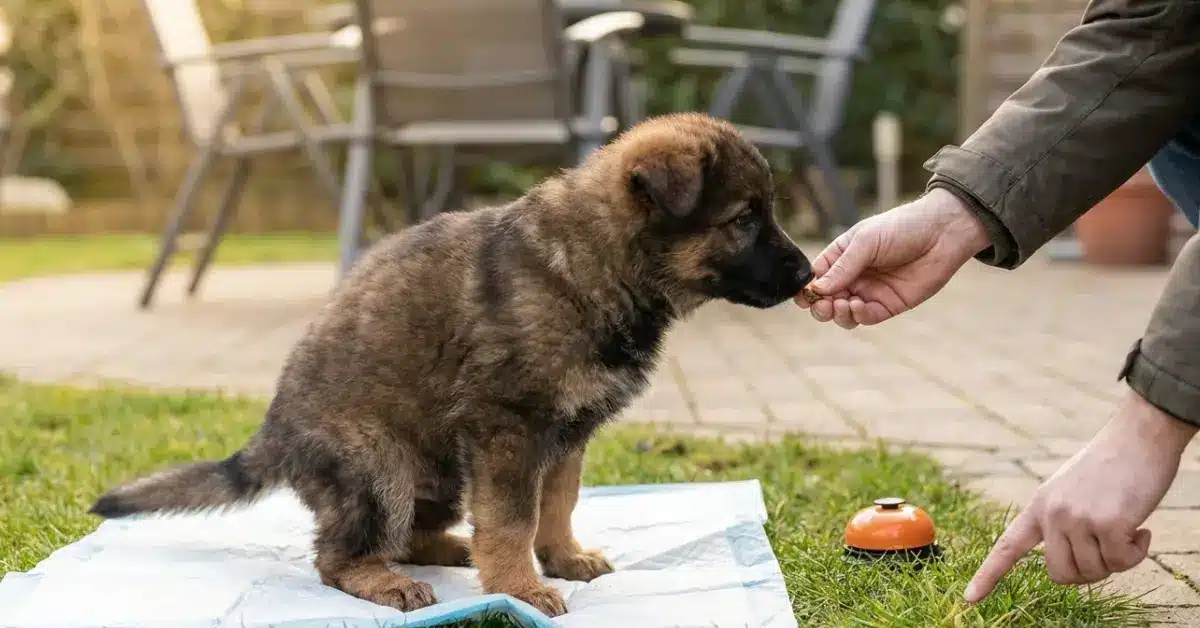
Praise comes right after the puppy does its business, then give a treat soon afterward. What counts most is when you respond, not how loud you get.

Introduce a Simple Potty Cue

One phrase pick. Stick to it every time:

• Go potty
• Do your business

One time is enough. Wait after you speak – otherwise the pup learns to ignore it.

Supervise or Confine

Here is when progress often stalls without meaning to.

Your puppy should either be:

• Fully supervised
• Or in the crate

Mistakes often follow when nobody is watching. These moments stick around longer than expected, shaping how things get done.

Noticing When Your Puppy Needs to Go Outside

German Shepherd puppies tend to give hints ahead of accidents – yet those signals can slip past notice.

Common signals include:

• Sudden sniffing
• Circling
• Walking away mid-play
• Sitting near doors
• Quiet whining

Puppies often sniff around before going potty. Not this one. She’d freeze mid-step, eyes locked on her person. At first, the family assumed it was love. Turns out, that fixed gaze meant she needed to go outside. Spotting the pattern changed everything. Fewer messes followed fast.

How Long Does It Take to Potty Train a German Shepherd Puppy

Most puppies:

• Understand the concept within 2–3 weeks
• Improve noticeably by 3 months

Most folks notice reliability around five months in. Six months might be safer though. That trust builds slowly, then suddenly it sticks.

Most days move forward, yet some slip backward when life shifts. A sudden change like a busy week or moving homes might slow things down. Puppies grow at their own pace, not on a calendar. Each step counts, even the wobbly ones.

That is normal – not failure.

How to Deal with Accidents Properly

When things go wrong, it is not the fall that counts. It is how you move after. What follows changes everything.

If you notice it happening:

• Interrupt gently
• Go outside immediately

If you find it later:

• Clean thoroughly
• Say nothing
• Adjust supervision

A small dog got yelled at by its person after going inside. That moment taught it nothing about timing – just made the human seem strange. When emotions faded and every day followed the same steps, things started shifting fast.

House Training a German Shepherd Puppy in Apartments

Living in an apartment brings extra layers. Still, it stays within reach when handled step by step.

A person I helped owned a dog and stayed upstairs. When the pup first arrived, messes happened inside the lift. Instead of letting it walk, they started lifting it straight to where it could go outside. Soon enough, the little one got used to waiting till arrival. By day fourteen, control improved each morning ride.

Helpful apartment tips:

• Carry young puppies when possible
• Keep leash ready near the door
• Use the same outdoor potty spot
• Reward immediately after success

Pads sometimes help at first. Put one by the door if needed, then slowly remove it over time.

Potty Training a Female German Shepherd Puppy

Same steps apply no matter the puppy, though slight differences can show up. Overall flow stays the same.

Female puppies often:

• Mature slightly earlier
• Show clearer squat signals
• Urinate in smaller amounts more frequently

A little girl dog I worked with used to crouch down many times on a single stroll. She’d pause each time, making her person believe she still had more to do, so they waited. That led to longer outings than needed. Breaking it into smaller visits outside fixed everything.

Start by watching closely every day. Stick to a fixed schedule instead of switching tactics often. Notice when she sniffs or pauses mid-play – that signals urgency. A quiet area may work better at first. Let time do most of the teaching while guiding gently. Consistency matters more than new ideas each week. Watch reactions after naps, meals, or rest. Patience grows stronger when rushing is avoided. Success shows up quietly, not with big wins.

Night Time Potty Training When It Happens

Some puppies struggle to stay asleep all night at first.

Helpful adjustments:

• Remove water two hours before bed
• Last toilet trip pushed close to bedtime
• Keep night outings boring and quiet
• Lift the puppy up when you have to take them outside

A small dog kept making messes close to three in the morning. Because of that, someone started taking it out at two forty-five – quietly – for several weeks straight. Slowly, those middle-of-the-night trips stopped being needed. Over time, the pup began staying dry until sunrise without help.

Training Mistakes That Slow Progress

Again and again, these errors pop up:

• Giving too much freedom too early
• Inconsistent feeding times
• Missing subtle signals
• Using the wrong cleaner

One after another slows understanding far beyond what anyone expects.

Comparing Potty Training Approaches

Method

Best For

Limitations

Crate training

Most homes Requires consistency
Puppy pads High-rise apartments

Can delay outdoor habits

Bell training Older puppies

Needs foundation first

In most real homes, crate training paired with outdoor routines works best long-term.

When Potty Training Stalls

When mishaps stretch beyond half a year, something hidden might be pulling strings.

Possible causes include:

• Urinary tract infections
• Anxiety
• Inconsistent schedules
• Too much unsupervised time

A small dog I met was called difficult – turns out it had a quiet bladder problem. Once that got fixed, everything changed fast, just ten days in. What looks like attitude often hides something else underneath.

Indicators Potty Training Is Progressing

Quiet moments carry progress just fine.

Look for:

• Longer dry periods
• Puppy heading toward the door
• Shorter potty trips
• Predictable timing after meals

Little clues show routines taking root.

Final Thoughts

Potty training a German Shepherd pup thrives on clear signals – not strict rules. Success comes not from flawless execution but steady habits, sharp attention, slow timing. Mistakes on the floor? That’s feedback – time to tweak the routine.

One morning, the quiet will feel different. Notice how things repeat. Rely on what unfolds slowly. Then a thought hits – no accidents in weeks – and just like that, proof sits right there.

FAQs

1. Speed up potty training for your German Shepherd puppy?

Sticking to routines works well when someone checks in often – rewards right after boost results more than waiting. What matters is showing up the same way each time, with quick wins keeping things moving forward.

2. When does a German Shepherd finish learning where to go potty?

Puppies often settle into habits around half a year when life feels predictable.

3. German Shepherd potty training without a crate?

True, though it tends to go slower while needing someone there all along. It does work – just not fast or hands-off.

4. German Shepherd Puppy Pee Holding Time?

A baby might sleep about an hour for each month they have lived, then add another full hour on top. Sometimes it lands a bit higher, sometimes lower – just depends how things go that day.

5. First Time German Shepherd Owners And Potty Training Challenges?

Only when habits slip does trouble start. Fast to pick up new things, this dog adapts within days.

6. How should accidents be handled during training?

Start by wiping everything down, then tweak how closely you watch. Discipline has no place here at any time.

7. Does potty training differ between male and female puppies?

What happens does not change, even if some grow faster than others.

8. What if my puppy only has nighttime accidents?

Later at night, shift how things usually go by including a planned trip to the bathroom. A single timed stop can make a difference when sleep schedules settle in.

HINDHUJA VAKADA

Written by Hindujha Vakada, Sr. SEO Specialist at Market Data Forecast, with expertise in creating research driven digital content. She has a strong passion for dogs and actively researches dog nutrition, training, behavior, and overall pet wellness. Dedicated to providing informative and trustworthy content that supports responsible dog care and better pet parenting.

🔴Related Post

1 thought on “German Shepherd Puppy Potty Training Guide”

Leave a Comment