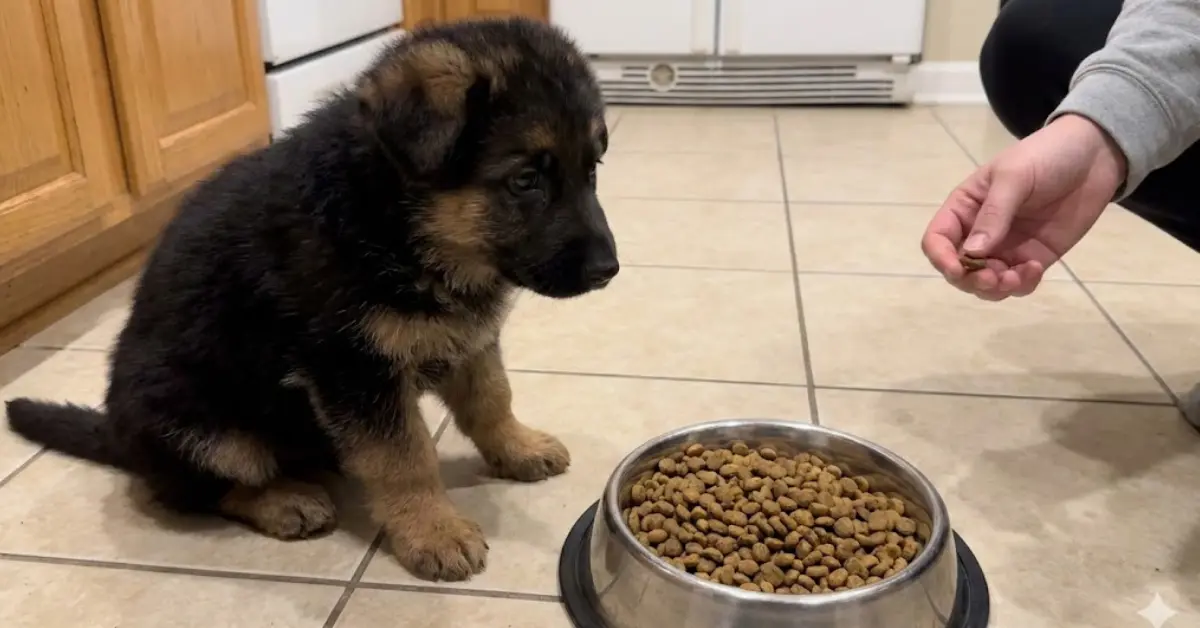
Too Many Treats
A full belly from too many snacks might explain why your German Shepherd pup ignores dinner. Tiny pups feel full fast when treats pack most of their calories, leaving little room for real meals.
Most of a puppy’s food intake needs to be proper meals. Tiny treats can slip in, but only if they stay under one tenth of what the dog eats each day. When pups get too many goodies while learning tricks, they start waiting for richer bites. That makes them turn their nose up at regular dinner.
Pieces of bread, slices of cheese, leftover rice – these human meals wreck a pet’s natural drive to eat right. When fed often, they mess up how the stomach processes food day after day. Eating at set times, with almost no extras, brings back real hunger. Picky patterns fade when only proper food appears on schedule.
Vaccination and Deworming Side Effects
Puppies of the German Shepherd breed often skip meals briefly when they get shots or medicine for worms. Their bodies react, sometimes making them feel tired, achy, or a bit queasy – which means eating feels less appealing. One moment they’re full of energy, next they just want to rest instead of touching their bowl.
Most of the time, hunger comes back after about a day or two. Even when eating slows, young dogs tend to stay awake and sip water.
Should a drop in eating go past forty-eight hours, especially with sickness or bloating, get help. When energy vanishes completely alongside these signs, reach out to your vet.
Intestinal Parasites (Worms)
Puppies often lose interest in food when gut invaders take hold. A swollen belly might show up first in German Shepherds, followed by thinning fur and loose bowels. Instead of gaining mass, they shrink despite eating. Their hair turns lifeless, dragging close to skin. Sometimes they drag their rear across floors, irritated. What looks like spaghetti may appear where it shouldn’t – right there in what they leave behind.
When parasites take hold, digestion struggles, so meals give little energy even if eaten. A pup might skip kibble one day, devour it the next – gut upset sways choice. Hunger shows up empty, growth stalls despite effort.
Poop checks help vets spot worm infections, then they give specific meds to clear them out. Sticking to routine doses keeps animals eating well, growing strong.
Digestive Upset or Food Intolerance
Puppies of the German Shepherd breed might skip meals now and then when their stomachs feel off. Though many point fingers at grains, the real trigger usually hides in certain protein sources or artificial ingredients mixed into the kibble. Instead of blaming wheat first, it pays to look closer at what else fills the bowl.
Loose bowels might show up alongside bloating, skin irritation, frequent ear issues, or rejecting meals again and again. Eating one particular thing too often tends to bring on such reactions.
Watch closely for signs of trouble, because spotting bad ingredients means paying attention. A change to simpler puppy meals can help when stomachs struggle or hunger fades. Getting advice from a vet might lead to trying a temporary diet that cuts out suspects. Better eating and smoother digestion often follow such shifts.
Other Health problems
Most times, a puppy stops eating because something is off inside. Think germs – tiny invaders like viruses or bacteria for example. These often take the hunger away fast. Sometimes right from birth, some pups face body quirks that mess with food breakdown. A hidden glitch in how energy gets used might be pulling strings behind the scenes.
Puppies of the German Shepherd breed face extra challenges because their bodies grow fast while immunity builds slowly. A missed meal along with low energy, raised temperature, throwing up, or loose stool? That’s a red flag.
Right away, a vet check helps spot health issues early when young animals are most at risk. Catching problems fast can stop things from getting worse as they grow.
German Shepherd Puppy Not Eating but Acting Normal
Sometimes a German Shepherd pup won’t touch their food yet still zoom around like nothing’s wrong. This mix of behavior often leaves caretakers unsure what to think. Not every young dog eats the same amount each day – hunger shifts happen. A sudden growth phase might dull interest in dinner. Sore gums from new teeth could play a role too. Even a small shift in schedule may nudge them away from the bowl. Yet energy stays high, eyes stay bright. Missing one meal isn’t always a red flag if everything else seems fine.
Most times a pup skips meals but still bounces around like nothing’s wrong, that’s just picky eating. Energy stays high, they sniff everything, drink water fine, chase toys when called. Often happens after too many snacks yesterday or if the bowl holds the same kibble every day. Sometimes a noisy home or car ride upsets them briefly. It clears without fixes, no vet needed.
Something’s off when a pet won’t eat. Watch for low energy, withdrawal, throwing up, loose stools, high temperature, or dropping pounds. A few bites here and there don’t rule out illness – trouble could still be brewing underneath.
Puppies behaving like themselves tend to ease worries within the first day. Skipping a single meal or nibbling only sometimes won’t cause harm during this window. When they stop eating past twenty-four hours, or their actions shift noticeably, getting help from a vet makes sense – hidden issues might be starting, possibly affecting growth if ignored.