What Is the Average German Shepherd Lifespan?
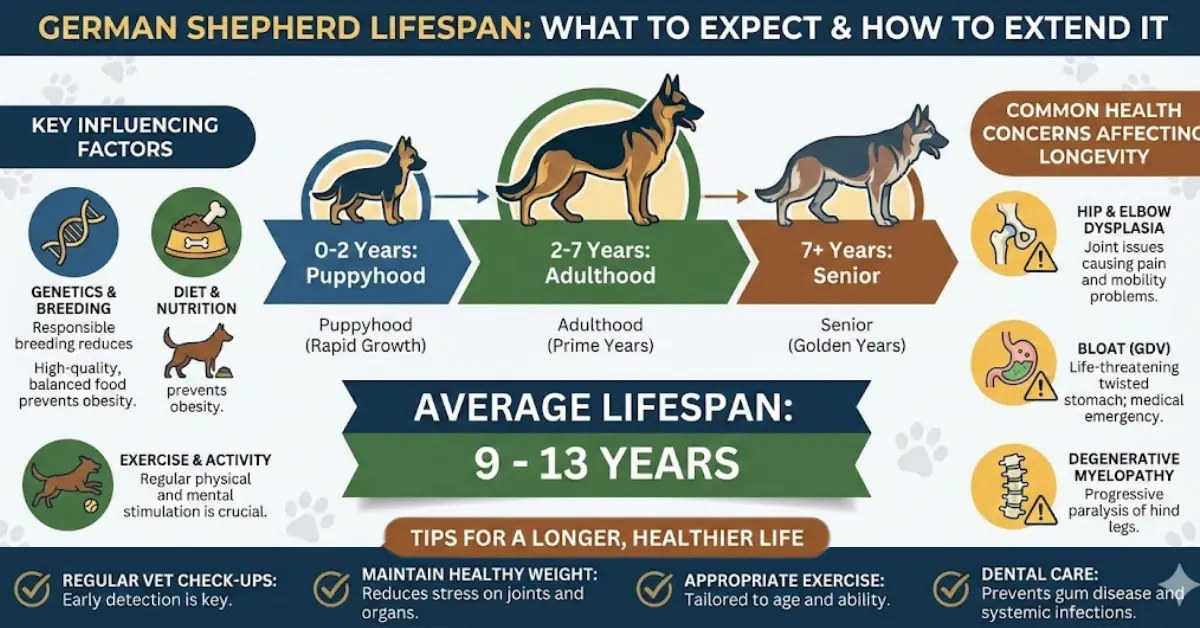
The average German Shepherd lifespan generally falls between 9 and 13 years. This range is based on long term breed data and real world ownership experience. Some dogs live beyond this range when genetics and care align well.
|
Category |
Average Lifespan |
|
Overall German Shepherd Lifespan |
9–13 years |
| Well-bred, well-cared dogs |
12–14 years |
| Poor breeding / poor care |
Under 9 years |
German Shepherd life expectancy is strongly influenced by daily lifestyle. Proper nutrition, healthy weight, and regular exercise help slow age related decline. Dogs that follow a structured routine tend to remain active longer.
Preventive veterinary care also plays a major role. Early health screenings, vaccinations, and dental care reduce long term risks. In my experience, dogs that receive consistent medical attention age with fewer complications.
Mental stimulation is equally important. Training, problem solving games, and social interaction support cognitive health. When physical and mental needs are met together, German Shepherds often enjoy a longer and more comfortable life.
Lifespan of Male vs Female German Shepherds
Male and female German Shepherds show small but noticeable lifespan differences. Females often live slightly longer than males. This is commonly linked to body size and hormonal factors.
|
Gender |
Average Lifespan | Notes |
|
Male German Shepherd |
9–12 years | Heavier build, higher joint strain |
| Female German Shepherd | 10–13 years |
Leaner frame, slightly longer lifespan |
Male German Shepherds are usually heavier and more muscular. This added weight can increase strain on joints and the heart over time. Joint issues may appear earlier if weight is not well managed.
Female German Shepherds tend to have leaner frames. This can reduce pressure on hips and elbows as they age. Spaying at the right time may also lower certain health risks.
That said, care matters more than gender. I have seen both males and females live long lives with proper diet, exercise, and veterinary support.
German Shepherd Lifespan Compared to Other Large Dog Breeds
Compared to other large dog breeds, German Shepherds have a balanced lifespan. Very large breeds like Great Danes often live shorter lives due to rapid aging. German Shepherds age at a steadier pace.
|
Breed |
Average Lifespan |
|
German Shepherd |
9–13 years |
| Labrador Retriever |
10–14 years |
| Golden Retriever |
10–12 years |
|
Great Dane |
7–10 years |
When compared with Labradors or Golden Retrievers, lifespan is quite similar. However, German Shepherds need closer attention to joint health. Early prevention makes a visible difference.
German Shepherds also age well mentally. With regular training and engagement, they stay alert into senior years. This mental strength supports better quality of life.
Overall, German Shepherds offer a strong balance of longevity, intelligence, and physical ability among large breeds.
Factors That Affect a German Shepherd’s Lifespan
Understanding the factors affecting German Shepherd lifespan helps owners make better long term decisions. From years of hands on experience with this breed, it is clear that how long German Shepherds live depends on more than genetics alone. Daily care, environment, and lifestyle choices play an equally important role.
|
Factor |
Impact on Lifespan |
|
Genetics & breeding |
High |
|
Diet & nutrition |
High |
| Exercise & activity |
Medium–High |
| Living environment |
Medium |
| Veterinary care |
High |
| Mental stimulation |
Medium |
German Shepherds are strong and adaptable, but they are also sensitive to neglect and inconsistency. Dogs that receive balanced nutrition, regular exercise, and preventive veterinary care tend to age more gracefully. Mental stimulation and emotional stability also influence overall health, especially as the dog enters senior years.
Early planning matters. Choices made during puppyhood often shape health outcomes later in life. Responsible breeding, controlled growth, and proper training reduce stress on joints and organs. When owners understand these influencing factors and act early, they significantly improve both lifespan and quality of life for their German Shepherd.
Genetics and Breeding Quality
• Most of what shapes a German Shepherd’s life span comes down to genes.
• When puppies come from parents who are healthy and properly checked, they tend to dodge many hereditary problems.
• From where I’ve stood, watching these dogs grow, careful breeding shows up clearly in how well they age.
• Most health troubles like loose hips or weak elbows come from careless mating choices.
• Not obvious when young, yet these hidden flaws pile up later in life.
• Picking a responsible breeder matters more than many realize.
• Starting strong, ethical breeders put health checks first, then look closely at personality and body structure.
• Because of this care, pups tend to develop without rushing, maturing smoothly over time.
• Their later years often unfold with fewer struggles.
• Lifespan in German Shepherds ties right back to these choices.
• Right from the start, good genes set the stage.
• When breeders choose strong stock, everything that follows works more smoothly.
• A solid beginning doesn’t fix future mistakes – yet it quietly shapes outcomes.
• Picking wisely at first stands out among early steps people take.
Diet And Nutrition For A Longer Life
• Food shapes how much energy a dog has, how well it fights illness, its organs function.
• For German Shepherds, meals must support joint movement, gut processing, strong muscles.
• Weak food leads to quicker aging.
• Instead of lasting longer, bad eating cuts life short.
• Most of the time, a solid amount of protein builds strength but won’t pack on pounds.
• Fat kept in check tends to guard the heart while easing stress on knees and hips.
• I’ve seen it – meals served steady and sized right often keep older dogs moving like they’re younger.
• Too much food happens a lot.
• When dogs carry extra pounds, their joints take more pressure.
• That load hits hardest at the hips and elbows.
• Trouble moving shows up sooner because of it.
• Life tends to shorten when that occurs.
• As years pass, what a dog eats ought to shift too.
• From young pups to grown dogs and then older ones, fueling their bodies differs at each stage.
• When caregivers tweak meals with care, healthier stretches of life tend to follow.
• Revising food choices over time just makes sense.
Exercise and Physical Activity Needs
• Running around keeps bodies strong, minds clear.
• German Shepherds stay limber when they move every day.
• Without motion, their muscles tighten, pounds creep up.
• Stiffness shows fast if they sit too long.
• A steady mix of movement matters most.
• Without enough motion, the body weakens; yet pushing too hard risks hurting connective tissue.
• From what I’ve seen, a set routine each day brings better results.
• Walking, practice routines, or guided games help keep older adults active.
• When people think while moving, tension often eases.
• The mind slows down too, just enough.
• Walking daily keeps your weight steady while boosting blood flow.
• That rhythm through the body lifts how you feel about yourself too.
• When those pieces fit, days stretch out fuller, moving with less effort.
Indoor and Outdoor Living for Dogs
• Out in the yard every night, some dogs wear down faster.
• Those who sleep inside, near people they know, tend to stay healthier longer.
• Comfort matters more than most realize.
• Besides staying warm, indoor dogs get watched more closely for signs of illness.
• Because someone is always around, small shifts in behavior show up fast.
• When those appear, help usually follows without delay.
• Over time, that makes a real difference down the road.
• Out in the open, dogs deal with harsh winds, heavy rain, or blazing heat – each taking a quiet toll.
• Left alone most days, they miss daily contact that keeps spirits up.
• When sickness creeps in, help usually arrives later than needed.
• Slowly, these things add up, wearing down their years without notice.
• Most German Shepherds thrive around humans.
• Being near their family tends to ease tension over time.
• As years pass, a steady space helps mind and body hold up better.
Common Health Problems That Impact German Shepherd Lifespan
German Shepherds are known for strength and intelligence, but certain health conditions can affect longevity. Understanding common German Shepherd health issues helps owners act early and reduce long term risks. From years of experience with this breed, early awareness often makes the difference between managed aging and shortened lifespan.
|
Health Issue |
Effect on Lifespan |
|
Hip & elbow dysplasia |
Reduced mobility, early decline |
|
Degenerative myelopathy |
Loss of movement in senior years |
| Bloat (GDV) |
Life-threatening emergency |
| Allergies & skin issues |
Indirect quality-of-life impact |
Some diseases that shorten German Shepherd lifespan develop slowly and show mild symptoms at first. Joint disorders, neurological conditions, and digestive emergencies are among the most serious concerns. Skin related problems may seem minor but can impact overall health when left untreated.
Regular veterinary checkups, early screening, and attentive daily care help catch issues before they progress. Responsible ownership also means recognizing subtle changes in movement, appetite, or behavior. When health problems are addressed promptly and managed correctly, many German Shepherds continue to live active and comfortable lives well into their senior years.

Hip and Elbow Dysplasia
Hip dysplasia and elbow dysplasia are among the most common joint issues in German Shepherds. These conditions occur when joints do not develop properly. Over time, this leads to pain, stiffness, and reduced mobility.
Symptoms may start subtly. Owners often notice difficulty standing, limping, or reluctance to exercise. In my experience, early signs are often overlooked until damage progresses.
Weight control and controlled exercise help reduce joint stress. Veterinary guidance and joint supportive nutrition also play a role. Severe cases may require medical or surgical management.
While dysplasia cannot be cured, early diagnosis improves quality of life. Proper care can slow progression and reduce its impact on lifespan.
Degenerative Myelopathy
Older German Shepherds sometimes develop degenerative myelopathy, a slow-moving nerve disorder. Though it doesn’t hurt, it takes away strength in the back legs over time. This damage targets the spine, worsening steadily. Helplessness grows even when discomfort stays absent.
Some dogs start off tripping, feet catching on the ground. Movement grows harder once symptoms take hold. Each animal follows a different path through it all.
Comfort comes through support, even if healing stays out of reach. Though function fades, exercise keeps motion alive longer. Thinking stays sharp when the mind has work to do.
Though degenerative myelopathy isn’t painful, daily life shifts. Spotting signs early means adjustments happen before struggles do. Owners gain time to adapt routines thoughtfully.
Bloat Gastric Dilatation Volvulus
Gas buildup inside the belly might turn deadly for dogs such as German Shepherds – especially those built broad and deep. The stomach swells, then rotates, shutting off vital flow. When this happens, every minute counts. Left untended, the outcome turns grim fast.
Restlessness shows up first, then comes belly swelling – often followed by gagging motions that never bring up food. Survival chances shift sharply depending on how fast you act.
Most vets suggest holding off on activity right after meals. Tiny portions help, since big ones can lead to trouble later. Raised food dishes? Some dogs do fine, others don’t – best to ask your vet first. What works one day might not next time.
When things happen fast, someone acting right away makes a big difference. Spotting the first warnings early means pets have far better odds if help comes without delay.
Allergies and Skin Conditions
Itchy skin shows up more than people think. Yet it’s brushed aside just as fast. Ears that hurt again and again tie into how the body feels day to day. When redness lingers, the system inside starts to drag. Swelling that won’t quit chips away at defense strength over time.
Things like pollen, certain foods, or tiny organisms inside the body often set off reactions. Figuring out what’s behind it means waiting through careful checks.
Most days go smoother when routines stay steady, especially with food choices that match care needs. When skin stays strong, the body often feels more alive, moving without drag.
Most skin problems won’t endanger your life, yet they still wear you down day after day. When left unchecked, ongoing irritation might spark stress – sometimes opening the door to deeper complications.
Increase Your German Shepherd’s Lifespan
Each day shapes a German Shepherd’s future more than people think. With time spent alongside these dogs, it becomes clear that tiny routines add up. Instead of waiting for problems, those who plan ahead tend to see better results over time. Longevity shows up most when attention comes early, not late.
A German Shepherd’s longer life isn’t built on drastic steps. Balance shapes it. Good food fuels the body while daily movement keeps joints strong – yet feelings matter just as much. When vet visits happen early, small issues stay small because peace of mind ties into physical health. Skip one piece, the whole picture shifts.
Spending on wellness early often brings returns down the road. Dogs brought up with steady habits, guidance, and good meals tend to slow down less sharply with time compared to those without routine. With age comes shifts – meeting them means shifting how you look after your dog. Watch closely, act ahead, and a German Shepherd may live longer while feeling stronger along the way.
Healthy Eating Tips for German Shepherds
Most of what keeps a body strong over years ties back to food choices. For German Shepherds, good meals mean fewer joint problems, better gut health, because nutrients matter more than volume. Weak diets pile on extra pounds, since empty calories add up while vitality drops off.
Protein that’s top notch helps muscles stay strong while staying gentle on the body. Skin, fur, and thinking sharp get a boost from good fats found in real food. From what I’ve seen, meals with few ingredients often outperform those packed with factory-made stuff.
Heavy meals pile extra strain on hip and elbow joints. Sticking to smaller amounts helps movement stay smoother longer. Too much food tends to wear down activity levels fast. Limiting intake supports a fuller life in motion.
As years pass, what a dog eats needs to shift too. From puppyhood through adult years into older age, each stage asks for its own mix of nutrients. When owners reshape meals over time, their pets move through life more steadily. Strength stays closer, discomfort keeps farther away.
Regular Vet Checkups Matter
Most pets hide discomfort until it worsens. Spotting changes early often depends on consistent vet visits. When a problem shows up quietly, routine checks offer the best chance to respond fast.
Every year, checkups help keep shots on track while watching how a dog feels overall. As pups get older, blood work along with looking at their joints shows what’s really going on inside. Spotting issues fast means tougher problems often never show up later.
Besides getting older, dogs need checkups more often. When they act different or lose weight, something else might be going on. A vet can step in before things get worse.
Vet visits that happen regularly fill out the full picture of an animal’s health. Because of this, choices about care tend to be clearer, working better over time.
Preventive Care and Vaccinations
Most health problems start small. Shots keep dangerous bugs away before they take hold. Missing dates on the calendar opens the door wider. Timing matters more than people think. A few minutes today blocks bigger trouble later.
Stopping parasites makes a difference. Tiny pests like fleas or ticks can harm your pet’s well-being. When left unchecked, they chip away at defenses over time while bringing irritation. Lasting contact leads to strain plus ongoing distress.
Teeth tend to slip minds when people think about health. When mouth hygiene fails, trouble might spread to the heart or deeper inside. Keeping up with cleanings helps the body stay on track.
Stopping issues early beats fixing them later. Health stays stronger when risks are blocked ahead of time.
Mental Stimulation and Training
Aging shows up in the mind as much as the body. When routines fall apart, a German Shepherd feels it fast. Without something meaningful each day, tension builds instead of trust. Problems start quietly – pacing, chewing, ignoring cues – not with drama but drift.
Most of the time, working together builds trust fast. Because practice helps a dog feel sure, staying sharp comes easier later on. When days include tasks, older years tend to go smoother.
Staying busy with puzzle games helps dogs think clearly. When they practice listening tasks, worries fade a bit more each time. Hanging around people or other animals also brings quiet moments later on.
Thinking keeps feelings steady. As a dog ages, calmness plus self-assurance builds strength through time.
German Shepherd Lifespan by Life Stage
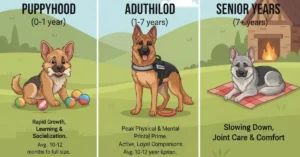
Understanding German Shepherd lifespan by life stage helps owners provide the right care at the right time. From long term experience with this breed, health outcomes improve when care evolves as the dog ages. Each stage brings unique physical and emotional needs that directly influence longevity.
|
Life Stage |
Age Range | Care Focus |
|
Puppy |
0–1 year | Controlled growth, training |
| Adult | 1–7 years |
Weight control, exercise |
| Senior | 7+ years |
Mobility, comfort, vet care |
German Shepherd puppy lifespan is shaped early through nutrition, training, and controlled growth. As dogs move into adulthood, maintaining balance becomes the priority. In later years, senior German Shepherd care focuses on comfort, mobility, and disease prevention.
Many lifespan related issues begin quietly during earlier stages. When owners recognize stage specific needs and respond proactively, they reduce long term risks. Adjusting diet, exercise, and veterinary care at each phase supports a smoother aging process. This life stage approach allows German Shepherds to remain active, confident, and healthy for as long as possible.
Signs Your German Shepherd Is Aging
Recognizing aging German Shepherd signs early helps owners adjust care before problems progress. Aging is a natural process, but it does not happen overnight. From years of experience with this breed, changes often appear gradually and are easy to miss.
|
Sign |
What It Indicates |
|
Reduced energy |
Normal aging |
|
Joint stiffness |
Arthritis risk |
| Behavioral changes |
Cognitive aging |
| Vision/hearing loss |
Sensory decline |
Senior German Shepherd symptoms usually involve both physical and behavioral shifts. Slower movement, longer rest periods, and reduced stamina are common early indicators. Subtle changes in appetite, sleep patterns, or responsiveness may also signal aging.
Paying attention to these signs allows owners to support comfort and health. Early adjustments in diet, exercise, and veterinary care reduce strain on the body. Aging does not mean decline in quality of life. With awareness and proper care, German Shepherds can remain content, confident, and engaged well into their senior years.