Hip Dysplasia in German Shepherd Puppies: Symptoms & Treatment

By HINDHUJA VAKADA

Updated On:

hip dysplasia in german shepherd puppies

Join WhatsApp

Join Now

Some German Shepherd pups face hip issues when the ball-and-socket joint doesn’t form right. Though changes start early, signs like stiffness or discomfort may take time to show. Fast growth in these dogs often hides problems until movement becomes harder. Without clear warning, damage might already be underway by the time anyone notices.

Most times, weak hips in dogs take weeks to show up, never just one reason behind them. Genes play a role, sure, yet fast size gains matter too – along with what they eat every day. How pups move around counts, especially if floors slide under their paws too easily. Tiny mismatches when bones grow might lead straight into trouble years later.

Spotting signs early makes a real difference. When pets start moving differently, paying attention matters more than waiting. Some pups face higher chances because of their size or breed, yet environment plays its part too. A vet visit at the right moment might slow how fast things change inside the joints. Care that fits the situation, given soon enough, often leads to steady progress. Even with shaky beginnings, plenty go on to live full lives without constant pain. Movement stays smoother when steps are taken before stiffness settles in. Owners who watch closely give their dogs a better shot at comfort later. Changes may be small at first – hesitation after rest, less jumping – but they add up. Helping early does not promise perfection, just fewer rough days ahead. Growing strong is possible even if hips do not form perfectly from the start.

This piece serves education alone instead of expert vet guidance. Speak with an approved animal doctor whenever checking or treating your pet.

Hip Dysplasia in German Shepherd Puppies Explained?

Most of the time, a puppy’s hips grow unevenly when it has hip dysplasia. Instead of sliding smoothly together, the femoral head and the acetabulum grind slightly off track in German Shepherds. As days pass, mismatched parts start tugging at surrounding tissues. One thing leads to stiffness, then subtle limping during play. Pressure builds where it should not, making movement feel rough instead of fluid.

Most new dog owners don’t realize hip dysplasia doesn’t happen overnight. Instead, it sneaks in slowly, usually starting while the pup is still growing. Even when a young dog runs around like nothing’s wrong, tiny shifts in the joints might already be underway. Because of this quiet start, knowing about the issue ahead of time makes a difference – long before any clear signs show up.

Most German Shepherds face higher health risks because of genes passed down through breeding. Still, DNA isn’t the only factor at work. How fast a puppy grows can shape joint development just as much as what it eats. Heavy young dogs often stress their forming bones more than lighter ones. Activity levels matter too – too much intense movement might disrupt normal hip growth. Outside conditions, like living space or climate, also quietly influence physical changes.

Most dogs move best if the ball fits right into the socket of the hip. If things sit slightly off, motion might feel rough instead of smooth. Little by little, rubbing in the wrong way eats at the cushioning tissue inside. Some notice changes fast; others take much longer to show any sign. Not every animal follows the same path when it comes to how fast symptoms appear.

Most times, a dog just seems off when getting up after lying down. Instead of bounding to its feet, it hesitates like something does not quite fit. Going upstairs turns into a slow event, each step careful, almost testing the ground. While playing, balance wobbles more than before, recovery takes longer. At first glance, these shifts appear minor – perhaps just puppy-like awkwardness. Yet they might signal hips not forming right. What looks like typical messiness could hide an underlying shift in joint function.

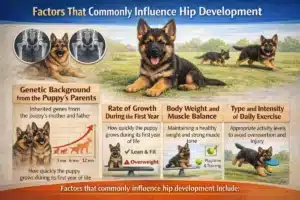
Factors that commonly influence hip development include:
Factors that commonly influence hip development

  • Genetic background from parent dogs
  • Rate of growth during the first year
  • Body weight and muscle balance
  • Type and intensity of daily exercise

Understanding this condition does not mean expecting problems, but rather being prepared. When owners recognize how hip dysplasia develops and what contributes to it, they are better equipped to make informed decisions about diet, activity levels, and veterinary checkups. This foundational awareness supports healthier growth and more confident long-term care for German Shepherds.

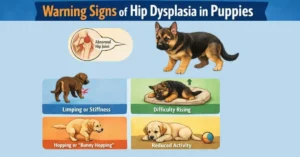
Warning Signs of Hip Dysplasia in Puppies

Hip dysplasia in puppies can be challenging to recognize early, as the signs are often mild and may come and go. Many young dogs remain playful and energetic, which can make subtle changes easy to overlook. For this reason, owners are encouraged to pay close attention to how their puppy moves, rests, and responds to everyday activities.
Warning Signs of Hip Dysplasia in Puppies


Hip Dysplasia in German Shepherd Puppies

Most times, a puppy’s hip problems come from genes mixed with life conditions, not just one cause. Seeing how pieces fit lets pet keepers act wisely while pups grow fast. Luck matters less when details are clear.

Most times, weak hips in dogs take weeks to show up, never just one reason behind them. Genes play a role, sure, yet fast size gains matter too, along with what they eat every day. How pups move around counts, especially if floors slide under their paws too easily. Tiny mismatches when bones grow might lead straight into trouble years later.

Spotting signs early makes a real difference. When pets start moving differently, paying attention matters more than waiting. Some pups face higher chances because of their size or breed, yet environment plays its part too. A vet visit at the right moment might slow how fast things change inside the joints. Care that fits the situation, given soon enough, often leads to steady progress. Even with shaky beginnings, plenty go on to live full lives without constant pain. Movement stays smoother when steps are taken before stiffness settles in. Owners who watch closely give their dogs a better shot at comfort later. Changes may be small at first, hesitation after rest, less jumping, but they add up. Helping early does not promise perfection, just fewer rough days ahead. Growing strong is possible even if hips do not form perfectly from the start.

This piece serves education alone instead of expert vet guidance. Speak with an approved animal doctor whenever checking or treating your pet.

Hip Dysplasia in German Shepherd Puppies Explained

Most of the time, a puppy’s hips grow unevenly when it has hip dysplasia. Instead of sliding smoothly together, the femoral head and the acetabulum grind slightly off track in German Shepherds. As days pass, mismatched parts start tugging at surrounding tissues. One thing leads to stiffness, then subtle limping during play. Pressure builds where it should not, making movement feel rough instead of fluid.

Most new dog owners don’t realize hip dysplasia doesn’t happen overnight. Instead, it sneaks in slowly, usually starting while the pup is still growing. Even when a young dog runs around like nothing’s wrong, tiny shifts in the joints might already be underway. Because of this quiet start, knowing about the issue ahead of time makes a difference, long before any clear signs show up.

Most German Shepherds face higher health risks because of genes passed down through breeding. Still, DNA isn’t the only factor at work. How fast a puppy grows can shape joint development just as much as what it eats. Heavy young dogs often stress their forming bones more than lighter ones. Activity levels matter too, too much intense movement might disrupt normal hip growth. Outside conditions, like living space or climate, also quietly influence physical changes.

Most dogs move best if the ball fits right into the socket of the hip. If things sit slightly off, motion might feel rough instead of smooth. Little by little, rubbing in the wrong way eats at the cushioning tissue inside. Some notice changes fast; others take much longer to show any sign. Not every animal follows the same path when it comes to how fast symptoms appear.

Signs Your Pet Needs Veterinary Care

Key signs to watch

• Persistent limping or stiffness
• Difficulty standing or walking
• Pain reactions when hips are touched
• Sudden decrease in activity
• Repeated gait changes over several days

A wobble during walks might catch your eye early on. Instead of moving smoothly, a young dog could stumble just a bit each time it steps forward. Before dashing ahead or leaping up, there’s sometimes a pause, small yet noticeable. What looks like normal puppy awkwardness might actually add up to something more persistent over days. When these little hiccups happen again and again, they point less toward playfulness and more toward growing ache in the joints.

Puppies dealing with young hip troubles often shift how they relax. One leg stretched out sideways becomes a common pose for some, just to ease discomfort. Lying flat might get skipped if it hurts too much. Getting up after rest can bring brief stiffness, then things loosen up. Movement returns slowly once they start walking.

Limping isn’t the only clue something might be off. When a pup who used to leap at toys now hesitates before moving, it could mean discomfort hides in motion. Quiet pullbacks from games aren’t always mood swings, sometimes they’re soft signals of strain. Subtle pauses between steps or shortened sprints may slip past notice, blending into what seems like normal tiredness.

Limping might show up first. Sometimes a child avoids running. One leg could seem shorter than the other. Sitting unevenly catches attention. Walking on toes happens now and then. A waddling motion appears during movement. Clicking noises come from the joint area. Uneven skin folds near the thighs stand out. Stiffness after rest becomes noticeable. Reduced range of motion limits play. Difficulty standing up from a sitting or lying position. A bunny hopping motion when running. Stairs seem tougher now, so going up them happens less often. Jumping feels like a thing of the past, rarely attempted these days. Occasional limping or uneven weight distribution. Back part moves side to side during movement. Touching the hips brings discomfort. Hips react strongly to pressure. Handling them feels unpleasant. Even light contact can be too much. The area stays alert to movement nearby. Pressure triggers a sharp response. Nearby shifts catch attention fast.

Some puppies show lopsided muscle growth in their back legs. The weaker side often seems softer, hinting at underuse instead of just how they’re built. As weeks pass, stance and movement might shift because of it.

Some days the puppy seems fine, yet right afterward it slows down without clear reason. Changes might follow rough play or sudden growth, catching owners off guard. Comfort today does not mean ease tomorrow. Because progress feels unpredictable, many wait before asking for help.

Diagnosing Hip Dysplasia

Most times, spotting hip issues in young German Shepherds takes more than just watching at home. Though shifts in how they walk might catch an owner’s eye, that alone won’t give clear answers. Only after checking body structure, past health records, together with X rays can real clarity emerge. What seems off at first glance usually needs expert tools to truly understand.

A vet begins by watching a young dog move, walking, standing, sitting. How it carries itself reveals hints about joint health through balance and step rhythm. Instead of relying on tools at first, hands test the hips lightly, feeling for stiffness or shifting inside the joint. Even when no pain shows, loose joints might already exist in very young pups.

Most vets rely on scans to confirm issues. How bones sit inside the joint shows up clearly on X ray images. Even though young dogs change fast, each result gets weighed against their current growth phase. Instead of jumping into treatment, small shifts might just need watching now and then. The fit between ball and socket matters a lot when judging severity.

Puppies showing lasting signs or facing greater risks might need checkups later on, depending on how they develop. As time passes, hips can shift in structure, watching these shifts matters for managing health well. Spotting issues early doesn’t guarantee serious problems down the road. Still, knowing helps shape smarter choices when growth is most fragile.

Most pet parents skip trying to spot hip issues themselves. Though noticing signs early helps, vets alone confirm if joints are changing, then decide what comes next. Quick vet visits mean each pup gets support tailored to how they grow, never guesses from looks. What matters shows up in checkups, not opinions.

Hip Dysplasia Causes in Puppies

Most times, a puppy’s hip problems come from genes mixed with life conditions, not just one cause. Seeing how pieces fit lets pet keepers act wisely while pups grow fast. Luck matters less when details are clear.

Genetic Influence

Most of the time, hip growth ties back to genes. When parent dogs have weak hips, their pups might get similar features shaping their joints. Not every youngster ends up with issues, yet chances rise under these conditions. Breeders who pay attention try to lower those odds, still, DNA isn’t the only force at work.

Rapid Growth and Body Development

Fast bone development defines a young pup’s early months. Though skeletons shoot upward, soft tissues sometimes trail behind, creating shaky support at joints. Big dogs like German Shepherds feel this mismatch more sharply than others. Extra pounds while growing pile added pressure onto forming hip structures.

Exercise and Physical Activity

Little bodies need motion, yet what kind makes a difference. When bones are still forming, pounding routines might tax tender joints. Leaping often, sprinting on concrete, or tumbling during sudden height gains could irritate connecting points. Movement shaped by stage builds power in muscles while sparing the hip joints.

Environmental Factors

Puppies grow into their bodies each day, shaped by where they walk and play. When floors are slick, tiny stumbles happen again and again, twisting little hips without warning. Without grip underfoot, every step adds quiet pressure to developing joints. Solid ground beneath them, along with room just right for safe exploring, helps keep strain away.

Nutrition and Feeding

Most of the time, what goes into the bowl matters just as much as how much. Feeding too much, or loading up on calorie dense food meant to push fast gains, can nudge bones to grow quicker by accident. Meals built for big pups keep things even, helping joints along without rushing milestones.

Most of the time, weak hips aren’t caused by one sudden error or brief accident. Things pile up slowly, layer after layer, until problems show. When genes mix with how fast a pup grows, what it does each day, and where it lives, the outcome shapes joint strength. Spotting these links helps caretakers choose daily routines that ease strain. Better motion early on often means easier years ahead.

Hip Dysplasia Care for Young Dogs

Puppies with hip dysplasia need care shaped by their own situation. Depending on how old they are, how much the joints have changed, how active they get, plus general condition, paths differ widely. Most vets start slow, watching closely before stepping up if needed as months pass.

Most young dogs start with treatment that doesn’t involve surgery. Instead of cutting, the goal is to help joints grow right while limiting stress. Movement often feels better when changes are made at home, but only if a vet guides them. Even pups showing slight symptoms can do okay without going under the knife.

Most times, pups do better with calm daily routines instead of wild running around. Rather than leaping over obstacles again and again, gentle motion helps build strength while protecting tender hip areas. Staying at a good weight matters just as much, since extra pounds tug harder on growing bones. A lean frame eases strain during early growth stages.

Most pups get extra help through treatments picked by vets, depending on what each one needs. As time passes and the young dog grows, those choices might shift slowly. Check ins happen often so changes fit just right if things move slower or faster than expected.

When joints stay unstable or pain continues even with standard treatments, doctors might talk about surgery. Not every path leads here, imaging tests plus a full checkup come first. Fixing how the joint works sits at the center, along with easing pain and keeping movement possible over time.

Most operations differ based on how old the puppy is plus what phase their growth has reached. For pups with soft, growing bones, certain fixes fit better early on, whereas some choices show up only after joints shift over time. Before deciding anything, a vet, or one focused on bone health, will go over what might help, what won’t work, and how healing plays out. Each option walks its own path depending on timing and body changes.

Even when picking a route, staying under vet care matters most. Fast growth in young dogs means today’s fix might not fit tomorrow. Watching how they move helps owners contribute, sticking to expert tips while keeping talks going with the animal doctor.

Most times, fixing hip issues isn’t quick. Instead, it takes steady effort over years to keep life smooth. Spotting problems early helps shape smarter choices down the road. Care that sticks around makes a difference later. Growing pups often stay lively, at ease, if support stays reliable. Attention to how hips form guides better outcomes. Long runs, play, comfort, these stick around when steps are thoughtful.

Stopping Hip Issues in German Shepherds

Besides good care, raising a German Shepherd pup means accepting some things are out of your hands. Though nothing wipes out the chance entirely, choices made early shape how hips form over time. Instead of chasing perfection, focusing on what can be influenced makes more sense. A little effort at the right moments eases stress on developing joints, and simple actions add up more than expected.

Breeding and Early Foundation

Breeding with care begins the journey. Good breeders look at hips first, picking only those dogs proven healthy through real tests. Results still aren’t certain, yet strong bones in parents make problems less likely. Buyers gain when they ask clear questions and choose breeders who openly share health checks.

Growth, Feeding, and Development

Puppies need consistent attention right after they arrive. Because their bodies change fast, slow and steady growth matters most early on. Instead of piling on pounds, keeping weight gain gradual reduces long-term strain. Meals designed for large breeds work better when guided by a vet.

Little bodies grow best when movement feels natural, not forced. Joints still forming handle gentle motion better than repeated heavy impact. Instead of intense drills, short play sessions build coordination safely. Muscle strength improves when activity matches readiness, protecting joints quietly through balance and timing.

Home Environment and Movement Safety

Poor footing at home can become a hidden issue. Slippery floors lead to small stumbles that slowly affect joint alignment over time. Safe, stable walking surfaces reduce risk, especially while balance skills are still developing.

Practical Prevention Steps

• Choosing breeders who prioritize hip health screening
• Maintaining steady growth instead of rapid weight gain
• Providing low-impact, controlled exercise during puppyhood
• Ensuring stable, non-slip flooring and safe play areas
• Scheduling regular veterinary checkups during growth stages

Watching closely at the beginning helps avoid larger issues later. Regular vet visits allow small changes in movement or posture to be noticed early. It is not about expecting problems, but about tracking development responsibly.

Prevention works best as a continuous effort rather than a single step. When responsible breeding, daily care, proper exercise, and veterinary guidance come together, the environment becomes more supportive for healthy joints. While no approach removes risk completely, these habits help promote smoother movement, less discomfort, and steadier long-term health as the German Shepherd grows.

FAQs

1. When do puppy hip problems start showing up?

Changes in the hip joint can begin very early, even in the first weeks of life. Signs are often subtle at first and become clearer over time as movement patterns develop.

2. Can puppies look normal even if hip issues are developing?

Yes, many young dogs appear completely fine while early joint changes are already present. Small stiffness after rest or slight movement differences may be the first clues, even before limping appears. X rays are often needed for confirmation.

3. Do larger puppies face more joint issues?

Larger, fast-growing puppies can place more pressure on developing joints. Growth speed, body weight, and coordination all influence how hips form during early development.

4. Can exercise affect a puppy’s hips?

Balanced activity supports muscle growth, but high-impact or repetitive strain during early growth can stress developing joints. Controlled, age-appropriate movement is safer.

5. Does flooring at home matter?

Yes, slippery surfaces can cause repeated small slips that affect joint alignment over time. Stable, non-slip flooring helps support healthier movement patterns.

6. Is hip dysplasia always inherited?

No, genetics increase risk but do not guarantee it. Diet, growth rate, exercise, and environment all influence how likely it is to develop.

7. When should a vet be consulted?

Any repeated stiffness, limping, or unusual movement should be checked early. Even small changes are worth discussing with a veterinarian.

8. Can dogs still live active lives with hip concerns?

Many dogs continue active lives with proper care. Adjusted exercise, weight control, and veterinary guidance help maintain comfort and mobility.

Conclusion

Raising a German Shepherd pup always means balancing excitement with awareness. Joint health plays a bigger role than it first appears. Small changes noticed early often matter more than major corrections later. Genetics contribute, but daily routines shape outcomes just as strongly. Steady, consistent care often works better than reactive decisions.

Working with a vet from the beginning helps guide safe choices. A calm home environment builds trust and stability. Feeding and exercise routines work best when matched to the puppy’s natural pace instead of being forced. Observing small changes early does not mean expecting problems, it simply helps avoid surprises. With time, consistent attention supports stronger movement, better comfort, and healthier development overall.

HINDHUJA VAKADA

Written by Hindujha Vakada, Sr. SEO Specialist at Market Data Forecast, with expertise in creating research driven digital content. She has a strong passion for dogs and actively researches dog nutrition, training, behavior, and overall pet wellness. Dedicated to providing informative and trustworthy content that supports responsible dog care and better pet parenting.

🔴Related Post

Leave a Comment