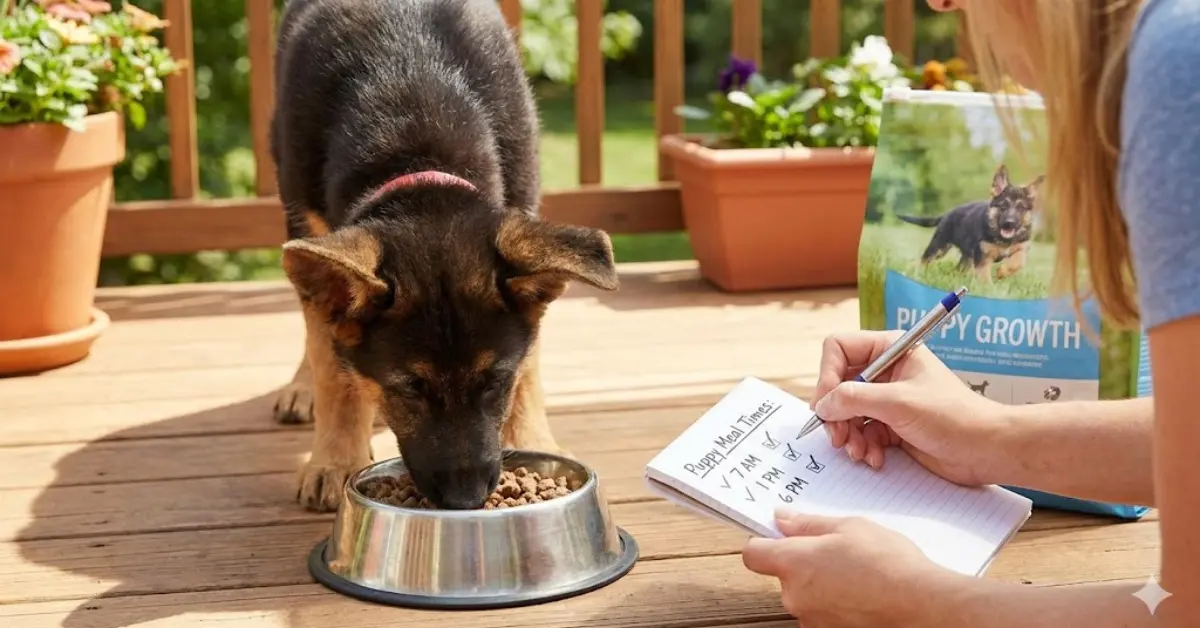
Most German Shepherd puppies need 3 to 4 meals per day, while adult German Shepherds typically do best with 2 meals daily. Senior dogs usually continue eating twice a day, although portion sizes and nutritional needs may change with age.
A consistent German Shepherd feeding schedule supports healthy growth, stable energy levels, proper digestion, and weight management. Meal frequency should be adjusted based on your dog’s age, activity level, health condition, and the type of food being fed.
In this guide, you’ll learn the ideal German Shepherd feeding schedule by age, recommended meal frequencies, portion guidelines, common feeding mistakes to avoid, and tips for maintaining a healthy weight throughout every life stage.
How Many Times a Day Should a German Shepherd Eat?
German Shepherd puppies typically need 3 to 4 meals per day, while adult German Shepherds do best with 2 meals daily. Senior dogs usually continue eating twice a day, although portion sizes and calorie requirements may change with age. The ideal feeding schedule depends on your dog’s age, activity level, health, and nutritional needs.
Feeding your German Shepherd on a consistent schedule supports healthy digestion, stable energy levels, weight management, and proper growth. Most veterinarians recommend avoiding irregular feeding patterns and adjusting meal frequency as your dog moves through different life stages.
German Shepherd Feeding Schedule
| Age | Meals Per Day |
|---|---|
| 8 to 12 Weeks | 4 Meals |
| 3 to 6 Months | 3 Meals |
| 6 to 12 Months | 2 to 3 Meals |
| 1 to 7 Years | 2 Meals |
| 7+ Years | 2 Meals |
German Shepherd Feeding Times Based on Age
Puppies need meals more often when young – this shifts as they grow. Their bodies change fast at first, then slow down over time. What fits in a small belly today won’t tomorrow. Energy needs shrink once growth slows. Age reshapes how much food matters.
Eight to Twelve Weeks Old
Puppies shoot up in size right now. Even though their bellies don’t hold much, they burn through fuel fast.
How many meals a day for a German Shepherd puppy at this age?
- Four small meals daily
Skipping long gaps between meals helps avoid energy crashes while keeping development on track. A puppy food made for big dogs should meet AAFCO standards to ensure nutrients stay in balance.
3 to 6 Months Old
Out of nowhere, legs start stretching fast. Little ones gain inches quickly while muscles slowly show up.
Feeding frequency for a German Shepherd puppy?
- Breakfast comes first
- Then lunch shows up later
- Dinner finishes things off
Start easing into three meals a day by week twelve. Watch how your pet looks and feels each day. You ought to feel ribs without seeing them clearly. Change happens slowly over those few weeks.
Six To Twelve Months Old
Slowing growth sticks around while progress keeps moving. Still, changes happen even when expansion fades.
Most dogs do well on:
- Every day, eat two or three times
- Sometimes it might be just two
- Other days, go ahead with three
Puppies often shift toward eating twice daily between 9 and 12 months – timing shaped by how big they get, how fast they grow. Some wait until closer to a year if development runs slower. Others move earlier when growth surges ahead.
Adults 1 to 7 Years
Most grown-ups who feel fine usually have meals like these
- Breakfast plus lunch make up the daily food routine
- Each morning begins with a meal, followed later by another
Most dogs do fine with food twice a day. Breaking it into portions eases pressure on the gut while possibly cutting down on that dangerous bloating issue known as GDV.
Older Adults Aged Seven and Above
Pacing dinner and breakfast helps certain senior pups keep steady throughout the day. Meals broken into lighter amounts can ease how their body handles food.
German Shepherd Feeding Chart
Below is a simplified comparison table. Individual calorie needs vary based on weight, activity level, and food formulation. Always consult your veterinarian for exact portion sizes.
|
Age Range |
Meals Per Day | Primary Focus | Notes |
|
8–12 weeks |
4 | Controlled growth | Small frequent meals |
| 3–6 months | 3 | Muscle development |
Monitor weight closely |
| 6–12 months |
2–3 |
Gradual maturity | Transition to adult formula near 12 months |
| 1–7 years | 2 | Maintenance |
Avoid overfeeding |
| 7+ years | 2 | Joint and weight support |
Consider senior diet |
This table serves as a general German Shepherd feeding chart rather than a strict rulebook.
Portion Sizes Based on Weight
How often you feed ties to frequency. What amount matters just as much though – portion size handles that part. Each holds equal weight.
Some German Shepherds are small, others much larger. Female dogs usually tip the scale at 50 to 70 pounds, but males? They might hit 65 up to 90 – or even go beyond. How active a dog is changes how much it needs each day.
Puppies need less food than adults do when measured by weight. One cup might fuel two small dogs but only half of a large one. Energy in kibble changes between brands often. Bigger animals usually eat more, yet metabolism differs even among litter mates. Always check the label before filling the bowl.
Daily Portion Guidelines by Weight
- A weight range of 50 to 60 pounds usually means about two up to three cups daily
- Most dogs weighing between sixty and seventy five pounds eat about three to three point five cups daily
- Between seventy five and ninety pounds usually means around three point five up to four point five cups daily
- Some days it might be a bit less, others closer to the higher end
- Highly active working dogs: may require more based on energy expenditure
Portion size can shift slightly with age too. What matters most is how the dog responds over time
Meal Splitting for Adults
Split each of these amounts in half when serving grown-ups at mealtime. One portion goes here, another there – simple like that.
Adjusting Portions for Puppies
Puppies grow fast, so their meals need shifting often. Every few weeks at first, change how much a German Shepherd pup eats. Food made for big pups tends to come with charts – these use age plus expected grown-up size. Stick close to that plan instead of making it up.
Importance of Food Labels
One brand’s idea of “3 cups” might pack way more energy than another’s version. Before choosing how much to eat, look at the calorie count listed per cup. Labels tell you what you’re really getting.
When Feeding Behavior Seems Off
Should your dog skip meals now and then yet act starved later, think about portion size before adding more mealtimes. Sometimes it’s not hunger driving the behavior – just timing or boredom nudging at bowl scraps.
Calorie Guidance Explanation
Energy in food shapes how much you eat, not just space on a plate. One cup of broccoli packs far less fuel than one cup of rice. Size alone won’t tell the full story behind intake.
Calorie Needs by Life Stage
Puppies
Puppies need extra fuel for building bones, muscles, organs – each pound of their small bodies burns more than grown dogs do. Still, big pups should gain size at a steady pace, never too fast. Too much food can overload young joints, making them work harder than they should.
Puppies built big need food that slows things down. Because growing too fast? That can mess with their joints – hips especially go sideways. A special diet keeps bones forming at a safer pace. Jumping ahead often backfires when skeletons aren’t ready.
Adults
Pacing through a day shapes how much fuel a grown German Shepherd uses. When one patrols streets or races obstacles, hunger for energy grows sharp compared to another lounging on carpet in tight city quarters. Cold air bites too – it nudges up the fire inside just to stay warm. Heat slips away faster when wind cuts across bare yards.
Seniors
Older dogs often need less food because their bodies burn energy more slowly. Eating too much now can lead to extra pounds, which adds pressure on joints like hips and elbows.
What to Evaluate Instead of Just Cups
Rather than focusing only on “cups per day,” evaluate:
- Each cup’s calorie count shows right there on the package
- Your dog’s activity level
- Body condition
- Veterinary guidance during annual exams
Figuring out how concentrated calories are helps pet owners feed their animals more accurately. Mistakes like giving too much food happen less often because of this awareness.
German Shepherd Puppy Feeding Compared to Adult
The nutritional difference between puppies and adults extends beyond frequency.
Puppies Need
- Higher protein and fat for growth
- Controlled calcium and phosphorus levels
- Multiple small meals
- Strict weight monitoring
Adults Need
- Balanced protein for muscle maintenance
- Controlled calories to prevent obesity
- Consistent meal timing
- Portion control
Key Feeding Differences
The feeding guidelines for German Shepherd puppies vs adults reflect differences in metabolism and skeletal development.
- Two meals daily suit most adults
Once a day meals suit some pet keepers just fine. Yet German Shepherds usually do better another way.
- Breakfast plus dinner available daily
- Better digestion
- More stable energy
- Reduced hunger related anxiety
- Lower stomach distension per feeding
Puppies of big dogs often do better when meals are spread out. One meal a day might fuel restlessness, also it could strain digestion over time.
German Shepherd Feeding Frequency by Activity
A household pet paces through days with little effort. Yet on patrol, a police dog races, climbs, stays alert for hours without pause.
When to Adjust Feeding
Adjust feeding frequency and portion size if your dog:
- Participates in agility or protection sports
- Works in law enforcement or service roles
- Runs long distances daily
Timing Meals Around Activity
Pacing your dog’s food around workouts matters more than you might think.
- A lighter portion before moving helps prevent discomfort later
- After running or playing, wait – give them space to settle first
- One full hour without heavy action keeps things safe
- Then offer the bigger meal they’ve earned
Common Feeding Mistakes Owners Make
Even experienced owners slip into habits that affect health.
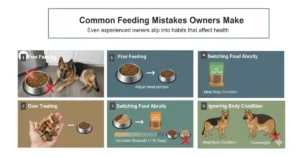
1. Free Feeding
Leaving food available all day encourages overeating. German Shepherds tend to eat what is placed in front of them.
2. Over Treating
Training rewards add up quickly. Adjust meal portions accordingly.
3. Switching Food Abruptly
Sudden dietary changes can upset digestion. Transition gradually over seven to ten days.
4. Ignoring Body Condition
The scale matters less than body composition. You should feel ribs easily without pressing hard.