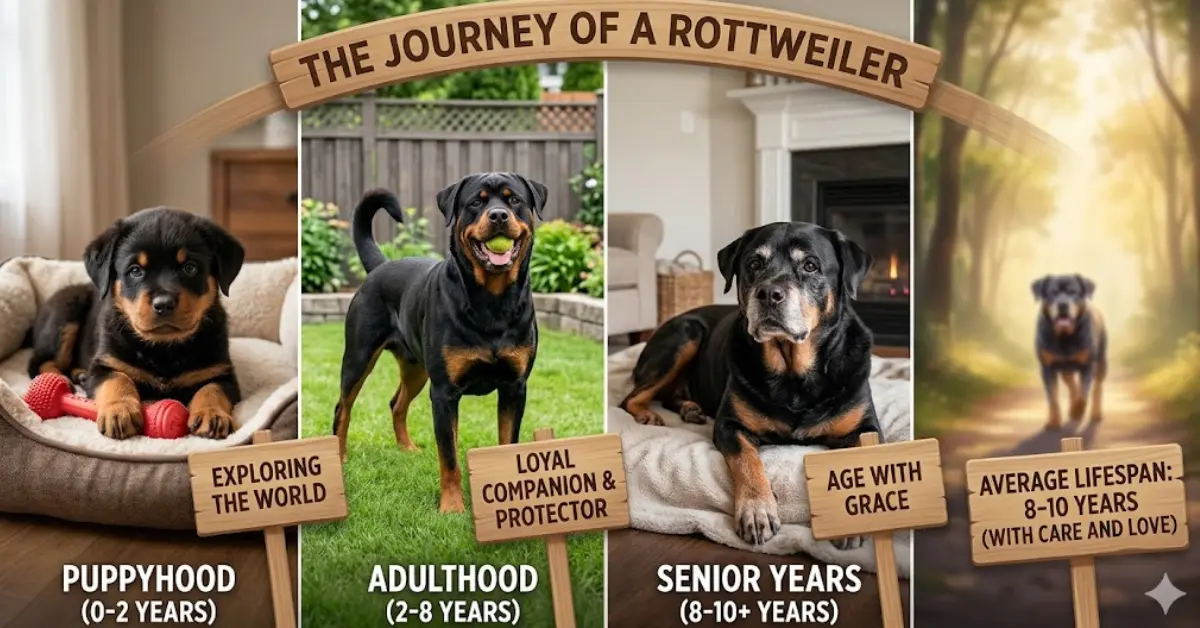
The average Rottweiler lifespan is typically between 8 and 10 years. However, some Rottweilers live beyond 10 years when they receive proper nutrition, regular exercise, preventive veterinary care, and responsible breeding. Genetics, body weight, lifestyle, and overall health play major roles in determining Rottweiler life expectancy. While this breed is known for strength, loyalty, and confidence, certain health conditions such as hip dysplasia, heart disease, and cancer can affect longevity. Understanding the lifespan of a Rottweiler and the factors that influence it can help owners support a longer, healthier life.
Rottweilers are among the most recognizable dog breeds in the world. Their powerful build, unwavering loyalty, and protective nature make them beloved companions for families, working professionals, and dog enthusiasts alike.
One question nearly every prospective owner asks is: how long do Rottweilers live?
The answer is not as simple as a number on a chart. While the average Rottweiler lifespan falls between 8 and 10 years, many factors influence how long an individual dog may live. Genetics, exercise, weight management, preventive healthcare, and even daily routines all contribute to longevity.
Understanding what affects a Rottweiler’s lifespan can help owners make informed decisions from puppyhood through the senior years. This guide explores Rottweiler life expectancy, growth stages, common health concerns, lifestyle factors, and practical ways to help your dog enjoy the healthiest life possible.
Understanding the Average Rottweiler Lifespan
The average Rottweiler lifespan is shorter than that of many medium sized breeds but relatively typical for a large, powerful dog.
|
Breed |
Average Lifespan |
|
Rottweiler |
8 to 10 years |
|
Labrador Retriever |
10 to 12 years |
| German Shepherd |
9 to 13 years |
| Boxer |
10 to 12 years |
| Golden Retriever |
10 to 12 years |
Large breeds generally age faster than smaller dogs. Scientists continue to study why larger dogs tend to have shorter lifespans, but growth rate, body size, and increased stress on joints and organs appear to play important roles.
Although the Rottweiler average age often falls within the 8 to 10 year range, some dogs live well into their early teens with excellent care and favorable genetics.
What Is the Typical Rottweiler Life Expectancy?
Rottweiler life expectancy depends on multiple interconnected factors.
Some dogs may develop serious health conditions early in life, while others remain active and healthy for many years. This variation explains why lifespan estimates are averages rather than guarantees.
Key influences include:
- Genetic background
- Breeding quality
- Body condition
- Exercise habits
- Nutrition
- Preventive healthcare
- Environmental factors
- Stress levels
Responsible breeders who prioritize health testing often help reduce the risk of inherited conditions that may shorten lifespan.
Rottweiler Lifespan by Life Stage: From Puppy to Senior
|
Life Stage |
Age Range |
|
Puppy |
0 to 12 months |
|
Young Adult |
1 to 3 years |
| Adult |
3 to 7 years |
| Senior |
7 to 10 years |
| Geriatric |
10+ years |
What Is the Longest a Rottweiler Can Live?
Many prospective owners ask, “How long can a Rottweiler live?” While the average Rottweiler lifespan is typically between 8 and 10 years, some individuals live significantly longer.
Healthy Rottweilers occasionally reach 12 to 13 years of age, particularly when they come from strong genetic lines and receive consistent veterinary care throughout life. Although less common, there have been reports of exceptional Rottweilers living beyond 13 years.
It is important to understand that these longer lifespans are not the norm. Large breeds generally age more quickly than smaller dogs, which is one reason the average Rottweiler age tends to be lower than that of many small companion breeds.
Several factors influence whether a Rottweiler reaches or exceeds the breed’s average life expectancy. Genetics play a major role, but lifestyle choices are equally important. Maintaining a healthy body weight, providing regular exercise, feeding a balanced diet, and addressing health concerns early can all contribute to better long term outcomes.
For owners wondering whether a Rottweiler can live 15 years, the answer is that it is possible but extremely uncommon. Most Rottweilers will not reach that age, but focusing on preventive care and overall wellness can help maximize both lifespan and quality of life.
Rather than concentrating solely on the number of years, owners should aim to provide a healthy, active, and comfortable life at every stage of their dog’s journey.
Do Female Rottweilers Live Longer Than Males?
Many owners wonder whether female Rottweilers live longer than males. While some studies across dog breeds have suggested slight lifespan differences between sexes, the gap is generally small and should not be viewed as a guarantee.
In most cases, individual health factors have a much greater impact on Rottweiler life expectancy than gender alone. Genetics, nutrition, exercise habits, body weight, preventive healthcare, and overall lifestyle typically play larger roles in determining how long a Rottweiler lives.
Male Rottweilers are usually larger and heavier than females, which may place additional stress on joints and the skeletal system over time. However, maintaining a healthy weight and providing appropriate exercise can help support long term mobility and overall health in both sexes.
Owners should also be aware that reproductive health decisions may influence certain health risks. Spaying and neutering can affect hormone levels and may be associated with benefits and risks that vary depending on the individual dog. Because every Rottweiler has unique health needs, decisions regarding spaying or neutering should always be made in consultation with a veterinarian.
Ultimately, whether a Rottweiler is male or female, the factors that matter most are responsible breeding, regular veterinary care, proper nutrition, weight management, and consistent physical activity. These elements have a far greater influence on lifespan than gender alone.
Factors That Affect the Lifespan of a Rottweiler
Genetics and Breeding
Genetics provide the foundation for a dog’s long term health.
Reputable breeders typically screen breeding dogs for conditions commonly seen in the breed. Health testing helps reduce the likelihood of passing inherited diseases to future generations.
Poor breeding practices can increase the risk of orthopedic issues, heart conditions, and other genetic disorders that may affect lifespan.
Nutrition
Diet has a direct impact on health and longevity.
A balanced diet supports:
- Healthy weight maintenance
- Strong muscles
- Joint health
- Immune function
- Heart health
Overfeeding can lead to obesity, which increases stress on joints and organs.
Exercise and Physical Activity
Meeting Rottweiler exercise needs is essential throughout life.
These dogs thrive on structured activity, including:
- Daily walks
- Obedience training
- Hiking
- Controlled play sessions
- Mental enrichment games
Insufficient exercise can contribute to obesity and behavioral issues.
Veterinary Care
Routine veterinary visits allow early detection of health problems before they become severe.
Preventive care often includes:
- Vaccinations
- Parasite prevention
- Dental care
- Wellness exams
- Blood testing in senior dogs
Early intervention frequently improves outcomes.
According to the American Veterinary Medical Association (AVMA), regular wellness examinations play an important role in identifying health concerns before they become serious. Routine veterinary visits allow for early detection of age related conditions, helping owners make informed decisions that support a longer and healthier life.
Rottweiler Growth Stages and Aging Timeline
Understanding Rottweiler growth stages helps owners provide age appropriate care.
Puppy Stage (0 to 12 Months)
Rottweiler puppies experience rapid physical development.
During this period:
- Bones grow quickly
- Muscles develop
- Socialization is critical
- Training foundations are established
Proper nutrition is especially important because excessive growth can increase stress on developing joints.
Young Adult Stage (1 to 3 Years)
This stage marks full physical maturity.
Most Rottweilers:
- Reach adult size
- Develop stronger muscles
- Display increased confidence
- Require consistent training
Energy levels are often at their highest.
Adult Stage (3 to 7 Years)
This is typically the prime of life.
Healthy adult Rottweilers often maintain:
- Strong physical condition
- Stable temperament
- Consistent energy levels
Preventive healthcare remains important.
Senior Stage (7+ Years)
Many veterinarians consider large breed dogs seniors around seven years of age.
Owners may notice:
- Reduced stamina
- Slower movement
- Increased sleeping
- Joint stiffness
Regular wellness screenings become increasingly valuable during this stage.
Signs Your Rottweiler Is Getting Older
As Rottweilers enter their senior years, owners may begin noticing gradual changes in appearance, behavior, and physical abilities. While aging affects every dog differently, recognizing these signs early can help you provide the support and veterinary care your companion needs.
One of the most noticeable signs of aging is graying around the muzzle and face. Many Rottweilers begin developing gray hairs as they approach their senior years, although the timing varies between individuals.
Reduced stamina is another common change. Activities that once seemed effortless, such as long walks, hikes, or energetic play sessions, may become more tiring. Senior dogs often prefer shorter periods of exercise followed by longer rest breaks.
Increased sleeping is also normal as dogs age. Older Rottweilers may spend more time resting during the day and may appear less interested in constant activity.
Joint stiffness can become more noticeable, particularly after sleeping or during cold weather. Conditions such as arthritis and hip dysplasia in Rottweilers may contribute to slower movement and discomfort.
Weight changes can occur as metabolism slows. Some dogs gain weight due to reduced activity levels, while others may lose weight because of underlying health concerns.
Owners may also observe reduced hearing or vision. Difficulty responding to commands, increased startling, or hesitation in unfamiliar environments can indicate age related sensory decline.
Behavioral changes are another important sign of aging. Some senior Rottweilers become more independent, while others seek additional comfort and companionship. Any sudden or significant changes in behavior should be discussed with a veterinarian to rule out underlying medical conditions.
Rottweiler Weight Chart
Body weight significantly influences longevity.
The following chart provides general weight guidelines.
| Age | Male Weight | Female Weight |
| 3 Months | 30 to 40 lbs | 25 to 35 lbs |
| 6 Months | 60 to 75 lbs | 50 to 65 lbs |
| 12 Months | 85 to 110 lbs | 75 to 95 lbs |
| Adult | 95 to 135 lbs | 80 to 100 lbs |
Why Weight Matters for Longevity
Maintaining a healthy weight is one of the most important factors influencing Rottweiler life expectancy. While genetics and preventive healthcare play significant roles, excess body weight can place unnecessary strain on a dog’s entire body and increase the risk of several health problems.
Overweight Rottweilers often experience increased joint stress, particularly in the hips, elbows, and knees. Because the breed is already predisposed to orthopedic conditions such as hip dysplasia in Rottweilers, carrying excess weight can worsen mobility issues and accelerate joint wear over time.
Reduced mobility is another common consequence of obesity. Dogs that struggle with movement may become less active, creating a cycle of weight gain and decreased fitness. This can affect muscle strength, cardiovascular health, and overall quality of life.
Excess weight may also increase the risk of metabolic diseases and other chronic health conditions. Maintaining a healthy body condition helps support normal organ function and can reduce strain on the heart and respiratory system.
Rather than focusing solely on the number shown on a scale, owners should work with their veterinarian to monitor body condition, muscle mass, and overall health. A lean, well conditioned Rottweiler is often better equipped to stay active, comfortable, and healthy throughout every stage of life.
Individual dogs may vary.
Maintaining a healthy body condition is often more important than hitting a specific number on a Rottweiler weight chart.
Common Rottweiler Health Problems That Affect Lifespan
Several health conditions can influence Rottweiler age expectancy.
Hip Dysplasia in Rottweilers
Hip dysplasia in Rottweilers is one of the most well known orthopedic concerns.
This condition occurs when the hip joint develops abnormally.
Potential symptoms include:
- Limping
- Difficulty standing
- Reduced activity
- Pain during movement
Weight management and responsible breeding play important roles in reducing risk.
Elbow Dysplasia
Like hip dysplasia, elbow dysplasia affects joint function and mobility.
Affected dogs may develop arthritis over time.
Heart Disease
Certain heart conditions occur more frequently in large breeds.
Regular veterinary examinations can help identify cardiac concerns early.
Osteosarcoma
Osteosarcoma is an aggressive bone cancer seen more commonly in large and giant breed dogs.
Early diagnosis remains important for treatment planning.
Cancer Risk in Rottweilers
Cancer is among the leading health concerns affecting large breed dogs and is one of the most significant factors that can influence Rottweiler life expectancy. While not every Rottweiler will develop cancer, owners should be aware of the increased risks associated with the breed.
One of the most commonly discussed cancers in Rottweilers is osteosarcoma, an aggressive form of bone cancer that typically affects the limbs. Early signs may include limping, swelling, pain, or reluctance to bear weight on a leg. Because the disease can progress quickly, prompt veterinary evaluation is important whenever unexplained lameness occurs.
Lymphoma is another cancer seen in dogs, including Rottweilers. This cancer affects the lymphatic system and may cause enlarged lymph nodes, lethargy, decreased appetite, and weight loss. Early diagnosis can improve treatment options and quality of life.
Hemangiosarcoma is a cancer that develops in blood vessel cells and often affects organs such as the spleen, liver, or heart. One challenge with hemangiosarcoma is that it can remain undetected until serious internal bleeding occurs, making regular veterinary examinations especially valuable for aging dogs.
Although genetics can influence cancer risk, maintaining a healthy body weight, providing balanced nutrition, and scheduling routine wellness exams may help support overall health. Early detection remains one of the most important factors in managing many forms of canine cancer and improving long term outcomes.
Obesity
Obesity is one of the most preventable health threats affecting lifespan.
Excess weight contributes to:
- Joint strain
- Reduced mobility
- Cardiovascular stress
- Metabolic problems
Keeping dogs lean often supports healthier aging.
The Connection Between Weight and Longevity
Research across multiple dog breeds consistently suggests that maintaining a healthy weight supports longer life.
Extra pounds may seem harmless, especially when your Rottweiler gives you that irresistible “one more treat” look.
However, chronic excess weight places continuous strain on:
- Joints
- Heart
- Lungs
- Ligaments
- Internal organs
Owners who monitor calorie intake and maintain appropriate activity levels often help their dogs avoid obesity related complications.
How Exercise Supports a Longer Life
Proper exercise contributes to both physical and mental health.
Meeting Rottweiler exercise needs does not require endless hours of activity. Instead, consistency matters most.
A balanced routine may include:
Daily Walks
Regular walks promote cardiovascular health and weight control.
Mental Stimulation
Puzzle toys, scent games, and obedience work challenge the brain.
Strength Building Activities
Controlled hiking and structured play help maintain muscle mass.
Social Experiences
Positive interactions with people and environments improve confidence and reduce stress.
Remember that exercise requirements often decrease as dogs age.
Common Myths About Rottweiler Lifespan
Many misconceptions surround this breed.
Myth 1: All Rottweilers Only Live Eight Years
While some dogs may pass away earlier due to illness, many live beyond ten years with excellent care.
Myth 2: Large Dogs Cannot Reach Senior Age
Numerous Rottweilers enjoy active lives well into their senior years.
Myth 3: Genetics Are the Only Thing That Matters
Genetics are important, but nutrition, exercise, weight management, and preventive healthcare also influence lifespan.
Myth 4: Joint Problems Are Inevitable
Not every Rottweiler develops hip dysplasia or severe arthritis.
Responsible breeding and proper care can reduce risk.
Myth 5: Older Rottweilers Should Stop Exercising
Senior dogs still need physical activity. Exercise should simply be adjusted to their abilities.
Protective Behavior and Lifespan: When Does It Become Problematic?
Rottweilers are naturally protective.
This trait is one reason many owners appreciate the breed. However, protective instincts can become problematic when they develop into chronic stress, anxiety, or aggression.
Warning signs include:
- Constant vigilance
- Excessive barking
- Resource guarding
- Difficulty relaxing
- Aggressive reactions toward visitors
Chronic stress may negatively affect overall wellbeing over time.
Proper socialization during puppyhood helps teach dogs how to distinguish normal situations from genuine threats.
Training should focus on confidence rather than suspicion.
A well socialized Rottweiler remains protective when necessary while also being calm, stable, and manageable in everyday situations.
How to Help Your Rottweiler Live Longer
Owners cannot control every aspect of health, but several strategies may improve quality of life and longevity.
Choose a Responsible Breeder
Health testing remains one of the best ways to reduce inherited disease risks.
Feed a Balanced Diet
Provide complete and balanced nutrition appropriate for age and activity level.
Maintain a Healthy Weight
Avoid overfeeding and monitor body condition regularly.
Schedule Routine Veterinary Visits
Preventive care allows early detection of developing health issues.
Prioritize Dental Health
Dental disease can affect overall health if left untreated.
Provide Mental Enrichment
A bored Rottweiler often becomes stressed or destructive.
Keep Exercise Consistent
Regular activity supports cardiovascular health and mobility.
Monitor Senior Dogs Closely
Changes in appetite, mobility, or behavior should always be discussed with a veterinarian.
How to Increase Your Rottweiler’s Lifespan
While no owner can control every aspect of a dog’s longevity, several proven habits can help support a longer and healthier life. If you are wondering how to improve your Rottweiler’s life expectancy, focus on these essential practices:
1. Maintain an Ideal Weight
Keeping your Rottweiler at a healthy body condition reduces stress on joints, muscles, and internal organs. Weight management is particularly important for preventing mobility issues and supporting long term health.
2. Feed a Balanced Diet
Provide a complete and balanced diet appropriate for your dog’s age, activity level, and health needs. Quality nutrition supports immune function, muscle maintenance, and overall wellbeing throughout every life stage.
3. Provide Daily Exercise
Meeting your Rottweiler exercise needs helps maintain a healthy weight, supports cardiovascular health, and provides important mental stimulation. Consistent activity is often more beneficial than occasional intense exercise.
4. Schedule Annual Veterinary Visits
Routine wellness examinations allow veterinarians to detect potential health concerns before they become serious. Senior Rottweilers may benefit from more frequent checkups and diagnostic screenings.
5. Screen for Joint Problems
Because hip dysplasia in Rottweilers and other orthopedic conditions can affect quality of life, early screening and proactive management are important. Maintaining proper weight can also help reduce stress on the joints.
6. Support Dental Health
Good oral hygiene is an often overlooked part of canine wellness. Regular dental care can help prevent infections and support overall health as your dog ages.
7. Monitor Senior Dogs Closely
As Rottweilers enter their senior years, pay attention to changes in appetite, mobility, weight, vision, hearing, and behavior. Early intervention often leads to better health outcomes and improved quality of life.
By combining these habits with responsible breeding, preventive healthcare, and a loving home environment, owners can give their Rottweiler the best opportunity to enjoy a long, active, and comfortable life.
Frequently Asked Questions
1. How long do Rottweilers live on average?
Most Rottweilers live between 8 and 10 years. Individual lifespan varies based on genetics, healthcare, nutrition, and lifestyle.
2. What is the average Rottweiler lifespan for males and females?
Male and female Rottweilers generally have similar lifespan ranges, although individual health factors often matter more than sex.
3. Can a Rottweiler live longer than 10 years?
Yes. Some Rottweilers live beyond 10 years and occasionally reach 12 years or more when provided with excellent care and favorable genetics.
4. What health issues shorten Rottweiler life expectancy?
Common concerns include hip dysplasia in Rottweilers, heart disease, cancer, obesity, and other orthopedic conditions.
5. Does exercise increase a Rottweiler’s lifespan?
Regular exercise supports healthy weight, cardiovascular fitness, mental wellbeing, and mobility, all of which contribute to overall health.
6. What is the best way to improve Rottweiler age expectancy?
Maintain a healthy weight, provide balanced nutrition, schedule routine veterinary care, and ensure consistent physical and mental stimulation.
Final Thoughts on Rottweiler Life Expectancy
The average Rottweiler lifespan typically ranges from 8 to 10 years, although some dogs live well beyond this with the right combination of genetics, healthcare, nutrition, and lifestyle management. While no owner can predict exactly how long a Rottweiler will live, understanding the factors that influence Rottweiler life expectancy allows you to make informed decisions throughout every stage of your dog’s life.
Maintaining a healthy weight, meeting Rottweiler exercise needs, scheduling regular veterinary checkups, and monitoring for common Rottweiler health problems such as hip dysplasia, heart disease, and certain cancers can all contribute to better long term outcomes. Early intervention and preventive care often play a crucial role in preserving both quality of life and mobility as dogs age.
While genetics provide the foundation, the choices made every day regarding nutrition, exercise, preventive healthcare, and weight management can have a significant impact on a Rottweiler’s quality of life and longevity. Owners who prioritize these essentials give their dogs the best opportunity to remain active, comfortable, and healthy throughout their lives.
A well cared for Rottweiler is far more than a powerful guardian. They are a devoted family companion whose wellbeing depends on informed, responsible ownership. By investing in their health from puppyhood through the senior years, you can help your Rottweiler enjoy a longer, happier, and more fulfilling life.
References
- American Kennel Club (AKC). Rottweiler Dog Breed Information. Available at: American Kennel Club (AKC) Rottweiler Breed Information
- American Veterinary Medical Association (AVMA). Pet Owner Resources and Preventive Veterinary Care. Available at: American Veterinary Medical Association (AVMA)
- Orthopedic Foundation for Animals (OFA). Canine Health Screening and Hip Dysplasia Information. Available at: Orthopedic Foundation for Animals (OFA)
- Rottweiler Club of America (RCA). Breed Education, Health Information, and Responsible Ownership Resources.
- American Animal Hospital Association (AAHA). Veterinary Care Guidelines and Preventive Healthcare Recommendations.