A little furball with four paws shows up, turns your life upside down. Fast legs sprint through every room by noon. Energy never runs out, just shifts forms throughout the day. This creature depends on meals that match its pace exactly. Many people find out too late what happens when food choices miss the mark. Stomach troubles creep in first. Bones may fail to strengthen at the right speed. Growth stumbles without warning. Bad habits form around mealtime chaos. Trouble appears quietly then sticks around longer than expected.
Years back, my own German Shepherds taught me hard lessons – one vet visit at a time. Each tip here comes from those moments, clear and straight. Skip the usual traps people fall into when feeding young ones. Real fixes sit close by, tried already. Every bit fits how life actually runs.
Table of Contents
ToggleFeeding Your German Shepherd Puppy Right
Big, active German Shepherds grow fast in their first twelve months. Since bones, muscles, and joints change quickly then, meals matter. The food picked – as well as when it’s served – shapes development closely. Nutrition timing plus portion size play roles just as much as ingredients do
• Their height and bone structure
• Joint health (hip and elbow dysplasia risks)
• Immune strength
• Energy levels and behavior
• Lifelong digestion comfort
The scary part?
It’s often only when problems show up that pet parents realize something’s been off.
Because getting food routines down fast helps life flow better – easier days start here, without extra fuss later. Your dog settles quicker when meals make sense from the start.
The Most Common German Shepherd Puppy Feeding Mistakes
Here’s what trips people up when feeding their German Shepherd, stuff I noticed myself at first along with common slips among beginners.
Mistake One Overfeeding Or Underfeeding
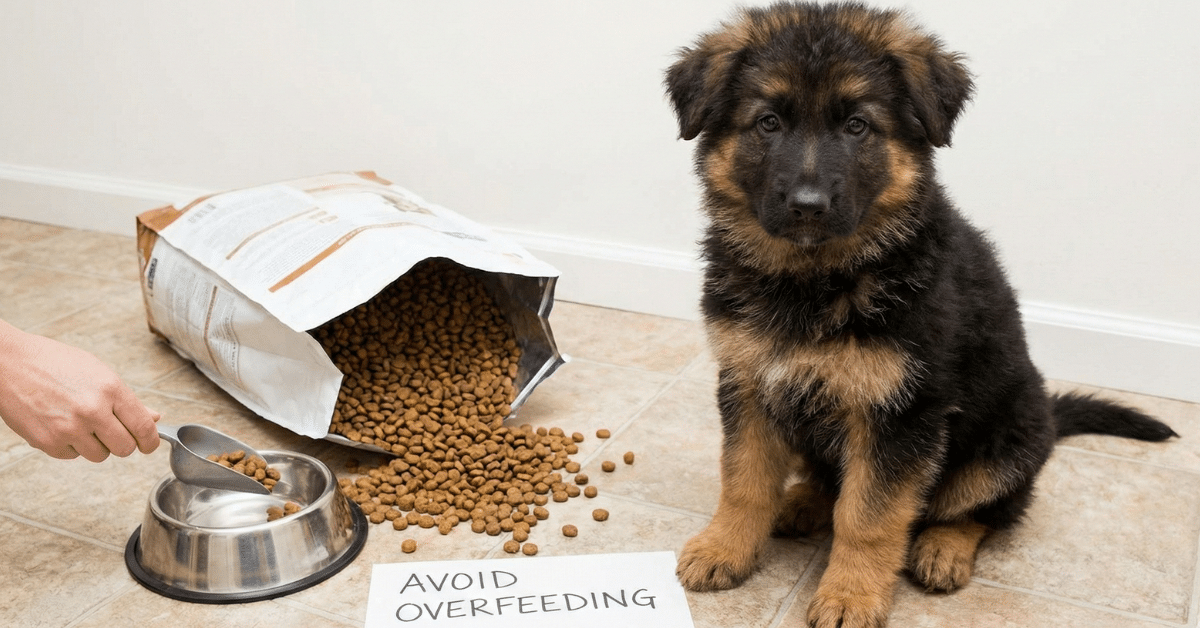
Most mix-ups happen right here: guessing how much to serve. Too much food brings problems just like too little does for German Shepherd pups. Their growing bodies react strongly either way.
Feeding Too Much to Young German Shepherds
Too much food can cause:
• Rapid weight gain
• Joint stress
• Growth disorders
• Diarrhea
• Constant bloating
A tiny shepherd pup landed in my care at four months, round and sweet. Then came the vet’s voice, calm but firm: that quick growth might lock joints in trouble forever.
Signs you’re overfeeding:
• Visible fat rolls
• Heavy breathing after light play
• Loose stool
• Puppy seems lethargic instead of playful
Underfeeding German Shepherd Puppies
On the other hand, underfeeding leads to:
• Rib visibility
• Low energy
• Slow or stunted growth
• Weakened immunity
Most first-time dog parents think their skinny pup must be active since they’re always moving. Yet visible ribs along with dull-looking eyes often suggest missing nutrients instead.
Mistake #2 – Feeding Too Few or Too Many Meals Per Day
I get asked a lot: How many times a day should a German Shepherd eat?
Here’s a simple schedule that works well:
| Puppy Age | Meals Per Day | Notes |
| 8–12 weeks | 4 meals | Small, frequent meals prevent hypoglycemia |
| 3–6 months | 3 meals | Growth picks up; digestion improves |
| 6–12 months | 2–3 meals | Transition slowly |
| 12+ months | 2 meals | Most adult GSDs thrive on 2 |
Many people feed their GSD puppies only one or two meals. That’s too little. Their stomachs aren’t ready for large loads of food at once.
If you’re ever unsure how often to feed a German Shepherd, stick with smaller, more frequent meals during the first few months.
Mistake 3 Switching Food Too Fast
What stings is how tender a GSD pup’s belly really is. Switching meals too fast might lead to:
• Diarrhea
• Vomiting
• Gas
• Temporary appetite loss
Start mixing small amounts of new food into the old meal. That way, tummy troubles stay less likely. One morning, swap in just a quarter of the fresh stuff. By midweek, make it half and watch how energy levels shift. After five days, move up to three quarters. Finish the switch by day seven if digestion seems steady. Changes this gradual help avoid messy accidents on the floor
7 Day Safe Food Shift
Two days start with mostly what they’re used to three quarters of the usual meal mixed in. A quarter switches over, slowly bringing fresh into the bowl. This blend keeps things steady while change slips through
Half the mix now comes from what was there before, while half is fresh stuff added in. The balance shifts slightly each time without changing the total amount present
On days five and six, mix one part original with three parts fresh
Day 7 100% new food
Puppies with past tummy troubles? Slowing down feeds helps. A careful pace suits them better. Their digestion handles it easier. Each pause between bites matters more now.
Mistake 4 Feeding People Food Without Knowing the Dangers
It happens to everyone. Mid bite, their gaze hits soft, wide and sharing feels less like a choice, more like breathing. Denying them seems wrong, almost cruel, even when it should be simple.
Most human foods, though, are terrible for German Shepherd puppies.
Foods Dangerous for German Shepherd Puppies
• Cheese too much can trigger diarrhea
• Cooked bones splinter risk
• Chocolate
• Onions and garlic
• Spicy foods
• Bread dough
Fat levels matter even in meat excess may trigger pancreas issues.
If you want to share food, stick to simple, safe items like:
• Plain boiled chicken
• Unsalted pumpkin
• Carrot sticks
• Plain rice
Yet still, remember balance matters most.
Mistake Five Skipping Treats in Daily Food Plans
Puppies zoom through energy like tiny engines, yet snacks pile on extra bites before anyone notices.
A common mistake feeding GSD puppies is giving:
• Too many training treats
• Big chews every day
• High calorie biscuits
Back then, during my first try at training, I handed out nearly two dozen little snacks to a young dog in just one go. That much sugar upset his stomach something fierce. Turns out, he didn’t need all those rewards to catch on just patience. For forty eight hours after, he felt awful, passing loose stools nonstop.
Safe Treat Guideline
Most of a pet’s food comes from meals, not snacks. A small piece now and then fits just fine. Too many extras can unbalance what they need. Stick to tiny amounts so health stays on track.
Another option is to try
• Kibble pieces as rewards
• Freeze dried meat in small bits
• Low calorie training treats
Mistake 6 Not Picking the Right Puppy Food
Just because a bag says it’s good for every kind of dog doesn’t mean it fits all. While some meals claim to work universally, pups like German Shepherds require chow built for big babies.
These foods have:
• Controlled calcium levels
• Balanced phosphorus
• Slower calorie density
• Optimal protein for joint friendly growth
What Matters in a GSD Puppy Food
Chicken, for instance, stands out among animal based foods. Lamb brings a distinct flavor profile compared to others. Beef tends to be favored in many traditional dishes across regions
• DHA for brain development
• No artificial colors
• Moderate fat
• Correct calcium to phosphorus ratio 1 to 1.5 to 1
Fresh choices shape how meals begin. What goes in matters most when flavor finds its way onto plates.
Mistake 7 Free Feeding Pets All Day
Food sitting out might feel easier, yet trouble follows close behind
• Overeating
• Irregular digestion
• Difficult potty training
• Behavioral issues resource guarding
Every day, German Shepherds do best when things happen at the same time. A set meal routine makes it easier to notice changes
• Appetite changes
• Digestive health
• Weight gain patterns
Puppies need meals spaced out every few hours, while adults do well with two at set times. A steady schedule beats leaving food out all day.
Mistake 8 Not Drinking Enough Water
Water keeps your stomach working right because it helps break down food. When you sweat, fluids help cool you off so you do not overheat. Your knees and elbows move easier when they stay moist inside. Without enough water, you might feel tired even if you slept well.
A GSD puppy should always have access to clean, fresh water, but avoid:
• Letting them drink too much immediately after exercise
• Letting water bowls go uncleaned for days
• Giving flavored or sugary drinks
Panting heavily, a pup without enough water may lie still. Drool gathers by its mouth while it ignores the bowl nearby. Energy fades fast when fluids run low. Refusing meals often follows that weak state.
Mistake 9 Not Watching How Your Puppy Grows
From day one, it hit me no two German Shepherd pups follow the same path. Each unfolds at its own pace, like seasons shifting without warning.
Out of nowhere, a few stay slim for weeks then pack on size fast. Meanwhile, some put weight on right away.
To avoid feeding mistakes:
• Weigh your puppy every 2 weeks
• Track growth using a GSD puppy growth chart
• Adjust food based on visible body condition
A Simple Body Condition Check
You should be able to:
• Feel the ribs but not see them
• A bit of shape shows at the midsection when viewed from overhead
• From the side, a slight pull in of the belly becomes visible
Pictures speak louder when judging portions compared to strict package rules.
Mistake 10 Not Seeing Diet Linked Health Issues Sooner
German Shepherd puppies may have digestion issues with certain foods
• Soft stool
• Excessive shedding
• Dry or flaky skin
• Gas and bloating
• Constant hunger
• Dull coat
Most times you’ll notice things like:
• Incorrect portion sizes
• Food allergies
• Poor quality diet
• Overfeeding or underfeeding
Should things not improve after a couple of days, reaching out to your vet beats trying to figure it alone.
A Simple Step by Step Feeding Routine for Gsd Puppies
This is one way I stick to, tried plenty of times. It works well most days.
Set Feeding Times
Pick three or four times each day to feed, based on how old the animal is.
Measure the food
A regular cup works just fine here keeps things clear. No need to wonder what goes where.
Allow 10 to 15 minutes for eating
After finishing, take away the bowl so it won’t be grazed.
Keep fresh water nearby
Wait a while before drinking much water once you finish eating.
Included Training Treats in Daily Calories
Stops quick increases in body weight before they start. Unexpected shifts on the scale become less likely when this is part of routine.
Watch Stool Appearance
Stool that holds its shape and looks dark brown? That usually shows food choices are doing their job inside the gut. When digestion runs smoothly, output tends to look steady, compact a quiet sign meals are balanced right.
Adjust as growth happens
• If ribs are visible increase slightly
• Should the stomach appear puffy or sagging cut back a little
Most errors during feeding never happen when you follow these steps.
Conclusion
Puppies thrive when meals happen at the same time every day. Skip the errors many beginners fall into watch how easily things improve. Digestion works better. Growth stays on track. Energy levels rise. Trips to the clinic drop off. A steady routine makes all the difference without extra effort.
Puppies of the German Shepherd breed each have their own personality, yet core needs stay consistent meals rich in nutrients, correct serving sizes, eating on a routine, plus close attention day by day.
Puppies look to you for how things begin. Get meals sorted, believe it or not, then watch what shows up shine in the fur, bold moves, that spring step everywhere.
FAQs
1. Feeding amounts for german shepherd puppies
Puppies need different amounts depending on how old they are and how much they move around. Usually, they have about two to four cups each day, spread across several feedings. Change the portion if their shape suggests too much or too little food is going in. How full they feel matters just as much as the cup count.
2. Feeding schedule for a German Shepherd puppy
Puppies start off needing four feeds every day. Around the half year mark, they usually move to three. Once past twelve months, two is often enough.
Every few hours, feed the young German Shepherd. Morning meals kick things off, then another round at midday. As afternoon rolls in, offer food again puppies need steady fuel. Evening brings one last portion before rest. Space each meal evenly across waking hours. Tiny stomachs mean frequent eating matters most.
3. Can feeding mistakes affect a GSD’s joints
Puppies eating too much can lead to fast development, which often stresses their joints. This kind of strain shows up most in problems like hip or elbow dysplasia among German Shepherds. When food intake isn’t managed well, bones grow out of balance. That imbalance raises the risk for long term joint trouble down the line.
4. Should I worry if my puppy seems always hungry
Puppies of the German Shepherd breed might seem hungry nonstop. When meals are correct in size, look into worm infections or snacks packed with calories instead.
5. Changing food for a German Shepherd puppy
Stomach upsets happen when routines shift. Because their digestion is delicate, GSD pups react badly to new food every few days loose stools follow close behind.
6. How often should I check my puppy’s weight
Twice a month works best. Keeping an eye on things now and then stops food problems from slowing progress.