How Much Should a German Shepherd Puppy Eat?

By HINDHUJA VAKADA

Updated On:

how much should a german shepherd puppy eat

Join WhatsApp

Join Now

Standing there, staring into a dog bowl, unsure what to feed your German Shepherd puppy? That feeling hits most people sooner or later. Raising several of these pups taught me something right away each one eats on its own rhythm, grows in their own time, signals hunger in their own quirky way. What surprises many? New owners everywhere wrestle with identical questions portion sizes by week, changes during fast growth, shifts between life phases.


Picture this real moments, straightforward talk

Picture this actual moments, straightforward talk. When I looked into feeding amounts for a German Shepherd pup, most replies seemed patchy, distant. Talking to experts didn’t help much either trainers, veterinarians, fellow dog parents all gave bits that left me circling back online later. That search popped up once more, chasing clarity after mixed signals piled high.

This guide sets everything right.

Real moments shape this guide, not theories. Stories from actual owners sit beside advice that vets agree on. Love for German Shepherd pups runs through every part, quietly. Practical steps come alive here without fuss. Built only for those who want clear help, nothing more.


German Shepherd Puppy Food Basics

Puppies of the German Shepherd breed shoot up quickly. In mere months, they shift from little bundles of fur into lean, powerful young dogs this change needs careful feeding.

Here is a thing I see after watching closely

Most people give their pets too much food rather than too little.

That sad little stare hits hard, right. A pup sits there empty bellied, eyes wide, gaze locked on yours. Suddenly, your resolve slips sideways. You give in before even realizing it.

Yet German Shepherds know tricks one minute they finish eating, the next they’re begging like they’ve seen no food in days.

The key is learning

• what their belly tolerates
• how fast they digest
• when their power fades
• how routine fits their mood


German Shepherd Puppy Feeding Guide by Age and Daily Amount

A basic guide sits below, shaped slowly through time. This fits nearly every big pup food on the market today. Most mainstream kibble labels follow this pattern pretty closely.

German Shepherd Puppy Food Chart (Age-Wise)

Puppy Age

Cups Per Day Meals/Day

Notes

6–8 Weeks

1 – 1.25 cups 4 meals Very small stomachs; easy-to-digest food needed
8–10 Weeks 1.5 – 2 cups 3–4 meals

Start building a stable routine

10–12 Weeks

2 – 2.5 cups 3 meals Energy increases quickly
3–4 Months 2.5 – 3 cups 3 meals

Growth spurts begin

4–5 Months 3 – 3.5 cups 3 meals

Bones developing fast

5–6 Months 3.5 – 4 cups 2–3 meals

Appetite increases with activity

6–12 Months

3.5 – 5 cups 2 meals Switch slowly to adult appetite patterns
12+ Months 3 – 5 cups 2 meals

Transition to adult formula


This german shepherd puppy diet chart is a starting point — think of it like the “map,” while your specific puppy’s behavior becomes the “GPS.”

Signs Your Puppy Eats Enough

Years passed before I noticed how right these signs really were.


Right German Shepherd Puppy Feeding Amount Signs

• Bone shapes show faintly beneath the skin, yet they do not jut forward. A subtle outline appears without sharp edges pushing through
• Puppy has steady energy, not hyper or exhausted
• Firm stools show up one to three times each day
• Growing at a normal, steady rate
• After eating, there is never any sudden tears or fussing


Signs of Overfeeding

• Loose stool
• Potbelly look
• Puppy sleeps heavily after eating
• Excessive weight gain


Signs of Underfeeding

• Visible ribs or hip bones
• Low energy
• Constant whining near feeding times
• Chewing quickly, then spending ages cleaning the dish with your tongue

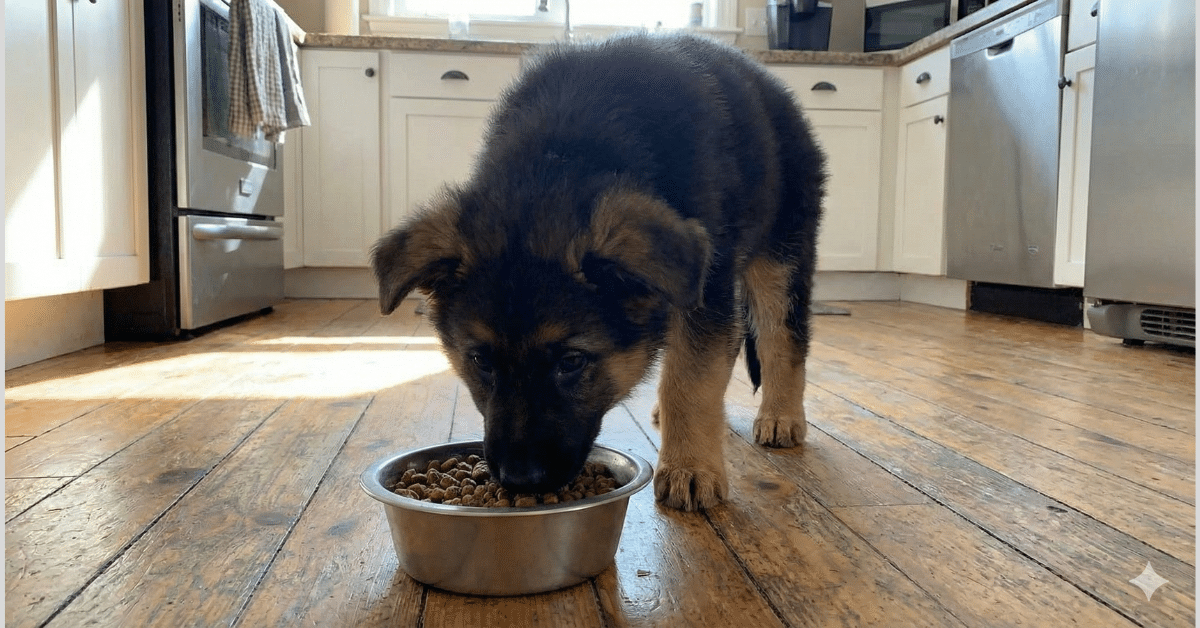
Most times my German Shepherd puppy gobbles food, so I switch to a special bowl that slows him down. It makes a real difference.


Feeding Times for German Shepherd Puppies

Pups stay calm and satisfied this schedule worked every time I tried others. It stood out after testing many ways to feed.


Feeding Times for a German Shepherd Puppy Sample Day

6–12 Weeks

7:00 AM Breakfast
11:00 AM Mid day meal
3:00 PM Evening meal
7:00 PM Last small meal

3–6 Months

7:00 AM Breakfast
1:00 PM Mid day meal
6:00 PM Dinner

6–12 Months

7:00 AM Breakfast
6:00 PM Dinner

Above schedule aligns with most german shepherd puppy feeding chart recommendations.

True, some days your dog won’t touch their food it happens now and then when teeth are coming in or the stomach feels off.


Food Amounts for a 12 Week Old German Shepherd Puppy

Twelve weeks old, German Shepherd pups tend to be bundles of nonstop motion.

The correct amount:

• Two up to two and a half cups daily
• Three times a day, divide it up. Each portion stands alone. One after another keeps rhythm going

Little bodies move nonstop, zipping through games like tiny engines on overdrive.

That 12 week old GSD puppy of mine after gobbling his food would dash wildly through rooms before dropping flat, out cold, as if he’d finished some epic race.


How Puppy Food Needs Shift Over Time

Your puppy’s appetite isn’t fixed. It changes with:

1. Activity Level

A quiet pup chews through meals slower. Sometimes stillness means smaller bites. When peace settles, hunger pauses too. A hyper puppy eats more. Simple rule.


2. Growth Spurts

At 10–16 weeks, expect sudden hunger spikes. It’s normal.


3. Type of Food Wet Dry Raw

Dry kibble keeps measurements consistent every time.
Wet meals feel heavier in the bowl but often carry fewer calories per volume.
Raw diet is calorie dense and needs careful balancing.


4. Body Condition

A Quick Test I Still Use

Slide your hand down the ridges. Beneath the skin, ribs make themselves known through light touch. Not outlined like bones on a diagram. A faint shape under flesh when pressed gently.


5. Weather

Cooler air means burning extra energy. Bodies work harder when temperatures drop. Hot weather appetite drops.


Feeding a German Shepherd Puppy Step by Step

Each day, meals happen at the same time. That’s how I do it.


Pick a high quality puppy food

Choose a brand that says:

• Large Breed Puppy
• 22–24% protein
• 12–15% fat


Set Regular Meal Times

Puppies of the German Shepherd breed thrive on predictability. This steadiness helps calm their nerves.


Track Each Meal

A bit of accuracy beats guessing every time. Pouring without checking leads to mistakes most forget. Watch what fills the cup before moving on.


Follow a feeding chart

Your german shepherd puppy food guide should update monthly.


Observe Stool Characteristics

A Healthy GSD Stool Looks Firm Brown And Well Formed

• firm
• brown

Simple to start using right away.


Adjust Monthly

Every month of puppyhood new appetite.

German Shepherd Puppy Food Guide (Recommended Quantities)

Below is a simple table I’ve found helpful for quick reference.

German Shepherd Puppy Eating Amount Guide

Weight (lbs)

Cups Per Day

10–20 lbs

1 – 2 cups

20–30 lbs

2 – 3 cups

30–40 lbs

3 – 3.5 cups

40–50 lbs

3.5 – 4 cups

50–60 lbs

4 – 5 cups

What Not to Feed Your German Shepherd Puppy

Some of these errors just happen, even when people try their best.


Avoid

• Milk
• Chocolate
• Grapes & raisins
• Cooked bones
• Onions
• Too many treats
• Spicy foods
• High fat table scraps

Puppies need the right meals at each stage. Feeding them properly supports strong bones later. A schedule helps prevent stomach troubles early on. Wrong portions might lead to joint stress down the road. Growth phases demand precise nutrition timing matters just as much as ingredients.


Common Feeding Questions People Also Ask


German Shepherd Puppy Always Hungry

Puppies of the German Shepherd breed use up energy quickly. Yet a never ending appetite might signal something else entirely

• growth spurts
• poor quality food
• parasites
• too much activity

Every day a German Shepherd pup needs about three cups of food. That amount changes as they grow older. Some pups eat more depending on their size. Activity level plays a role too. A vet can give exact amounts for each dog.

Puppies need different amounts of food based on how old they are and how active. Some grab just two scoops while others take nearly double that much. Size matters when filling their bowls each day. Energy level changes what goes inside too.

Picture the german shepherd dog food chart like a rough guide. Sometimes it points the way, though every pup might need something slightly different. What works today could shift tomorrow. Feeding isn’t one size fits all, even with charts in hand. The numbers help, but watching your dog react matters more. Adjustments often come from paying attention, not just following lines on paper.


German Shepherd Puppy Meal Frequency

Typically

• 4 meals 6–8 weeks
• Three meals each day during the period from two to six months
• Half a year goes by, then two meals show up. Meals come twice daily once that time passes


Changing Your Puppy’s Food

True though it takes time.

Start by adding a quarter of fresh food each two to three days.


Conclusion

Puppies of the German Shepherd breed shoot up in size, gobble food without hesitation, yet need steady care to stay strong. When you start noticing their patterns the way they whine before meals, how they curl when tired, the texture of what comes out the back life smooths out.

Hold on to one thing above all

Bread fuels rising, never hoarding.

Pacing meals just right keeps your German Shepherd puppy on track, yet eyes stay open to shifts in energy or mood. Each pup moves at their own rhythm, which makes the journey feel alive noticing when they pause mid chew, or race ahead after naps. Changes come slow, like shifting food amounts by a spoonful here or there. You start seeing patterns, then so do they, syncing up without words. Their world grows around routines, yours bends slightly to meet theirs.

A pup raised right will thrive, alert and sturdy, on track to become a bold grown dog. When care lines up meals, attention, steady learning the little one gains strength day by day. Bright eyes stay sharp if routines stick. A calm start builds what lasts surefooted maturity.


FAQs

1. How much food should a 2 month German Shepherd puppy eat

Puppies need their daily portion divided through the day roughly between one and a half to two cups total. Spread each amount across three or four feeding times. Stick close to what the German Shepherd puppy chart shows.


2. How often should you feed a German Shepherd puppy

Puppies do well on three daily meals. For your German Shepherd pup, sticking to the same times matters.


3. Feeding Homemade Food to a German Shepherd Puppy

Puppies need good food. Try sticking to a German Shepherd feeding plan. Balanced meals help most mix in solid protein with healthy fats plus enough calcium.


4. How do I know if my puppy is underfed

Watch how the puppy moves sluggish steps might mean it is not eating enough. A bony outline under the skin can show up when meals are too light. Whines that never stop could point to discomfort or hunger. Check those signs beside what healthy german shepherd pups usually eat at each stage.


5. What’s the safest way to switch puppy food

Gradually mix old and new kibble over 7–10 days.


6. Feeding Raw Food to German Shepherd Puppies

Puppies need balance stick to a clear feeding plan built for German Shepherds. Nutrition must match their growth, nothing skipped.


7. Feeding Amounts for a Six Month Old German Shepherd Puppy

Some go through 3.5 to 4 cups daily activity level shapes how much. Though movement plays a role, needs shift quietly across individuals.


8. My GSD puppy eats too fast. What do I do

Try a slow feeder bowl instead helps avoid choking while also promoting better digestion when feeding your GSD puppy. This kind of dish slows down eating naturally, which makes meals safer overall.


HINDHUJA VAKADA

Written by Hindujha Vakada, Sr. SEO Specialist at Market Data Forecast, with expertise in creating research driven digital content. She has a strong passion for dogs and actively researches dog nutrition, training, behavior, and overall pet wellness. Dedicated to providing informative and trustworthy content that supports responsible dog care and better pet parenting.

🔴Related Post

Leave a Comment