When to Spay a German Shepherd Puppy: Best Age Guide
Life shifts fast once a German Shepherd pup walks through your door. Not merely an animal, it becomes part of your rhythm – always near, always watching, full of motion beneath dense fur. Yet behind those clumsy chews and sweet early smells hides something weighty: the choice around spaying or neutering. Timing isn’t trivial it shapes health, behavior, even years ahead. Each nip at socks ties into bigger decisions waiting just out of sight.When to Spay a German Shepherd Puppy: Best Age Guide
Table of Contents
ToggleThe Spay and Neuter Debate in German Shepherds
Years went by with vets all saying the same thing – six months old is when it should happen. Called the go-to move back then. Yet fresh knowledge on how big dogs grow so quickly changed what is now understood. Timing a German Shepherd’s spay isn’t fixed anymore. Future joint strength, balanced against womb-related risks, shapes what feels right.
Spending years alongside this breed, watching owners decide early – then dealing with joint pain later – and also seeing others delay too long and face sudden issues like pyometra shows one thing clearly: balance matters. Science offers guidance, but each dog brings its own variation. Risk shifts with time, lifestyle, and experience. The right moment sits somewhere in that mix.
The Old Approach vs. New Understanding
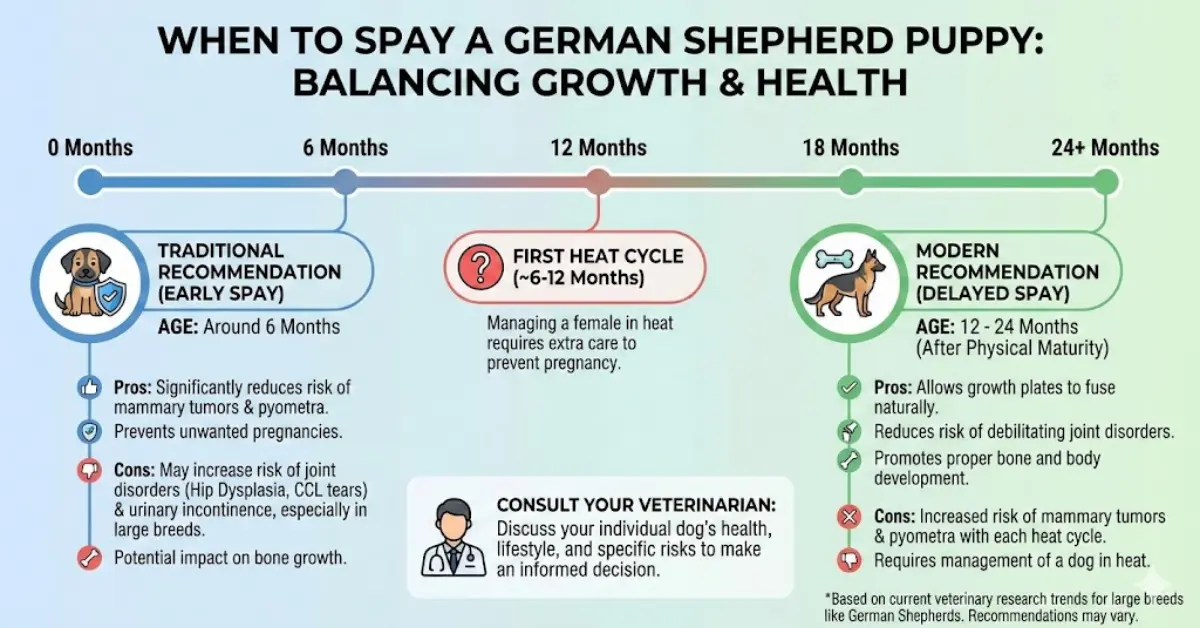
Early spaying was mainly encouraged to prevent unwanted litters and reduce tumor risks. Those benefits still matter today, but a more individual approach is now preferred for large breeds like German Shepherds.
Heavy bones, broad chest – that defines the breed. Unlike smaller dogs, German Shepherds take up to two years to fully mature. At the ends of their long bones are growth plates, soft areas that close only when hormones like estrogen and testosterone signal the body to stop growth.
When spaying or neutering happens too early, those signals change too soon. Growth plates may stay open longer than normal, sometimes leading to uneven bone development. This can affect posture and increase strain on joints like hips and elbows.
When to Spay a German Shepherd Puppy: Best Age Guide
The long-standing six-month guideline is now being reconsidered. Research, including studies from institutions like UC Davis, suggests that large breeds altered before full maturity may have higher rates of joint problems. For dogs already prone to hip and elbow issues, early intervention can add unnecessary risk. Allowing natural growth to complete often supports better long-term structure.
Benefits and Risks of Timing the Procedure
No timing option removes risk completely. The decision always comes down to balancing outcomes based on the individual dog.
Benefits of Delaying Spay Until 12 to 24 Months
Allowing full skeletal maturity supports stronger joints. Once growth plates close naturally, risks such as ACL injuries and hip dysplasia may reduce. Joint stability tends to improve as development completes without interruption.
A German Shepherd’s true structure becomes more visible during this stage. The chest expands, muscles firm up, and the overall frame becomes more defined. Shoulders and hindquarters gain clearer shape. Movement looks more grounded as growth settles into its adult form.
Later spaying may also influence certain health risks, including some tumor types, possibly due to continued hormonal presence.
Risks of Waiting Too Long
Heat cycles will occur if spaying is delayed. These require careful management and separation from male dogs during that time.
As age increases, the risk of pyometra also rises. This is a serious uterine infection that can develop quickly and requires urgent medical attention.
Each heat cycle also slightly increases the risk of mammary tumors in unspayed females, making long-term monitoring important.
Male vs Female German Shepherd Timing
While spaying often gets most attention, neutering male German Shepherds is also an important decision. Hormones like testosterone play a key role in muscle development and skeletal growth.
For many large-breed males, neutering is often delayed until around 18 to 24 months to allow full physical maturity.
For females, many vets recommend waiting until after the first heat cycle, often between 12 to 18 months depending on growth rate and health condition.
Quick Comparison: Spay Timing at a Glance
|
Age Range |
Pros | Cons |
| 6–9 Months | Zero risk of pregnancy; lowest risk of mammary tumors. |
High risk of joint issues; growth plates may not close properly. |
|
12–18 Months |
Better joint health; allows for one heat cycle to mature the endocrine system. | Risk of “accidental” litters; dealing with the mess of a heat cycle. |
| 2 Years+ | Full skeletal and mental maturity achieved. |
Highest risk of pyometra; behavioral habits may be more “set.” |
Managing the Heat Cycle Hidden Details
Later on, when your German Shepherd pup grows up, a heat cycle will happen. Been there myself. Not terrible, sure, yet it needs some thought ahead. Having one ready helps.
Most female German Shepherds start their first heat cycle anywhere from nine to fifteen months old. Roughly three weeks long, it brings noticeable changes. Bloody spotting shows up – using dog diapers helps manage messes easily. Her mood may shift without warning; one moment she wants constant attention, next she seems distant. Behavior turns unpredictable, like sudden restlessness or quiet withdrawal.
Beware – leaving a female dog unattended outside during her heat cycle is risky, fences or not. When males catch that scent, they’ll stop at almost nothing. Some climb, others dig, many just keep trying. Stories abound of determined suitors clearing barriers like athletes. One leap might be all it takes.
Preparing for Spay Surgery
After picking your moment – say, 14 months or maybe closer to two years – it’s time to get ready. Calming a German Shepherd after spaying takes extra effort compared to tiny breeds since they just won’t stay put easily.
The Pre-Op Consultation
Start by asking your vet for a blood test. That way, you will know if her liver and kidneys can manage the anesthetic without trouble. German Shepherds sometimes react badly to specific drugs – so having that info helps keep things under control.
The Night Before
Most times, stop feeding by eight p.m. the evening before the operation so there’s less chance of throwing up during anesthesia. Drinking water often stays allowed unless told otherwise – ask your vet just in case. Then again, rules can shift depending on the animal. Better safe than dealing with a mess later. Always good to confirm what works for your pet.
The Big Day
Start by packing something she knows – maybe a worn blanket or shirt carrying your smell. Because German Shepherds stick close like shadows, that hint of you eases stress when left at boarding. The scent works quiet magic in strange places.
Post-Surgery Setup
A space set aside for healing waits at home. Inside, a crate stands empty or perhaps just a bare room. Furniture she might leap onto has been removed. Nothing lets her climb or scramble around.
Start her off with something softer than the usual plastic cone. An inflatable neck pillow might feel better on her fur. Big dogs tend to move easier in a full-body recovery suit. Think of it like a cozy outfit made just for healing. Most seem less bothered by these options.
Walk only on leash. Yard running? Not allowed for ten to fourteen days. Tough truth about German Shepherd ownership begins right here.
People Also Ask
Is 6 months too early to spay a German Shepherd?
Some German Shepherds do better with later spay timing. Their size and long development phase mean early procedures might disrupt natural hormone patterns needed for full growth. Recent studies point toward holding off until around one year of age – this helps support healthier joint formation over time.
How long is the recovery for a GSD spay?
Healing on the outside tends to wrap up around day ten to fourteen. Inside though, recovery continues for about two more weeks. During this time, intense activity should be avoided so healing tissues are not disturbed.
Spaying and Your German Shepherd’s Personality?
Spaying does not change core personality. Energy levels may feel calmer, but weight gain or behavior shifts usually come from diet and exercise, not the surgery itself. Movement and portion control shape body condition far more than spaying.
How You Might Notice Your Puppy Is Ready for the Procedure
That shift in appearance – when a German Shepherd moves from lanky to structured – often signals maturity. Movements become smoother, energy steadier, and muscle definition clearer. Growth begins to slow, and the frame looks more settled overall. This stage often suggests the body is closer to readiness for the procedure.
Height stops increasing noticeably. Weeks pass without visible growth changes, showing development is leveling out.
Veterinarians may confirm this with imaging, where growth plates can be checked to see if they have closed.
Learning From Calling It Too Soon
Back then, early spaying followed standard advice – around six months. Later, joint issues appeared by age four, including stiffness and an uneven gait. Veterinary insight later suggested early intervention may have influenced growth and joint stress over time.
With that experience, waiting longer became the preferred choice. One dog developed fragile structure, another stronger stability. The difference becomes more obvious over years than months.
Heat cycles require more management, but long-term joint health often makes that trade-off worthwhile.
Summary of Recommendations
The best timing for spaying a German Shepherd depends on growth, health, and lifestyle factors rather than a fixed age. Many veterinarians suggest waiting until after the first heat cycle, often around 12 to 15 months. Others recommend slightly earlier or later depending on individual development.
Some owners wait until around two years to allow full bone and muscle development. Early spaying between six and nine months may be considered in specific situations, such as shelter requirements or health needs.
Each dog is different, and veterinary guidance is essential in deciding the right timing.
Final Thoughts
- Rushing into spaying is rarely necessary. A vet familiar with large breeds can help shape the right decision based on growth and health. Timing around 12 to 18 months is common, but flexibility matters.
- The key outcome is a healthy, active dog with strong joints and a steady quality of life.
- Asking questions and learning already puts things in the right direction.