
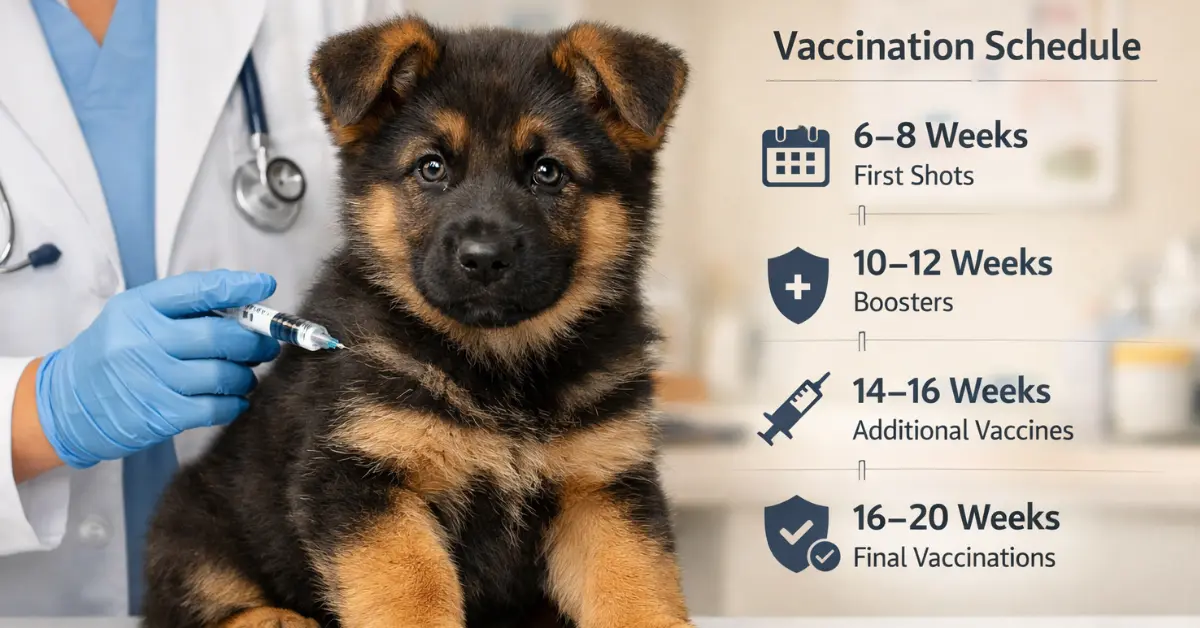
German Shepherd Puppy Vaccination Schedule for New Owners
Ah, there he is – your new black-and-tan whirlwind, now curled up on your floor. Good job making it through the door together. Those early nights? They come with soft little cries, feet too big for his body, then sudden lunges at socks, shoes, even the corner of your laptop charger – all fair game.
Yet behind those soft puppy smells and daily lessons lies something serious – keeping them well. Not quite like dogs you can ignore after feeding, German Shepherds work hard even when just being themselves. Fast growth marks their youth, intense movement fills their days, while constant interaction puts them face-to-face with more outdoor threats than quieter breeds ever meet.
Right off the bat, I always mention to someone fresh with a German Shepherd: those puppy shots aren’t merely tasks checked at the clinic – they form the core defense when your dog’s body is still figuring out how to fight back
One thing stands out after all this time: vaccine questions never stop coming. What must happen versus what might help? Yet when can you finally walk through those park gates without worry? Here is clarity, built for real life with zero noise.
Table of Contents
ToggleHow Many Vaccinations Does a German Shepherd Puppy Need?
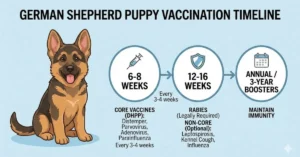
German Shepherd Puppy Vaccination Basics
Puppies of the German Shepherd breed receive key shots and some extra ones through their first twelve months, helping them grow solid defenses. Since their body’s defense isn’t fully online yet, one dose won’t do the job. Protection comes step by step, timed so coverage stays active once baby like resistance fades away.
German Shepherd Puppy Vaccination Schedule for New Owners
Puppies of the German Shepherd breed usually get their first key shot between six and eight weeks old. After that, they need two or three more doses over several weeks. Each round guards them from dangerous illnesses like distemper, parvovirus, adenovirus, along with parainfluenza. Many vets call this set of protections the DHPP vaccine.
Puppies might get extra shots beyond the basics, based on where they live, how they spend their time, or what dangers they face. At roughly 12 to 16 weeks old, most must have the rabies vaccine because laws often demand it. A vet could suggest added protection like one for leptospirosis, bordetella often tied to kennels or flu that spreads among dogs.
Most puppies get shots every three to four weeks until they reach around sixteen weeks of age. Because their bodies are still developing, timing matters for building strong defenses. Missing doses might expose young German Shepherds to illness when they’re most at risk.
Once a year has passed, extra doses help keep protection strong. How often those come yearly or once every few years depends on the shot and rules where you live. A vet knows which path fits best.
Why a Personalized Vaccine Plan Matters
Every pup moves at its own pace when building immunity. A plan signed off by your vet beats one size fits all dates every time. Where the dog lives matters just as much as how old it is. Illness threats shift from place to place what works in one town may fall short in another. Skipping shots, even once, can open doors best kept shut. Regular jabs help guard against problems that hit hard and fast. Protection stacks up dose by dose, not all at once. Puppies thrive when shielded early, especially strong breeds like German Shepherds. Timing gaps leave room for trouble. Each shot plays a role few notice until something goes wrong.
Timing Matters with a GSD Puppy
Right after birth, a German Shepherd puppy receives some protection through mom’s early milk, known as colostrum. That shield comes in the form of what scientists call maternal antibodies. Imagine it as nature’s short term bouncer pass, keeping harmful stuff out while the little one grows stronger.
Here’s the catch. Those helpful mom derived antibodies don’t last forever. Vaccinating too soon means they could block the shot, stopping the puppy from building its own defense. Wait past that point, though, and the young dog is left open no shield, no backup, just exposed.
This is why we space things out step by step. Not due to failure of the initial dose, yet aiming precisely at the moment the puppy’s body can handle protection on its own.
The Core vs. Non Core Debate
Hold up. Before checking the chart, understand this vaccines aren’t all required. Most vets sort them into two groups instead
1. Core Vaccines
Starting strong core vaccines aren’t optional. When it comes to German Shepherds, skipping them isn’t an option because they guard against serious threats. Some of those illnesses spread fast, others hit hard with deadly outcomes. Then there’s rabies one that jumps from dogs to people. Because of risks like these, every single one must get the full set.
2. Non Core Vaccines
Some shots matter more if your dog spends time outdoors. Hiking in damp forest areas changes the risk level compared to city walks near tall buildings. Where you go shapes what protection might help.
Core Vaccines for German Shepherds
Puppies often face this illness when their defenses are weak. It spreads fast through sneezes or shared bowls. Breathing troubles show up early, followed by vomiting or diarrhea. Later, seizures might appear as damage deepens. Vaccines help prevent it, yet many skip them. Without care, outcomes turn severe quite quickly.
Puppies like German Shepherds often face serious danger from parvovirus. It spreads fast, strikes hard death possible in just a few days without quick help.
Adenovirus (Hepatitis) Protects the liver.
Besides being deadly, rabies spreads to people so nearly all states demand the shot. Though rare, the risk pushes lawmakers to insist on vaccination.
German Shepherd Puppy Vaccination Chart by Age
I find that having a quick-reference guide helps take the anxiety out of those early vet visits. Here is a typical breakdown of what your german shepherd puppy vaccination chart will likely look like during that first year.
| Puppy Age | Recommended Vaccines | Notes |
| 6–8 Weeks | Distemper, Parvovirus (DHPP) | Often done by the breeder before you pick them up. |
| 10–12 Weeks | DHPP Booster, Bordetella, Leptospirosis | This is the “socialization” phase. |
| 14–16 Weeks | DHPP Booster, Rabies, Lepto Booster | The final round of puppy shots. |
| 12–16 Months | DHPP Booster, Rabies (1-year or 3-year) | The first “adult” check-up. |
Breaking Down the Schedule Step by Step
Picture how these appointments play out once you’re inside the clinic. Having gone through it many times myself, each veterinarian tweaks their approach just a bit yet the key moments stay familiar. One after another, they follow a rhythm that feels both unique and predictable.
The First Visit 6 To 8 Weeks
Puppies of this breed often stay close to their brothers and sisters right now. That mix shot for distemper and parvo takes center stage at the vet visit. Since German Shepherds might digest things differently, it’s normal if your young dog naps more than usual afterward. Maybe they skip eating for part of the day this happens quite a bit. Most times, there’s no need to stress.
The Expansion Phase 10 To 12 Weeks
This changes everything. Now the conversation turns to Bordetella also called Kennel Cough as your vet brings it up. Should doggy school or grooming be in the cards, proof of this shot becomes necessary. Without it, those places won’t take your German Shepherd pup.
Leptospirosis enters the picture early in our minds. Because German Shepherds tend to sniff low, often near soil or puddles, exposure rises when wild animals have passed through urine from creatures like raccoons, deer, or squirrels carries the bacteria. Backyard play or trail walks? That makes vaccination far more than just an option.
The Final Puppy Stage 14 To 16 Weeks
Here it comes. At this stage, your young dog receives the last set of essential vaccinations along with the required rabies injection. Many areas demand proof of rabies vaccination before a pet turns four months. After these shots are done, tension often eases. The animal’s defenses are now taking real shape.
People Also Ask
Walking Your German Shepherd Puppy Timing?
People ask me about this all the time. Most vets say wait one to two weeks after the last vaccine, which lands around week seventeen or eighteen. Yet German Shepherds really need early social exposure. I often suggest taking your puppy out in arms during outings or arranging small meetups with healthy, vaccinated dogs at a closed yard prior to full immunization. Simply avoid letting them step on pavement where lots of animals walk places such as store entrances or playgrounds for pets. Time moves fast when raising a young dog.
German Shepherds and vaccine needs compared?
Not really, in terms of body stuff. Still, since German Shepherds often face specific health problems and usually have jobs to do, vets push harder on shots for leptospirosis along with measures against Lyme disease. Outside time is normal for these dogs, which means care matches that lifestyle.
Are there side effects I should watch for?
Most times, just a bit of tiredness shows up after shots maybe slight soreness where the needle went in. Not usual? Swelling on the face, raised red patches on the skin, or nonstop throwing up. Those mean you reach out to your veterinarian without delay. From what I’ve watched, German Shepherds usually take their vaccinations fine. Still, sounding too worried beats staying quiet when something feels off.
The German Shepherd Factor
It’s not simply about bringing up a puppy. Raising a German Shepherd means extra details matter, especially when planning out their vaccine timeline. Each step unfolds differently because of the breed’s needs. Timing shifts slightly compared to other dogs. Consider these differences early. They shape how protection builds over months. Not every shot fits the same pattern. Some happen sooner. Others repeat later. The path isn’t one size fits all. Watch closely as milestones approach. Adjustments often help. This breed responds uniquely. Stay aware without rushing ahead.
Parvovirus Sensitivity
For years vets have argued over if German Shepherds and Rottweilers face higher Parvo risks. Science hasn’t settled it yet. Still, those who know GSDs well often delay the last Parvo shot until closer to 20 weeks. That extra wait aims to lock in protection for sure.
The Lyme Disease Question
Ticks turn into a real problem if you’re up north or in the middle of the country. A German Shepherd’s dense fur makes spotting one nearly impossible like searching for a speck in a pile of leaves. Instead of hoping luck kicks in, I rely on the Lyme vaccine, which works hand in hand with solid tick protection. That combo has saved me more than once.
Socialization vs. Safety
Most tricky thing to manage? Socializing your German Shepherd early enough so it stays calm around others miss that window before four months, fear might take hold. Yet taking an unvaccinated pup out risks exposure to deadly Parvo through contact at places like parks.
Maybe start small. Have pals come by dogs tagged with clean health papers. Your German Shepherd picks up cues in a safe spot. Skip the open fields where unknowns roam. Home turf works better for learning who’s friend, not threat.
Preparing for the Appointment
Puppies that big never sit still inside those clinic rooms. A German Shepherd at twenty pounds already chews through tissues, boots, even quiet moments. Curiosity pulls them forward like invisible strings each noise, each scent a new mission.
Start with tasty rewards. Tiny bits of cooked chicken work well. Or try thin slices of cheese. Make each visit feel like a snack adventure. Turn the clinic into their favorite food spot.
A folder makes things easier when tracking your gsd pup’s shots. Begin one early boarding places will ask for proof later. Training groups check it too. Even local permits rely on these papers.
Puppies often come into the world carrying worms inside them. While shots matter, they do not handle everything. A visit to the vet should include a test on poop samples. This helps spot hidden bugs living in the gut. Protection means checking both vaccines plus what’s going on below the surface.
Adult Booster Phase Long Term
After the first twelve months pass, monthly visits become unnecessary a relief for many. Adult German Shepherds usually shift to getting key vaccines once every three years.
Not every owner goes for Titer Testing, but some do. A small sample of blood shows how many antibodies remain active inside your dog. When those numbers stay strong, another vaccine dose may not be needed right away. Skipping boosters becomes possible when results come back solid. Cost wise, the lab work often runs higher than simply getting the injection. Worrying about too many vaccines? This path offers one alternative worth knowing.
Final Thoughts On Keeping Your Gsd Safe
Puppies of the German shepherd kind come with shots on a strict timeline sure, it might seem like too much, maybe even costly. Yet seeing their wide, innocent stare along with that clumsy head lean makes every moment make sense.
One pup after another ends up sick just because someone thought staying home made vaccines unnecessary. Skipping Parvo or Distemper? That choice hits hard when things go wrong avoidable pain. Sticking to the timeline builds strength early. A steady routine opens doors to health, confidence, presence. Growing into who they are supposed to be starts here, now, without delay.
One trip at a time is enough. Let snacks come often. Savor the young dog days they vanish quicker than expected.
FAQs
1. That initial jab for your German Shepherd?
It’s typically a mix called DHPP covers Distemper, Hepatitis, Parainfluenza, plus Parvovirus. Reputable breeders tend to get it done early, often between six and eight weeks old, long before you bring the pup home.
2. Working line German Shepherds get the same core shots as others
Their health requirements do not change based on lineage. Yet exposure matters early training often means more contact with dogs. Because of that, a vet might move up the Bordetella dose. Protection kicks in faster when given ahead of heavy group activity.
3. Most times, someone skips a vet visit to save money
Yet keeping vaccines cold matters more than it seems. A fridge at home cannot match what clinics use. Without proper storage, the shot might do nothing. Paperwork becomes a problem too. Places like kennels want official proof, not just a needle mark. Even if done right, laws usually require a licensed person sign off. Doing it alone could leave gaps no one notices until trouble comes. Rules exist because mistakes happen quietly.
4. Pricing for a standard German Shepherd puppy vaccination plan
Shifts depending on where you live. Expect to set aside roughly seventy five to one hundred fifty dollars each trip. Each appointment usually includes a checkup from the veterinarian, immunizations, along with deworming steps that are needed.
5. Missed a week on the gsd puppy’s vaccine plan?
Get the visit booked right away. Should it be over twenty one days behind, the vet could suggest beginning that round again this helps make sure protection builds properly. Happens more often than you think.
6. Inside dogs aren’t safe just because they stay inside
Parvo sticks around in places you wouldn’t expect like floors touched by dirty footwear. A single walk near an infected spot could bring danger close without warning. Protection isn’t about where the dog goes it’s about what might come to them. Skipping vaccines leaves even quiet, calm shepherds at risk.
7. Every year your GSD gets a “Lepto” shot
Because protection doesn’t last like it does with Rabies. Outdoor life means more puddles, streams, and risk. Shorter shield time from the vaccine? That’s why timing matters. Water carries the threat. Repeating the dose keeps guard up when paws hit muddy trails.
8. Vaccines do not lead to hip problems in German Shepherds
Research shows no connection between shots given to young German Shepherd dogs and troubles in their joints. Instead of medical prevention methods, what really matters are inherited traits, how fast they grow, along with what they eat. Blame genes first, never the vet visit.


2 thoughts on “German Shepherd Puppy Vaccination Schedule for New Owners”