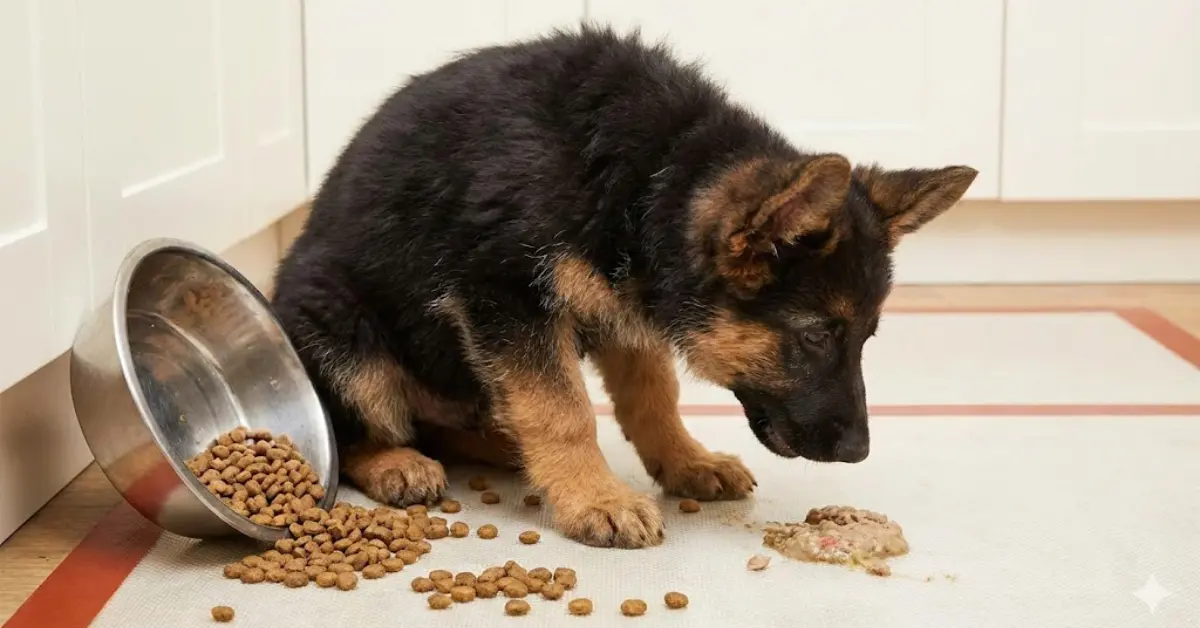
Out of nowhere, things go sideways when a young German Shepherd vomits soon after eating. A quiet second ago, all looked okay. Now there’s worry. The gut might just be figuring itself out – timing meals wrong isn’t rare. Gulping down food too quickly causes trouble more often than sickness does. German Shepherd Puppy Vomiting After Eating: Causes, What to Do, and When to Worry big servings add fuel even if the cause seems small. Even so, seeing it again and again? That kind of pattern needs attention. Puppies aren’t fully built yet – their systems are still under construction.
Table of Contents
ToggleMealtime Behavior and Early Triggers
Mealtime sends most German Shepherd pups into a frenzy. Fast eating follows – air gulped down with kibble – stomach trouble close behind, sometimes spitting it all up just minutes later. New foods or heavy snacks might do the same, even without speed. A small hiccup today could stick around when routines never shift.
Routine Changes and Recovery Example
A shift in routine might be enough to resolve things. After one person noticed repeated sickness, they tried a slower eating dish along with smaller servings. Eating at spaced intervals through the day brought balance to their dog’s system, improvement showed fast – within seven days. The fix came without pills, simply clearer timing at mealtimes.
Understanding the Pattern
Throwing up happens for lots of reasons, yet some matter more than others. Spotting the difference between a one-time belly issue and something that sticks around – or gets worse – matters most. Sometimes, tiny changes at home make it better. Other times, seeing a vet makes sense. Later on, what seems like throwing up might actually be food coming back up without stomach churning. Watch when it happens, notice how the person acts right before. A moment after eating could mean something different than hours later. If breathing gets noisy or weight drops, reach out to someone trained. Strange patterns deserve attention sooner rather than later. The way they move their body during can give clues others miss.
German Shepherd Puppies Throwing Up After Meals Is This Normal?
After meals, some German Shepherd pups might throw up now and then, particularly while growing fast. Yet if they bounce back right away – chasing toys, wagging tails, diving into food again – it’s likely just about speed: gulping kibble like there’s a prize. Their excitement at dinner time runs high, so tummies sometimes protest with a heave or two.
Right from the start, young pups eat a lot, making their digestion touchy. A slight shift in what they’re fed – or how much – might upset their belly. Often, after vomiting once, the little dog acts totally fine, suggesting it’s about eating habits, not sickness.
When throwing up happens often, especially each time after eating, people start to worry. Alongside low energy, loose stools, dropping weight, or dry mouth, the problem might run deeper. Young dogs less than half a year old face higher risks since their stomachs aren’t fully formed yet.
Most of the time, watching how things go makes a difference. When throw-ups happen now and then but the young dog acts fine, changing what it eats could make things better. Should those episodes show up again regularly, getting a vet involved becomes key to check for hidden problems.
German Shepherd Puppy Vomiting After Eating Possible Reasons
Puppies of the German Shepherd breed sometimes throw up right after eating – not because they are sick, but how they eat. Fast eating turns into a big problem for many young ones. Air sneaks in when meals get gulped down without chewing much. That extra air inside stirs up trouble in the belly. Up comes the food, minutes later, looking almost unchanged.
One common reason? A sharp switch in diet. Jumping to new food fast, skipping slow steps, upsets gut balance. Too much grub plays a role too – hefty meals tax a tender belly, possibly bringing on throw-ups, even when the chow fits fine.
Some puppies struggle to process specific ingredients found in their meals. While proteins often cause issues, artificial substances might trigger upset too. After parasite treatments finish, subtle digestive disruptions sometimes remain behind.
Should sickness go on, get help from a vet – other signs might point to something more serious underneath. Not stopping could mean there’s an issue needing closer look.
Eating Too Fast
Out of nowhere, a German Shepherd pup might dive into dinner like it’s racing someone. Because they gulp down kibble so fast, air sneaks in too, tagging along with the meal. That mix tends to stir up trouble in the belly not long after. Up comes the food, sometimes without warning. Even then, the youngster bounds off like nothing happened.
Eating slower often fixes the problem.
• Try using special bowls
• Scattering kibble on a tray
• Offering less at each meal
Vomiting drops sharply. Dogs built to gulp their food gain real benefit here. Most times it isn’t sickness lurking underneath – just how they take in dinner.
Sudden Diet Changes
Most times, changing a German Shepherd puppy’s food too fast brings on vomiting. Little by little works better – their gut isn’t ready for abrupt changes. When new ingredients hit the bowl overnight, upset stomachs often follow. Meals can quickly turn into messes if the shift happens without slow steps.
One way pups handle new meals better is by taking it slow across a few days. Because tiny bits of fresh chow blend smoothly with what they’re used to, bellies get time to catch up. When shifts happen too fast – more so while bodies are growing – stomachs tend to protest. Starting over abruptly? That path usually ends in tummy troubles.
Food Sensitivities or Intolerance
Not every German Shepherd pup handles all foods well, even if the meal seems complete. Instead of itchy skin, an upset stomach might signal trouble – watch for throwing up soon after eating.
Most of the time, a puppy will finish eating without issue – then bring it back minutes later. Spotting what causes this might mean watching closely, or trying one food at a time under advice. Meals with just a few components tend to settle better when digestion acts up. Fewer ingredients sometimes means fewer messes on the floor.
Too Much Food or Large Portions
Puppies shooting up in size can bring back supper if meals are oversized. Sneaky thing large portions look kind enough, but flood a puppy’s tiny gut before you notice.
Puppies thrive if their meals follow a steady pattern.
• Tiny portions several times daily
• Spacing snacks across hours
This eased stomach troubles. Strength built up fast in large breeds when eating limits began young. Pups that eat too fast might pay for it later. Their joints can suffer because of early habits. Meals taken at a steady pace tend to go easier on growing bodies.
Regurgitation Compared to Actual Vomiting
Out of nowhere, a pet might regurgitate right after eating – food appears whole, barely moved from its original form. Heaving kicks in differently with vomiting, abdominal muscles twist tight during the push. Digestive juices get involved, altering whatever finally comes out. Often, a pale yellow fluid tags along, evidence of internal churns doing their work behind the scenes.
Food sometimes comes back up when young German Shepherds scarf meals too fast – it’s not true vomiting. One happens because of eating speed, while the other suggests an upset stomach. Telling them apart guides owners on what to do afterward. Clues like these help professionals figure out hidden causes underneath.
German Shepherd Puppy Throws Up After Eating But Acts Normal
After eating, some puppies toss up their meal but act normal seconds later. A German shepherd might simply scarf down food fast instead of having a health problem. Notice the speed at that bowl – rushing means spills or worse on the floor. Vomit doesn’t always mean trouble if the dog still looks lively and happy. Little things can disturb digestion: different feeding dishes, running around too much, or munching random clumps of lawn. Eating quick is usually the real culprit. Usually, without a fever or tiredness, things are fine. When daily routines hold still, the body sorts out digestion on its own. Not every ache needs fixing.
Puppies often vomit occasionally during growth spurts or after gobbling food too quickly. This shows up a lot in particular types of dogs. Staying calm works better than jumping to answers right away. Look at how often it happens, what’s coming up, any changes in alertness or behavior over several days.
Puppies bursting with energy might still hide issues beneath the surface. When vomiting repeats itself, pay close attention.
• Slowing down meals
• Switching portion sizes
• Sticking to one type of food
Improvement usually comes quietly, no major steps needed.
German Shepherd Puppy Vomiting After Eating
• Notice their stance
• Breath rhythm
• How they rest
Instead of feeding right away, pause food for a short stretch to let digestion settle down; patience works better than quick fixes. Hydration counts, yet offer just small amounts at intervals, not big gulps.
Later on, watch how your dog or cat handles meals.
• Try special bowls
• Cut portion size
• Spread meals through the day
Usually, these steps handle common issues. If recent menu changes happened, return to the old food right away, then shift forward again gradually, allowing seven to ten days for adjustment.
After every small bite, stay alert.
• Write down meal times
• List what they ate
• Include any vomit seen
Pause Feeding See What Happens
After a puppy pukes, pause feeding right away. Its stomach often needs that quiet stretch of four to six hours without grub. Skipping meals briefly helps things calm down inside.
Adjust Feeding Speed
Food flies out when these young dogs eat fast. Watching them, a slower way seems better.
• Special dishes
• Flat trays
• Feeding piece by piece
Air doesn’t build up like before. Quiet bellies follow.
Check Food and Snacks
Stomach issues usually start when the food dish looks different.
• Backtrack to familiar meals
• Move gradually between foods
• Cut out treats first
Steady meals beat rotating options.
Drinking enough without overdoing it
After vomiting, hold off on big drinks.
• Offer small amounts
• Space them over time
• Check gums and hydration
Healing moves better when water levels stay steady.
Foods and feeding mistakes leading to vomiting
Puppies might vomit when their food doesn’t agree with them.
• Leftovers from family plates
• Too many treats
• Sudden schedule changes
Predictable portions served at the same time help avoid issues.
When Vomiting Signals a Deeper Issue
One sudden vomit usually does not mean much. But once in a while, it hints at deeper trouble.
• Vomiting past twenty four hours
• Blood in vomit
• Loss of energy
• Dry gums or dehydration
Quick action matters.
When to Call a Vet
Keep an eye out right after your young dog has eaten or had water.
• Vomiting more than twenty four hours
• Drop in energy
• Not eating
• Swollen abdomen
• Pale gums
• Breathing difficulty
• Fever or shivers
• Seizures
A visit today sometimes prevents tougher moments tomorrow.
Stop Feeling Sick After Meals
Puppies feel better when food comes at the same time each day.
• Fixed schedule
• Slow feeding
• Gradual food changes over seven days
• No treats during transitions
Tiny steps build strength when repeated well.
Conclusion
Most folks blink when their German Shepherd throws up after eating. Still, small tweaks sometimes help a lot. A meal gobbled down in seconds? That habit may play a role. Jumping to another dog food without warning can rattle a puppy’s gut. A steady pace replaces sudden changes. Digestion likes predictability instead of surprises.
Even so, staying comfy mustn’t mean skipping care. When a young dog tosses up food now and then, it may pass without issue – but if barfing repeats, behavior dips, or coat turns dull, that’s when eyes should narrow.
FAQs
1.What causes a German Shepherd pup to vomit soon after meals?
Puppies born into German Shepherd lines may toss up food shortly after eating – gobbling fast sets it off, swallowing air joins in. Too large portions or munching dense treats can twist their stomachs another way.
2.Is it normal for a German Shepherd puppy to vomit after meals?
Once in a while, a dog may bring up their meal – nothing alarming if it’s rare. Yet when vomiting follows every bite, concern grows.
3.What should I do if my puppy vomits after eating?
Start with missed meals, then observe your dog closely. Offer small water and slow feeding.
4.Why is my puppy throwing up undigested food hours after eating?
Whole food returning without warning might mean regurgitation or slow digestion.
5.When should I worry and call a veterinarian for puppy vomiting?
If it keeps happening beyond twenty four hours, includes blood, or shows dehydration signs.
6.German Shepherds and Digestive Sensitivity?
Heavy digestion hits many German Shepherds sooner or later. A fixed routine helps settle things down.
7.German Shepherd Puppies Vomiting After Eating These Foods?
Fried foods, table scraps, rich dishes, sudden brand changes.
8.How can I tell the difference between vomiting and regurgitation?
Vomiting involves stomach contractions. Regurgitation brings back whole food quietly.
9.German Shepherd Puppy Vomits After Eating Why?
Measured portions, slow feeding, fixed timing, and gradual food changes help.