Mental Stimulation and Enrichment
Puzzles keep a German Shepherd’s mind busy, much like running does its legs. Because these dogs learn quickly, they thrive on tasks that make them pause and figure things out. When days pass without problem-solving chances, chewing or barking might fill the quiet instead.
Start them off with a quick game that makes them think. Puzzle toys work well when you mix in some hide and seek using smells they know. Training bits sprinkled through the morning help too, since brains stay sharper that way. Short bursts of these activities, even just a few minutes, ease restless feelings by midday.
Boredom fades when a dog’s mind gets just as much attention as its body. A German Shepherd moves through days with steady focus if puzzles and tasks fill some of the hours. Trust grows stronger each time an owner joins in play that challenges thought. Calm energy often follows after problem-solving work. Engagement sticks around longer when learning feels like part of routine. Emotional balance shows up in quieter moments later.
German Shepherd Behavior Around Kids and Families
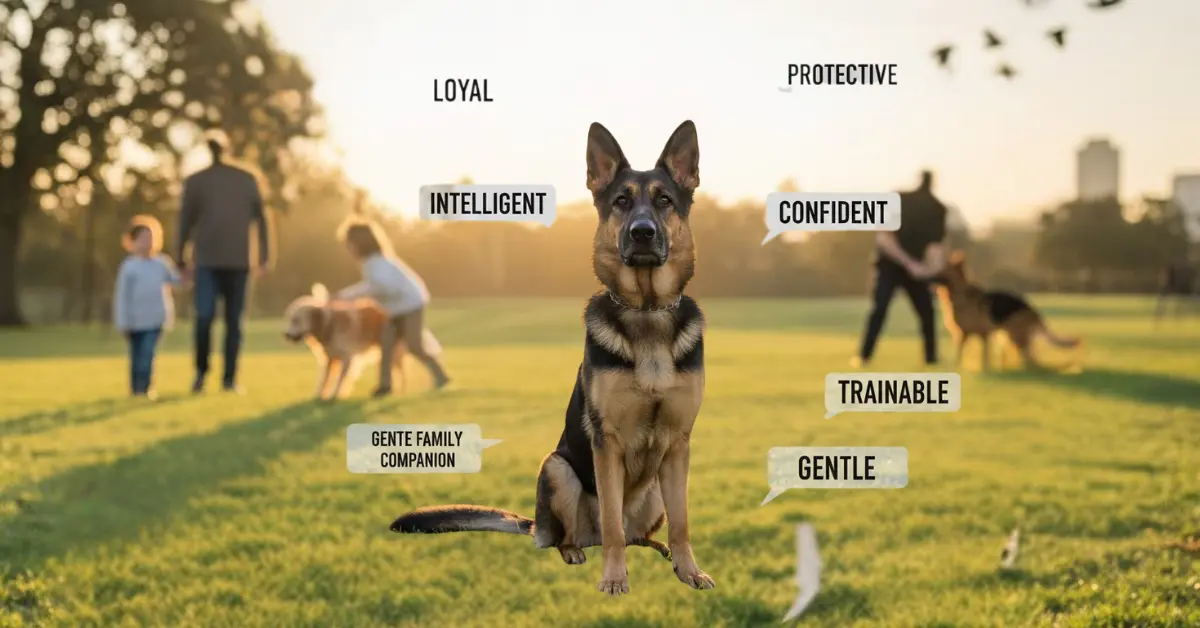
Most homes with German Shepherds find they fit right in, especially if raised gently and with routine. Watchful by nature, these dogs stick close to their people, offering quiet alertness instead of constant barking. Not every protective dog shows love so clearly this one does, which is why so many pick it over others.
A well trained German Shepherd often shows calmness around kids, staying alert without being tense. Because they bond strongly, they usually stick near children like a quiet guardian. Still, their strength and excitement need careful handling every time. Their presence feels steady, yet someone must always guide how they interact.
When families know how German Shepherds typically behave, it becomes easier to build good moments together. Because they thrive on steady schedules, firm limits, and meeting people young, these dogs settle into homes smoothly while bonding deeply with kids and grown ups alike.
How They Act Around Little Kids
Little kids might see a quiet strength in German Shepherds if they meet them the right way. Watchful by nature, these dogs pick up shifts in noise or motion, leading to careful reactions instead of quick ones.
Start soft when kids meet dogs hands quiet, movements slow. A steady presence keeps things safe instead of sudden grabs or loud noises. Watch every moment together so lessons stick without confusion. Trust builds when actions stay predictable.
Close by kids, German Shepherds tend to stay when playing or just sitting still. Not trying to take charge just paying attention. Given clear direction, these dogs settle into homes well, giving steady care and warmth without making a fuss.
Early Socialization Matters
Puppies learn how to act around kids when they meet people early on. Meeting new faces, places, and noises makes them less nervous later. Starting young sets the pattern for calm reactions.
Puppies meeting kids at a young age learn calm reactions over time. When these moments go well, steady feelings grow alongside self assurance.
Even as they get older, dogs still need time with people. Spending consistent moments together at home, having calm games, followed by clear lessons keeps things steady. If raised right, German Shepherds turn out loyal companions strong when needed, yet kind around loved ones.
German Shepherd Behavior Around Other Dogs and Pets
A German Shepherd’s behavior toward other animals often comes down to how it was raised, what training it got, and clear rules set early. When introduced well to new companions, peace with dogs or pets at home is possible. Confidence might look like aggression, though it usually isn’t just a strong drive to protect shaped by experience. Without direction, that instinct can cause confusion.
Most worries over German Shepherds acting aggressively stem from how they’re first met, not their nature. Raised with clear guidance, these dogs often act like any friendly breed. Calm curiosity replaces pushy behavior when their upbringing supports balance. Their reactions reflect training more than temperament.
When owners understand how these dogs interact socially, fewer conflicts happen. Because they respond to steady guidance, regular contact, plus slow introductions, German Shepherds fit into homes with multiple pets while staying balanced.
Same Sex Competition and Space Behavior
Out of nowhere, a German Shepherd might challenge another dog of the same gender, especially if not neutered. Confidence plays a role here, along with awareness of surroundings. Without structure, tension can grow as they mature.
Training helps keep strong reactions under control. Regular walks, structured tasks, and controlled play reduce stress while building patience. If tension appears early, slowing things down is better than forcing interaction.
In familiar spaces, they may act protective. When raised together from a young age, dogs learn boundaries and reduce conflict. With the right approach, stability replaces confrontation.
German Shepherds and Other Pets
A slow introduction matters when bringing a German Shepherd around other animals. Neutral spaces reduce tension and help both pets adjust. Watching their reactions step by step improves safety and comfort.
Positive reinforcement helps build trust. When calm behavior is shown, rewards encourage repetition. Over time, these small interactions strengthen peaceful coexistence.
Leashes are useful around smaller animals at first. Early exposure helps reduce chasing instincts later. With patience and structure, German Shepherds can live peacefully with other pets in the home.
Aggression and Behavior Misunderstandings
German Shepherds are often seen as aggressive, but much of this comes from misunderstanding or poor handling. In reality, they are naturally alert rather than hostile. Proper upbringing shapes calm and steady behavior.
Their watchful nature helps them notice changes quickly, but awareness is not the same as aggression. With consistent training, they remain composed and reliable in daily life.
Environment and structure play a major role. In stable homes with clear rules, they tend to show loyalty and balance instead of fear or reactivity.
Nature Versus Nurture in Behavior
A dog’s personality comes partly from genetics, but environment shapes how those traits appear. Confidence, alertness, and sensitivity can all be influenced by experience.
Early exposure to people, sounds, and places helps build emotional stability. Without it, fear responses may appear stronger, sometimes mistaken for aggression.
Consistency in daily life helps balance instinct and behavior. With the right guidance, German Shepherds grow into steady and dependable companions.
Training and Its Effect on Behavior
German Shepherds respond strongly to training because they learn through patterns and outcomes. Reward based guidance helps shape calm responses over time.
Inconsistent training can lead to confusion, which may look like unwanted behavior. Clear structure helps them understand expectations and reduces stress.
With repetition and patience, they learn to pause instead of react. Over time, training builds trust, focus, and stability.
Male and Female Behavior Differences
Males are often slightly larger and may appear more steady in presence, while females can seem more independent yet affectionate once bonded.
However, behavior is influenced more by training and environment than gender. Personality differences vary widely between individuals.
Choosing between male and female depends more on lifestyle, activity level, and training commitment than predictable traits. Both can adapt well to family life when guided properly.