If you’ve just brought home a German Shepherd puppy, you’re likely currently dealing with what I affectionately call the “Land Shark” phase. Your arms are probably covered in tiny scratches, and your shoes have become chew toys. But there is a quieter, less visible challenge happening inside that growing body.
In my eleven years of living with and writing about this breed, I’ve found that new owners are often surprised by just how persistent parasites can be. You’d think a sturdy, brave GSD would be immune to something as small as a worm, but the reality is that a german shepherd puppy deworming schedule is the single most important health foundation you can set.
I remember bringing home my first GSD, a spitfire named Luna. She looked perfect—shiny coat, bright eyes—until about three days in, when I noticed something moving in her stool. It looked like a stray piece of spaghetti. That was my first introduction to roundworms in dog poop, and it taught me that even the most pristine-looking puppy can be carrying an internal “zoo” that needs evicted.
Why German Shepherds are Unique When it Comes to Parasites
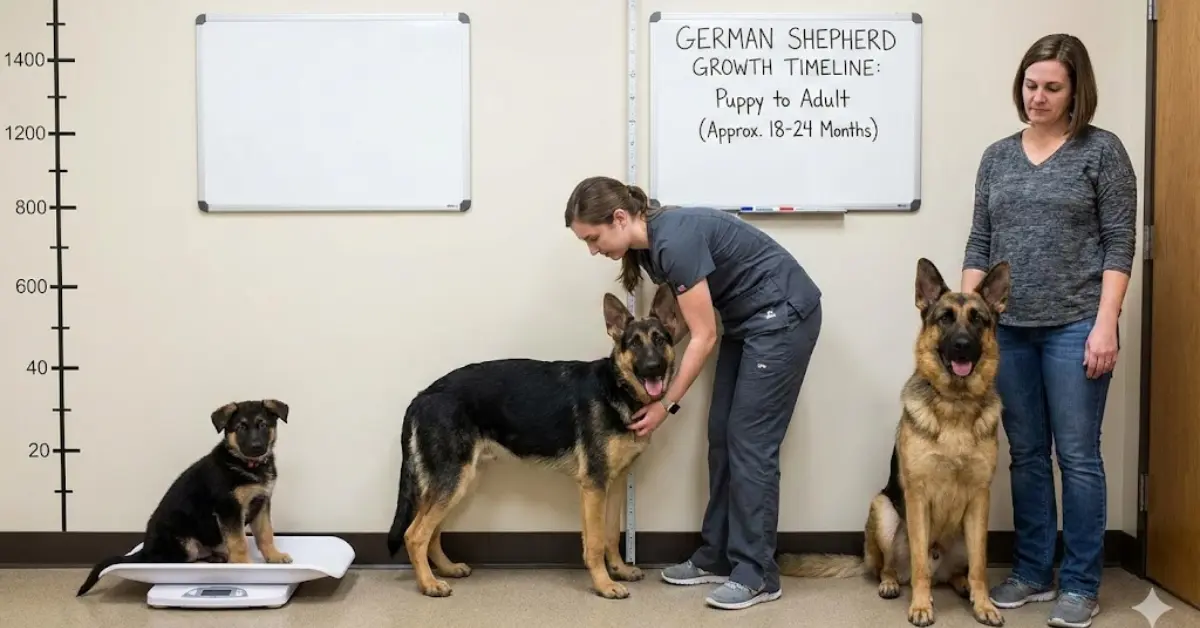
German Shepherds grow at an incredible rate. A male GSD can go from a 15-pound ball of fluff at 8 weeks to a 60-pound teenager by 6 months. This rapid skeletal and muscular development requires an immense amount of nutrition.
When a puppy has roundworms, those parasites are essentially sitting at the dinner table before the puppy is. They steal the calcium, phosphorus, and protein that the GSD needs for those famously large bones and upright ears. Beyond just “being gross,” an untreated worm load in a GSD can lead to:
- Poor Bone Density: Increasing the risk of joint issues later.
- Digestive Sensitivity: GSDs are already known for “weak stomachs”; parasites make this ten times worse.
- Secondary Infections: A weakened immune system can’t fight off puppyhood illnesses as effectively.
The 2026 German Shepherd Puppy Deworming Schedule
Veterinary protocols in 2026 have shifted toward a more “preventative-first” mindset. We no longer wait to see symptoms; we assume the parasites are there and act accordingly.
The Early Weeks (Breeder Phase)
Most of this happens before you even pick up your puppy, but it’s your job to ask the breeder for the records to ensure it was done.
- 2 Weeks Old: The first dose. This targets worms passed through the mother’s milk or in utero.
- 4 Weeks Old: The second dose. This catches the larvae that were migrating through the tissues during the first round.
- 6 Weeks Old: The third dose. At this stage, the puppies are starting to eat solid food and explore their immediate environment.
The Homecoming Phase (Owner Phase)
This is where you take the reins. Gsd puppy deworming needs to be consistent during these high-growth months.
- 8 Weeks Old: This usually aligns with their first vet visit with you. It’s a critical time because the stress of moving to a new home can actually trigger a dormant parasite load to flare up.
- 12 Weeks Old: Your puppy is likely venturing further into the yard or perhaps a puppy social class. They are vacuuming up everything with their nose.
- 16 Weeks Old: The final “puppy” dose before transitioning to adult maintenance.
The Maintenance Phase
- 6 Months+: Transition to a monthly broad-spectrum preventative that covers heartworm, roundworms, and hookworms.
| Puppy Age | Treatment Type | Target Parasites |
| 2–8 Weeks | Liquid/Oral Suspension | Roundworms & Hookworms |
| 12 Weeks | Chewable/Tablet | Roundworms, Hooks, & Whipworms |
| 16 Weeks | Monthly Combination | Heartworm, Intestinal Worms, & Fleas |
What About Heartworms?
This is where things get a bit more serious. I often hear owners ask, “can a puppy get heartworm?”
The answer is a resounding yes, though the biology is a little different than intestinal worms. Heartworms are transmitted via mosquitoes. If a mosquito bites an infected dog and then bites your puppy, they inject “microfilaria” (baby heartworms) into your GSD’s bloodstream.
Actually, the question shouldn’t be “can puppies have heartworm?” but rather “when should I start protecting them?” In 2026, the consensus is to start heartworm prevention for puppies as early as 8 weeks.
In my experience, owners sometimes get confused about the puppy heartworm schedule. You don’t “deworm” for heartworm once and call it a day. It is a lifelong, monthly commitment. Because a GSD is a “working” breed that likely spends a lot of time outdoors—hiking, training, or patrolling the yard—their exposure risk is significantly higher than a lap dog that stays inside.
Real-World Signs Your GSD Puppy Has an Issue
Even with a strict schedule, things happen. I’ve seen puppies pick up tapeworms because they managed to swallow a single flea while chasing their tail. Here is what to look for:
The “Pot Belly” Appearance
If your GSD looks bloated or “tight” in the stomach area, but you can feel their ribs easily elsewhere, it’s a classic sign of a heavy worm load. They aren’t fat; they are full of parasites.
1. The Infamous “Scoot”
If you see your puppy sitting down and dragging their hindquarters across your grass (or worse, your rug), they are trying to relieve an itch. This is often caused by tapeworms, which leave behind little segments that look like dried grains of rice.
2. Change in Coat Texture
A healthy GSD puppy should have a coat that feels soft and looks slightly lustrous. If the fur starts looking “staring” (spiky or dull) or if they start losing hair in patches, their body is diverting nutrients away from the skin to deal with the internal parasites.
3. Behavioral Changes
A wormy puppy is a tired puppy. If your “Land Shark” suddenly stops wanting to play or seems lethargic, it’s time for a fecal test at the vet.
Step-by-Step: Managing the Deworming Process
Administering meds to a German Shepherd is an art form. These dogs are smart—they can sniff out a pill hidden in a steak from a mile away.
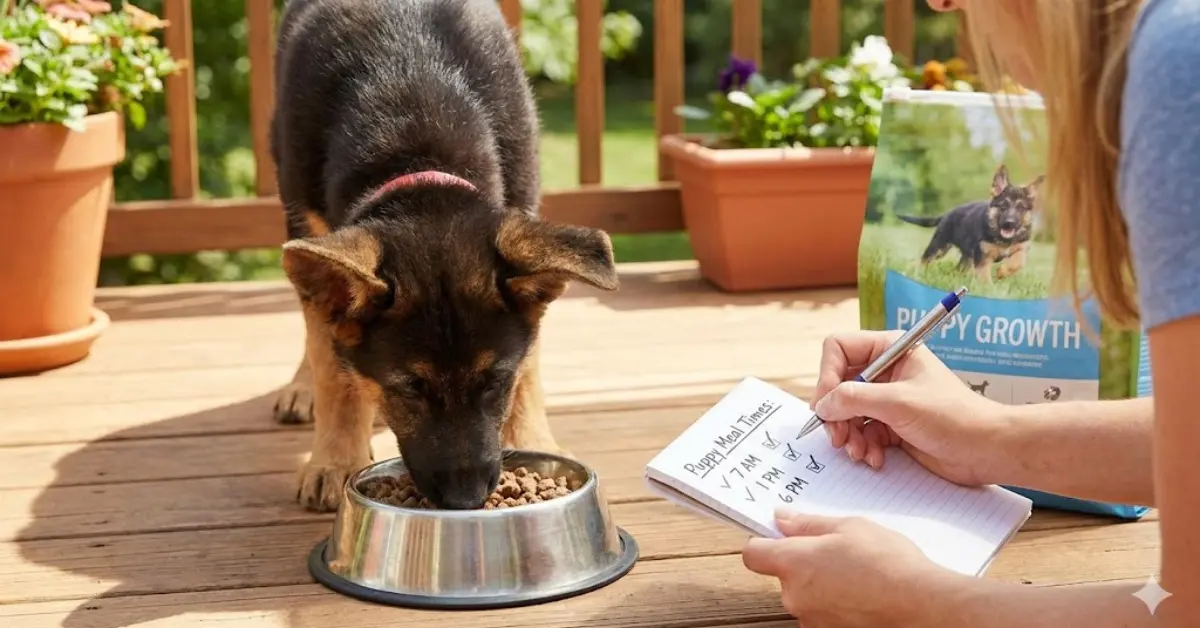
- The Weigh-In: Before every dose, weigh your puppy. GSDs can gain 5 pounds in a couple of weeks. An under-dosed dewormer won’t kill all the parasites, and an over-dosed one can cause an upset stomach.
- The “High-Value” Hide: Don’t use standard kibble. Use a small piece of braunschweiger, a smear of peanut butter (xylitol-free!), or a piece of plain boiled chicken.
- The Check-Up: For 48 hours after deworming, keep your puppy on a leash when they go potty. You need to see what’s coming out. If you see roundworms or segments, you know the medicine is working.
- Sanitization: Immediately pick up any waste. Many worm eggs are “sticky” and can survive in the soil through rain and snow. If you leave it there, your puppy will just reinfect themselves next week.
People Also Ask
Does the breeder always deworm puppies before they leave?
Most reputable breeders do, but I’ve seen cases where a “backyard breeder” skips these steps to save money. Always ask for a signed health record from their vet. If they can’t provide one, assume the puppy has not been treated.
Can I get worms from my German Shepherd?
Yes, unfortunately. Roundworms and hookworms are zoonotic. I always tell my readers: “Treat your puppy, wash your hands.” Kids are especially vulnerable because they tend to play on the floor where the puppy has been.
Why does my puppy have diarrhea after deworming?
This is actually fairly common. When a large number of worms die off at once, they release toxins that can irritate the lining of the gut. It usually clears up in 24 hours. If it lasts longer, call your vet.
Dealing with Tapeworms: A Special Note
If you’ve done the standard roundworm treatment for dogs and you’re still seeing little white flecks near your puppy’s tail, you are likely dealing with tapeworms.
Tapeworms aren’t killed by most “all-in-one” puppy dewormers. They require a specific medication (usually Praziquantel). Since tapeworms come from fleas, you also have to tackle the flea situation. If you don’t kill the fleas, the tapeworms will be back in 14 days. It’s a frustrating cycle, but one that is easily broken with a good flea preventative.
Wrapping Things Up
Keeping your German Shepherd on a strict german shepherd puppy deworming schedule feels like a lot of work in those first few months. Between the vet visits, the “poop patrol,” and the cost of preventatives, it’s easy to feel overwhelmed.
But look at it this way: you are protecting the future of your dog. Those large bones, that sharp mind, and that incredible energy depend on a healthy gut. I’ve seen what happens when a GSD puppy is neglected in this area—they often struggle with digestive issues for the rest of their lives.
Stick to the 2-4-6-8-12 week plan. Get your heartworm prevention for puppies started early. And most importantly, enjoy these crazy puppy days. They grow up way too fast!
FAQs
1. What are the most common roundworms in dog poop?
The most common is Toxocara canis. When you see them, they usually look like light brown or cream-colored worms that are several inches long. They often curl up like a spring once they are outside the body.
2. Can a puppy get heartworm in the winter months?
Yes, it is possible. While mosquitoes are less active in the cold, 2026 has shown that microclimates (like warm garages or unusually warm winter weeks) allow mosquitoes to survive. This is why vets now recommend year-round protection rather than seasonal.
3. How do I choose the right roundworm treatment for dogs?
Always start with your vet. Over-the-counter (OTC) meds can be “hit or miss” and sometimes aren’t strong enough for a heavy infestation. Your vet will likely prescribe something like Pyrantel Pamoate or Fenbendazole, which are highly effective and safe for GSDs.
4. Is the puppy heartworm schedule different for German Shepherds?
The timing is the same (starting at 8 weeks), but the dosage is based on weight. Because GSDs grow so fast, you often have to buy single doses rather than a 6-month pack, as they will outgrow the weight bracket within 4 weeks!
5. What should I do if I see tapeworms after my puppy was already dewormed?
You need to ask your vet for a specific tapeworm treatment. Most standard dewormers only target “ascarids” (roundworms). You also need to check your puppy for fleas, as that is almost certainly how they caught the tapeworm.
6. Can puppies have heartworm at birth?
No. Unlike roundworms, which can cross the placenta, heartworm requires a mosquito as an intermediate host. A puppy is born “clean” of heartworm but can be infected by a mosquito bite just minutes after being born.
7. Why is my GSD puppy “scooting” if I don’t see worms?
It could be impacted anal glands, but more often than not, it’s the microscopic irritation caused by parasites. Even if you don’t see roundworms, the eggs or larvae could be causing discomfort.
8. How long does the german shepherd puppy deworming schedule last?
The intensive “every few weeks” phase ends at 16 weeks. After that, your dog moves to a monthly preventative for the rest of their life to protect against heartworm and common intestinal parasites.