Raising a German Shepherd puppy honestly feels like stepping into a whole new world. They’re tiny, they’re clumsy, and they look at you with those big hopeful eyes every time you hold their bowl. When I brought my first GSD puppy home, I remember standing in the kitchen completely confused about how much to feed him. I tried searching, asking friends, even guessing at times… and that never ended well. That’s when I first came across the german shepherd puppy feeding chart, and it felt like someone finally turned the lights on for me.
The german shepherd puppy feeding chart didn’t just tell me the numbers—it gave me a sense of direction. My puppy was growing fast, changing almost every week, and the german shepherd puppy feeding chart helped me understand how quickly their needs shift. Without it, I would’ve easily overfed or underfed him, and German Shepherds are sensitive during these early months. Even now, whenever someone tells me they’ve adopted a GSD puppy, the first thing I share is the german shepherd puppy feeding chart, just because it removes so much confusion in the beginning.
Let’s break everything down in a simple, friendly, experience-based way.
Understanding Your GSD Puppy’s Growth
One thing I’ve noticed over the years… no two GSD puppies eat the same way. Some are gentle nibblers, while others inhale their food like they’re training for an eating competition. But they all share one thing: rapid growth.
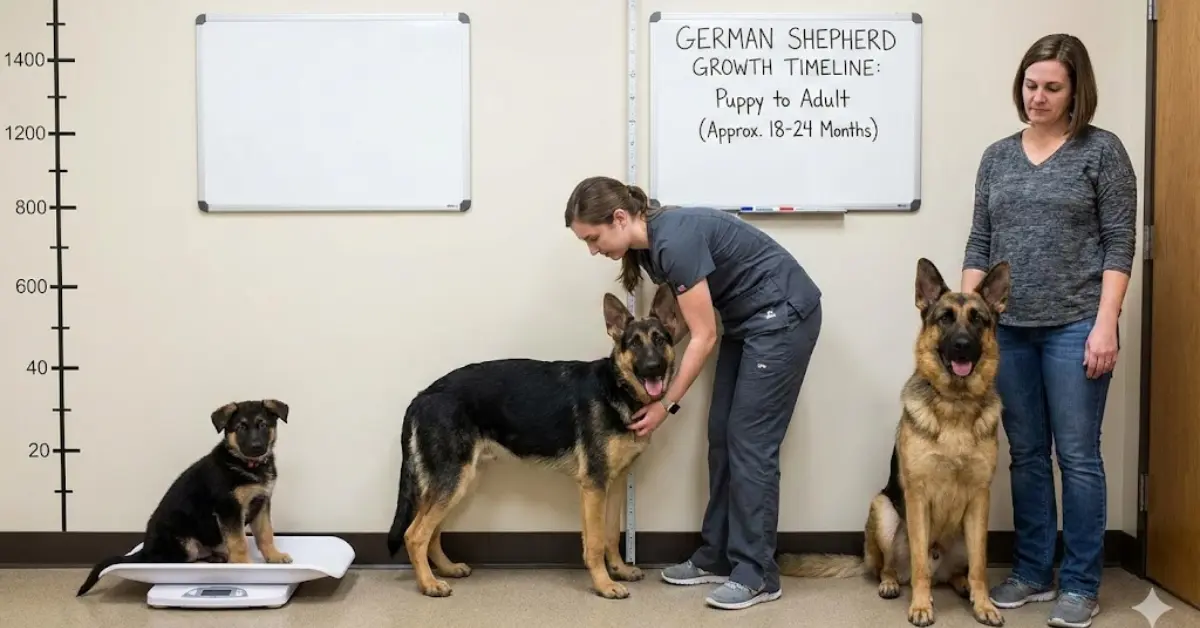
From 0–12 months, their bones, muscles, brain, and digestive system develop at a crazy pace. This is why a structured gsd puppy food chart isn’t just about feeding—it’s about supporting their long-term health.
Key Growth Facts
- GSD puppies can gain 1–2 lbs per week in the early stage
- Their joints grow earlier than their muscles
- Wrong nutrition can cause hip dysplasia risks
- They burn calories faster than small breeds
- Growth plates remain soft until 12–14 months
I’ve personally gone through the guesswork of feeding “by feel,” and it almost always leads to either a too-chubby or too-skinny pup. Having a structured german shepherd weight and feeding chart honestly saves you from a lot of stress.
Complete German Shepherd Puppy Feeding Chart (0–12 Months)
Below is the detailed gsd feeding chart by age with real-life, actionable quantities and feeding schedules.
🍼 0–2 Months (Newborn to 8 Weeks)
At this stage, the mother does 90% of the work. If your puppy is orphaned or the mother has low milk supply, you’ll have to step in.
Feeding Method:
- Mother’s milk
- Puppy formula milk (never cow milk)
- Bottle feeding every 2–3 hours if orphaned
Food Quantity:
- 1–3 tablespoons per feeding depending on body size
Behavior Signs:
- A warm puppy = well fed
- Crying = hunger or cold
- Strong sucking = good appetite
I remember bottle-feeding a tiny GSD named Shadow, and honestly, it was exhausting but deeply bonding. This stage passes quickly — but it sets the foundation.
2–3 Months (8–12 Weeks)
Your puppy is now learning to eat solid food. Their appetite grows almost daily.
| Age | Weight Range | Meal Frequency | Food Amount/day |
| 8–10 weeks | 7–11 kg | 4 meals | 1–1.5 cups |
| 10–12 weeks | 9–14 kg | 4 meals | 1.5–2 cups |
Good signs:
- Puppy is active after meals
- No bloating
- Poop is firm
Red flags:
- Vomiting
- Diarrhea
- Puppy crying around food
I’ve learned that 2–3 month-old GSD puppies love routine more than anything else.
3–4 Months (12–16 Weeks)
The first big growth spurt happens here. Legs get longer, ears go up and down like radio antennas, and appetite jumps.
| Age | Weight | Daily Food | Frequency |
| 12–16 weeks | 10–18 kg | 2–2.5 cups | 3 meals |
What I usually do at this stage:
- Introduce light training treats
- Use a slow-feeder bowl
- Keep the meal schedule consistent
This is also when teething begins — so don’t panic if appetite drops on certain days.
4–5 Months
Your GSD puppy now starts showing early signs of their adult structure.
| Age | Weight | Daily Food | Meals |
| 4–5 months | 12–22 kg | 2.5–3 cups | 3 meals |
Tips for this stage:
- Avoid overfeeding to “speed up” growth
- Bones are still fragile
- Add calcium only if vet recommends
- Introduce boiled vegetables slowly
One of my puppies became mildly overweight at 5 months because I thought “more food = more strength.” The vet corrected me fast. Keep meals balanced.
5–6 Months
Teenage energy begins, and trust me, they run like rockets.
| Age | Weight | Daily Food | Meals |
| 5–6 months | 16–27 kg | 3–3.5 cups | 2–3 meals |
This is generally when you can slowly transition to twice-a-day feeding.
Check body condition:
- Can feel ribs but not see them
- Clear waistline
- Energetic, not sluggish
6–9 Months
Now the puppy’s strength increases. This is the stage where muscle mass starts catching up to their height.
| Age | Weight | Daily Food | Meals |
| 6–9 months | 20–32 kg | 3.5–4 cups | 2 meals |
What I always watch:
- Sudden growth spurts
- Signs of hip stress
- Excessive weight gain
If your GSD seems “heavy,” reduce portions — don’t wait.
9–12 Months
You’re approaching adulthood, but the puppy brain is still very real.
| Age | Adult % Size | Daily Food | Meals |
| 9–12 months | 70–90% | 4–5 cups | 2 meals |
Tips:
- Start switching to adult food around 12 months
- Keep bones and heavy chews limited
- Maintain structured exercise
How Much to Feed a GSD Puppy (Simplified)
Here’s the simplest and most practical formula I use:
Daily Food (cups) = Puppy Weight (kg) × 0.10 to 0.13
Example:
If your puppy weighs 15 kg, it needs:
1.5 to 2 cups per day (adjust depending on activity)
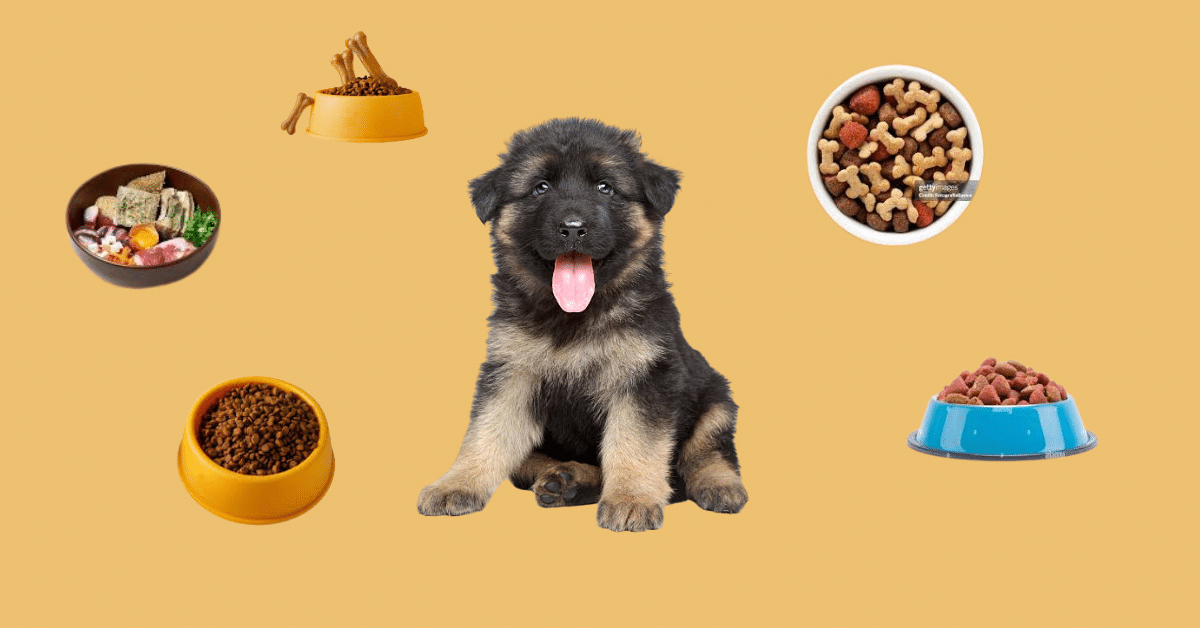
Types of Food You Can Feed
1. Dry Kibble (Recommended)
- Best balance
- Easy to measure
- Supports jaw strength
Choose large-breed puppy kibble with:
- 22–28% protein
- 10–14% fat
- Controlled calcium levels
2. Wet Food
I use this only for picky eaters or mixing with kibble.
Pros:
- Tasty
- High moisture
Cons:
- Expensive
- Can cause soft stool
3. Homemade Food
Lots of owners love this — but be careful.
Good ingredients:
- Boiled chicken
- Lamb
- Pumpkin
- Carrots
- Boiled eggs
- Rice
Foods to avoid:
- Onions
- Grapes
- Chocolate
- Excessive salt
- Too many bones
4. Raw Diet
Personally, I don’t use full-raw diets for puppies. The risk of imbalance is too high.
If you choose raw feeding:
- Work with a canine nutritionist
- Avoid too much liver
- Maintain proper calcium-phosphorus ratio
Sample Feeding Schedules by Age
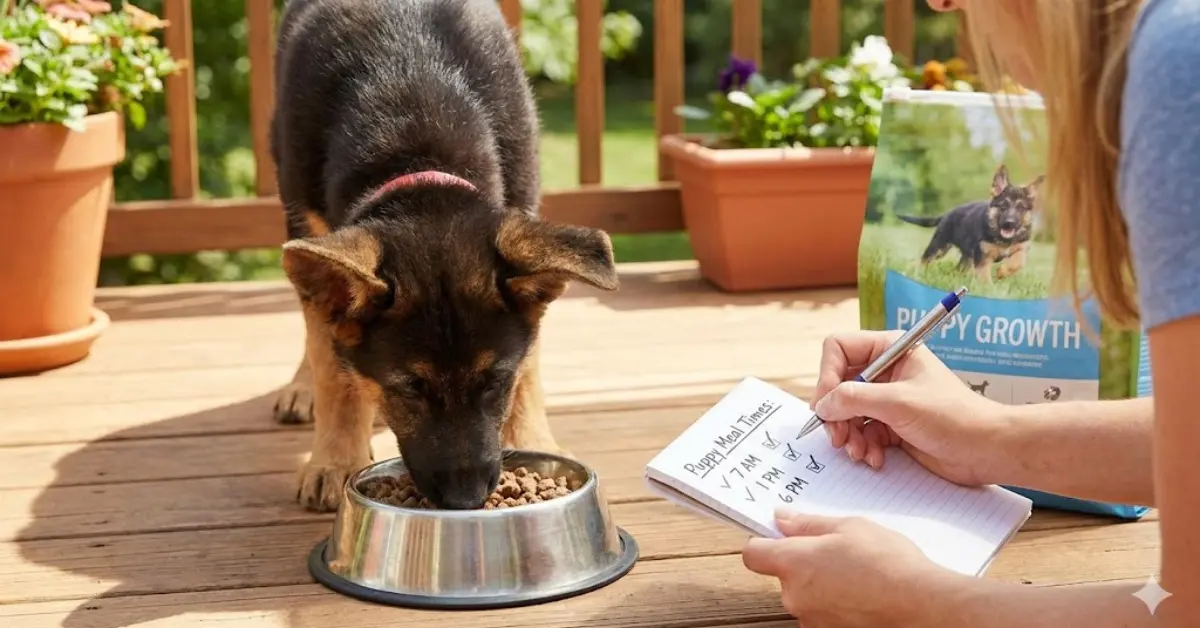
GSD puppies thrive on predictable routines.
2–3 Months
- 4 meals a day
- 7:30 AM
- 12:00 PM
- 4:00 PM
- 8:00 PM
3–6 Months
- 3 meals a day
- 8:00 AM
- 2:00 PM
- 7:00 PM
6–12 Months
- 2 meals a day
- 8:30 AM
- 6:30 PM
Signs You’re Feeding Too Much
- Loose stools
- Constant bloating
- Puppy looks round
- Reduced energy
- Rapid weight gain
GSD puppies grow fast, but not “bodybuilder fast.” Controlled growth is healthier.
Signs You’re Feeding Too Little
- Visible ribs
- Low energy
- Slow growth
- Dull coat
If I ever feel unsure, I follow the german shepherd weight and feeding chart guidelines as a quick correction.
Supplements You Can Give (Only If Needed)
- Fish oil (for coat)
- Probiotics
- Glucosamine (after 6 months)
Avoid giving:
Calcium supplements unless your vet confirms deficiency.
- Calcium overload = joint deformities.
- People Also Ask (Extended Edition)
- Should I free-feed my GSD puppy?
- Free-feeding leads to overeating and inconsistent digestion.
How fast should a GSD puppy grow?
- Around 1–2 lbs per week, depending on genetics.
Why does my puppy eat grass?
- Usually boredom or digestive self-soothing. Not always a concern unless excessive.
Can I switch kibble brands anytime?
- Do it slowly over 7 days to avoid stomach issues.
Combined German Shepherd Puppy Weight & Feeding Chart
| Age | Avg Weight (kg) | Food/day (cups) | Meals |
| 2 months | 7–11 | 1–1.5 | 4 |
| 3 months | 10–18 | 2–2.5 | 3 |
| 4 months | 12–22 | 2.5–3 | 3 |
| 5 months | 16–27 | 3–3.5 | 3 |
| 6 months | 20–32 | 3.5–4 | 2 |
| 9 months | 26–34 | 4–5 | 2 |
| 12 months | 28–38 | 4–5 | 2 |
Extra Feeding Tips from Real Experience
- Keep treats under 10% of daily calories
- Too many treats = stomach trouble.
- Stick to one protein source at first
- Helps avoid allergies.
- Use slow-feeder bowls for fast eaters
- GSD puppies often inhale food.
- Don’t feed right before intense play
- Prevents bloating risks.
- Learn the rib test
- Can feel ribs = perfect
- Can see ribs = too thin
- Can’t feel ribs = too heavy
- Short-term diarrhea?
- Boiled chicken + rice works wonders.
- Growth spurts change appetite
- Some days high, some days low — normal.
The Final Scoop on Feeding Your German Shepherd Puppy
Feeding a German Shepherd puppy is both a responsibility and a joy. With a proper german shepherd puppy feeding chart, you’ll feel more confident and less stressed — and your puppy will grow strong, healthy, and full of life. GSDs aren’t just pets; they’re family members who depend on your choices every single day. When you follow the gsd feeding chart by age, observe your pup’s behavior, and stay consistent with meals, you’re building the foundation for long-term health and a beautiful bond.
FAQs
1. Can I give fruits to my GSD puppy?
Yes — apples, blueberries, bananas (small pieces). They fit well into a gsd puppy diet chart as snacks.
2. What’s the best protein for German Shepherd puppies?
Chicken, lamb, and turkey work best for digestion.
3. Is rice good for GSD puppies?
Yes. It’s gentle on the stomach and safe to mix with kibble.
4. Should I feed before or after walks?
After light walks. Heavy exercise on a full stomach isn’t ideal.
5. My puppy eats too fast. What should I do?
Use a slow-feeder bowl — it’s a life-saver for fast-eating GSDs.
6. What if my GSD puppy refuses food?
Check for teething, change in routine, or tummy issues. Refer to your german shepherd weight and feeding chart to adjust.
7. Can I give bones?
Soft, puppy-safe chew bones only. No cooked bones.
8. How can I tell which kibble is best?
Look for large-breed puppy formulas with controlled calcium and good protein levels.