German Shepherd Puppy Leash Training: A Warm, Real-Life Guide for New GSD Owners

By HINDHUJA VAKADA

Updated On:

german shepherd puppy leash training

Join WhatsApp

Join Now

Table of Contents

German Shepherd Puppy Leash Training Made Simple

That moment sticks. An 8-week-old German Shepherd pup, wide-eyed, staring at the leash like it was something from another planet. Chewing came next. After that? Spinning in frantic loops. Maybe you’ve seen this before. Probably feels familiar. Honestly – it happens more than you think.

Puppies of the German Shepherd kind learn more than steps when on a leash. Through you, they discover trust, begin to pay attention, then slowly decode what surrounds them. A walk becomes their window.

Then everything clicks into place.

Peace settles in during walks, turning them into quiet times together rather than wild pulls back and forth.

Start here, where things make sense because they’ve been tried before. This isn’t theory – just steps taken by people who actually walked through them. Each part fits together like worn tools in a working kit. Not perfect, but honest. Built slow. Learned fast.

German Shepherd Puppies Often Have Trouble Walking on a Leash Early On

Puppies of this breed explore everything, react strongly to new things, also burst with movement. Strange is how a strap around the neck seems – suddenly stopping their dash, bringing noises odd to small ears, tugging in ways that confuse young minds.

Most owners miss this point entirely

That strap around the neck? More than rope. For a young dog, each tug speaks sentences. Meaning grows with every step.

Common first reactions include:

• Chewing the leash
• Pulling in the opposite direction
• Sitting and refusing to move
• Getting overly excited
• Chasing every single thing that shifts. Running after whatever stirs. Always moving toward what flickers in the corner. Never still when something changes place. Following each motion like it matters

Should your puppy have shown any of these behaviors, progress is clear.

The Best Time to Begin Leash Training Puppies

You can start gsd puppy leash training as early as 8–10 weeks. At this age:
• They learn faster
• They adapt to new equipment more easily
• They haven’t yet developed strong pulling habits
• Even now, they trail behind as you move through rooms

Start early with the leash, then every step of training feels lighter. Later on comes harder catches.

What To Have Ready Before Starting

Right off the bat, some first-time pet holders head out walking before sorting simple needs. Yet using proper equipment changes everything.

What You Need:

• A lightweight 4–6 foot leash
• A well-fitted harness or flat collar
• Little bits of chewy snacks
• A quiet indoor space

Peace inside shows up before anything else does. Your presence carries weight – more than actions sometimes. Stillness speaks louder when things get loud around you. What hums beneath your skin affects outcomes quietly. Energy shifts happen without words being said. How you hold yourself changes how moments unfold

Puppies just starting out tend to move around a lot, which makes a harness easier on their bodies since sudden tugs won’t strain their necks like a collar might. Instead of pressing tightly during quick moves, the harness spreads pressure more gently across the chest area where it’s less likely to cause irritation.

German Shepherd Puppy Leash Training Made Simple (Step by Step)

Here’s how leash training can be shaped into calm walking without tugging or fear. Over time, the pattern builds into consistency. Instead of rushing ahead, the pup learns to stay close. When it tries to charge forward, movement pauses. Patience becomes the guide, not force. Each stop resets focus. Walking slowly becomes the new rhythm. Rewards arrive only when attention returns. This is less about control and more about timing. Repetition locks the behavior in place.

Let Your Puppy Get Used to the Leash Indoors

Hold off on heading outside just now.

Drop the leash and collar where your pup can reach. Let it explore – nudging, smelling, maybe chewing. Some biting is normal too.

Goal:

Make the leash feel safe and ordinary.

Attach the Leash Without Moving

Pup gets used to wearing a leash inside when it is clipped on during play.

At first:
• Let it trail along the ground behind
• Do not guide them
• Let it feel normal

Tip: Keep sessions short – 2 to 3 minutes.

Teach Follow Me Indoors

  • Slowly take hold of the leash.
  • Step back once.
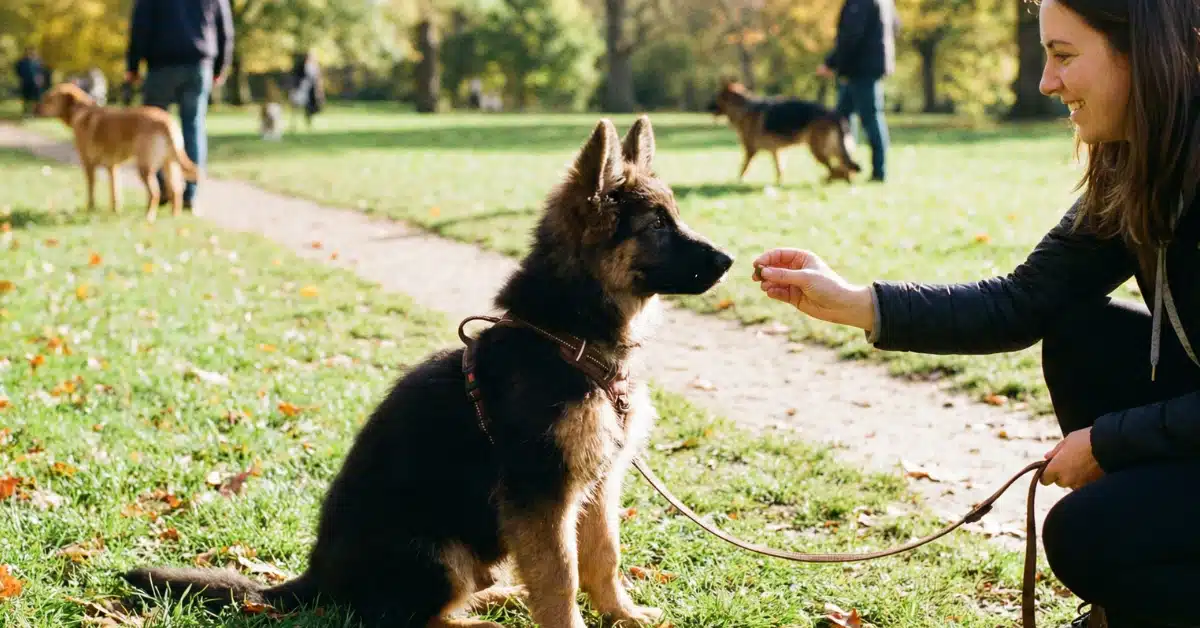
  • If the puppy follows, reward immediately.
  • This moment builds the foundation of walking beside you.
  • A cheerful “Yes!” often comes out. Sometimes a simple “Good!”
  • Shouting breaks connection. Calm movement builds it.
  • Repeat for 3–5 minutes.

Practice:

  •  Walk a few steps at a time
  • Move near familiar indoor areas
  •  Gradually extend movement space

Response guide:

  •  Follows → Reward
  •  Pulls → Stop movement
  •  Stops → Kneel and encourage

Add Simple Indoor Turns

Once following improves, introduce slow turns left and right.

Smooth movement helps the puppy adjust without confusion.

German Shepherds respond well to direction and structure.

Training close walking early reduces pulling later.

Take It Outside (Start Small)

Take your puppy outside only when:
• Indoor leash walking feels comfortable
• The leash is understood as safe
• The puppy can walk beside you for about ten steady steps

Start outside with short sessions. Three to five minutes is enough. Build slowly from there.

Reward Calm Walking

Every time your pup stays beside you, even briefly, acknowledge it immediately.

• “Yes!”
• Treat
• Gentle praise

Even small moments matter. Staying close becomes the behavior that gets rewarded.

Treats can reduce over time, but praise should remain consistent.

Practice Daily (Consistency > Length)

A beginner-friendly leash training schedule for puppies looks like:

Session Duration Location
Morning 3–5 minutes Indoors
Afternoon 5 minutes Backyard / Quiet street
Evening 2–3 minutes Indoors

These micro-sessions add up fast and prevent overwhelm.

Stop Pulling Early

Years go by, yet folks still bring up the same thing again. It pops up a lot when people talk about their struggles

“My German Shepherd puppy pulls like crazy. What am I doing wrong?”

Here’s the truth:

Puppies with deep chests learn fast when someone guides their steps. Without clear paths shown early, these quick thinkers make up games as they go.

The Change Direction Method

Puppies full of energy tend to respond best to this approach.

When your puppy bolts forward:
• Calmly turn around
• Head back the way you came
• Reward if they return with good manners

Most times, by the third or fifth try, the pup looks at you rather than pulling ahead.

Common Challenges and Simple Solutions

Puppy Won’t Walk or Sit Still

This tends to occur when:
• They’re scared
• They’re overwhelmed
• The leash feels uncomfortable

Puppy Chews Leash

Totally normal.

Fixes:
• Use a toy for redirection
• Keep walks short
• Use fabric-based leash options that discourage chewing

Most people notice less chewing after just a week or so of steady practice. Timing may vary, but around two weeks often shows strong improvement.

Puppy Overexcited When Walks Begin

Your puppy is overflowing with energy.

Fix:
Begin inside with five minutes of playful movement. Light activity helps release energy before stepping outside.

A bit of early movement reduces pulling later. Training sticks better after controlled play.

People Also Ask

1.What’s the timeline for getting a German Shepherd pup used to a leash?

Weeks of steady effort usually teach a young German Shepherd pup how to behave on a leash. Around two to three months is often when walks feel smoother and more relaxed.

2.How do you train a German Shepherd puppy to stop pulling?

Pause each time they tug, then continue only when they settle. Reward calm walking instead of pulling.

Consistency matters more than strength.

3.Can leash training start indoors?

Yes. Starting indoors helps build confidence without distractions.

4.How long should a GSD puppy walk daily?

Short and frequent walks work best:
• 5–10 minutes per session
• Multiple sessions a day

Their bodies are still developing, so long walks are not ideal yet.

5.When should a German Shepherd puppy start walking outside?

Outdoor walks are safer after initial vaccinations are completed. Until then, controlled areas like a yard or clean driveway are better options.

Focus less on distance and more on comfort and readiness.

6.Tips for Keeping Training Fun

• Use high-value treats like chicken or cheese
• Keep sessions short
• Mix training with play
• Celebrate small progress
• Stay consistent

Training improves faster when it feels like play, not pressure.

7.Common Mistakes to Avoid

• Starting outdoor walks too early
• Using heavy leashes for young puppies
• Pulling the leash to control behavior
• Expecting long walks too soon
• Inconsistent routines
• Frustration during training

Steady energy creates steady results. Calm handling shapes calm behavior.

8.Quick Recap for Busy Owners

• Start indoors
• Keep sessions short
• Reward calm following
• Stop when pulling starts
• Move outdoors gradually
• Stay consistent

Small habits, repeated daily, shape the biggest changes over time.

9.Leash Training a GSD Puppy Takes Time and Patience

Puppies of the German Shepherd breed come into the world sharp-minded, devoted, full of curiosity. Begin leash lessons slowly, keep each try brief, stay steady in your manner – trust grows where calm repetition lives.

Great bonds between GSDs and people rest on trust. It holds everything together without making a sound.

Walk slow. Feel every movement underfoot.

Your puppy is learning the world through you.

FAQs

1. How do I start gsd leash training tips for a very shy puppy?

Start inside, away from anything that might pull their attention. A soft voice helps – praise each tiny step they take your way. Rewards work best when given right after a move, no matter how small it seems. Quiet spaces let them focus without pressure. Every bit of progress counts, especially at first.

2. Can I teach gsd puppy to walk on leash without treats?

Puppies pick things up faster when treats are part of training. Once they grasp what’s expected, kind words and gentle pats work just as well.

3.Walking at your heels isn’t required. Behind you might mean he’s unsure. Puppies often follow where they feel safe. Sometimes distance shows caution. He could be watching what’s ahead. Comfort matters more than position. Let him move freely unless there’s a reason not to. Each dog finds their spot differently.

True, if it feels right for them. Following comes naturally to some pups – confidence grows along the way.

4. How often should I practice gsd puppy leash training each day?

Start small – just a couple of quick rounds, around 3 to 5 minutes long, works fine at first. A few brief moments like that can make a difference early on. Try fitting in two or even three sessions before moving further.

5. My puppy pulls toward smells – what should I do?

Hold still. When their eyes meet yours, give a treat. Then move forward again.

6. Should my puppy meet other dogs during leash training?

Early leash learning is easier in calm, quiet spaces. Other dogs can distract your puppy and make pulling more likely. Controlled greetings can come later once walking improves.

Keeping distance early helps them focus and stay relaxed.

7. Does leash training get harder during teething?

Puppies tend to chew more during teething. Offering toys instead helps redirect that urge. Keeping sessions short also makes training easier during this stage.

8. What age should a German Shepherd puppy master walking on a leash?

Most puppies start walking well on a leash by around six months with consistent training. Some may take a little longer depending on routine and practice frequency.

HINDHUJA VAKADA

Written by Hindujha Vakada, Sr. SEO Specialist at Market Data Forecast, with expertise in creating research driven digital content. She has a strong passion for dogs and actively researches dog nutrition, training, behavior, and overall pet wellness. Dedicated to providing informative and trustworthy content that supports responsible dog care and better pet parenting.

🔴Related Post

Leave a Comment