German Shepherd puppies need significantly more sleep than adult dogs, typically between 14 and 22 hours per day depending on their age. Sleep plays a critical role in healthy growth, brain development, learning ability, immune function, and behavior regulation. Newborn puppies may sleep up to 22 hours daily, while puppies between 6 and 12 months generally require 14 to 16 hours of rest.
Establishing a consistent sleep schedule helps prevent overtired behavior, supports house training, improves focus during training sessions, and promotes emotional stability. Understanding how sleep needs change from 8 weeks to 12 months allows owners to create age appropriate routines that support healthy development.
This guide explains the ideal German Shepherd puppy sleep schedule by age, recommended nap patterns, bedtime routines, common sleep issues, and practical tips to help your puppy rest better and thrive.
Table of Contents
ToggleGerman Shepherd Puppy Sleep Schedule by Age
Puppies of this breed pack serious growth into each week so rest shapes how they learn. Because bodies stretch fast downtime matters just as much as playtime. From tiny wobbly steps to confident strides sleep shifts subtly through weeks and months. Missing cues often leads to crankiness trouble focusing or clumsy responses during practice sessions. Watchfulness pays off when aligning nap times with natural energy dips. Each phase asks for slight tweaks nothing stays fixed for long.
Newborn to 8 weeks
Puppies nap most of the time during their first eight weeks around twenty to twenty two hours every day. Because hunger wakes them often rest comes in bursts rather than long stretches. Right now routine means little they follow instinct instead. Growth gets a boost each time they drift off especially the brain nerves and body defenses. The deep need for shut eye shapes how they gain strength and awareness.
Between eight and twelve weeks pass by
Most puppies nap after eating playing or learning something new. Around this stage nighttime rest grows longer often five to seven hours straight with just a couple of bathroom trips needed. Total shut eye dips a bit landing between eighteen and twenty hours each day. Routines start shaping their rhythm slowly syncing with home life.
3 to 6 months
Puppies of the German Shepherd breed usually spend around sixteen to eighteen hours asleep each day. As evening comes their rest grows steadier frequently stretching seven or eight hours without interruption. Naps through daylight shift into three or four planned pauses instead of scattered dozing. When these young dogs miss enough rest they tend to act restless nip more than normal struggle to pay attention while learning.
6 to 12 months
Most days a puppy sleeps around fourteen to sixteen hours. Though they’re slowly moving into grown up routines young dogs need far more downtime than adults. When growth surges hit extra shut eye often follows. Missed naps might show up later as defiance or chewing on things they should not.
Key takeaway
Puppies grow into their rest patterns without help. Pushing grown up timing ahead of time might harm behavior or slow growth. Enough downtime helps them learn stay balanced build strong joints plus live well later. Rest counts among the core needs when raising a young German Shepherd.
How Many Hours Do German Shepherd Puppies Sleep?
Puppies rest much longer than grown dogs perfectly natural behavior. Typically they spend sixteen to twenty two hours asleep each day varying by how young they are what kind they are plus daily movement. In the case of German Shepherd pups deep sleep helps fuel fast body changes along with sharper mental growth.
Puppies under eight weeks old might nap nearly twenty two hours daily. Between those naps they stir mostly to feed or snuggle close. While resting their brains grow rapidly building vital connections. Rest also supports body defenses quietly reinforcing health during these early days.
Puppies between eight and twelve weeks nap a lot think eighteen to twenty hours every day. Though they start stretching their wakeful moments rest follows eating playing or learning something new. Overnight slumber stretches five to seven hours yet most need a bathroom trip at some point.
Puppies between three and six months usually spend around sixteen to eighteen hours asleep each day. As nights go by their nighttime rest settles into a steady pattern while daytime dozing shifts into fewer but longer breaks. When they miss proper rest these young dogs might act restless bite more often or struggle to pay attention.
Puppies between six and twelve months nap about fourteen to sixteen hours each day. Even if their routine begins to mirror grown dogs extra downtime remains necessary particularly when they’re shooting up in size.
Puppies spend a lot of time sleeping since growth takes energy. Because their brains and muscles grow fast rest plays a big role. When they get enough shut eye moods stay steady. Learning sticks better after solid naps. Joint health gets a quiet boost during downtime. Calmness often follows full sleep cycles. Happiness tends to tag along with good rest.
Why puppies sleep so much?
Puppies spend most of their days resting since everything inside bones nerves thought is changing fast. While grown dogs have settled into routines young ones take in new things every waking minute. During quiet moments with eyes shut much of that progress slips into place. Without those long naps even good food and practice wouldn’t be enough.
Most young dogs spend hours asleep because their brains are growing fast. As they rest fresh moments get sorted into memory while nerve pathways grow stronger. Smart types such as German Shepherds take in tons of details when learning or meeting others sleep helps handle it all. Their minds need that quiet time more than most.
Deep sleep fuels body growth. When pups drift into heavy rest their bodies put out key chemicals for building tissue. As those young German Shepherds shoot up fast needing solid frames long stretches of downtime shape sturdy skeletons. Rest keeps strain away while the frame sets into strength.
Bodies need balance especially in young ones. When puppies dash around discovering new things or chewing on ideas through play they burn through reserves fast. Rest steps in right here giving muscles time to reset and minds a chance to catch up. Without enough downtime signs pop up sudden sprints at midnight nipping at hands crying for attention struggling to stay calm when excited.
Puppies rest often so their bodies can stay strong against infections. When they nap it gives them time to heal from little scrapes and handle what each day brings. Without proper shut eye pups face a higher chance of getting sick or acting out.
Puppies spend most of their time asleep simply because rest powers development brain wiring mood stability plus long term wellness. Instead of mistaking constant dozing for idleness think of it as essential groundwork for building a steady self assured emotionally resilient companion.
Setting a Sleep Routine for Your Puppy?
A pup’s day goes smoother when rest times are set. Because consistency shapes habits regular naps ground young dogs. When bedtime follows a rhythm energy levels steady out. This works well for sharp active types such as German Shepherds. Calmness grows where structure exists. House training often speeds up too. Learning improves if the mind has time to reset. Predictability gives puppies confidence they can rely on.
Every day begins the same way. Rise with your puppy at a fixed hour each morning then stick to predictable times for meals games lessons because rhythm shapes behavior. After chewing through breakfast or sprinting across the floor little bodies grow heavy this signals it is time to settle. Catch those quiet stretches early guiding them into a crate or bed before wobbling legs and glassy eyes take over.
A spot just for sleeping works best when it stays hushed cozy because stillness tells the pup it is time to rest. A crate might fit well although a soft bed can do the same job if placed away from chaos. When evening nears shadows grow longer on purpose as voices drop lower than usual. Quiet moments like these paired with gentle words slowly teach the young dog what comes next.
Little pups often doze off every couple of hours. Older ones hold out longer between sleeps. Nap breaks help prevent wild energy spikes. Some never slow down without a little guidance. Rest keeps them calm even if they resist it at first.
Later on things slow down. Rough games stop before it gets too late. Instead of running wild they go outside one last time. After that stillness takes over. Quiet moments make sleep come faster. The night becomes easier when the rhythm feels steady.
Puppies need time so stay calm and ready to adapt. A few weeks might pass before they settle into regular sleep. When you keep things steady and offer quiet support they begin to understand when to wind down. This rhythm helps them act more steadily grow stronger each day.
When Should a German Shepherd Puppy Sleep?
Puppies rarely thrive on identical sleep schedules yet many settle well when lights out falls from nine to eleven at night. German Shepherds often follow this pattern too. A fit bedtime hinges less on the clock and more on daily rhythm energy levels because habits shape rest better than precision does. Even so sticking to roughly the same time each evening counts above all else.
Puppies often start feeling drowsy just as the house gets calm. As people slow down so do they eyes drooping when rooms grow dark. Settling a pup during these hushed moments makes drifting off smoother. Rest comes faster nighttime fussing fades.
Puppies younger than twelve weeks need a quick toilet trip before bed then quiet time right after. During these early weeks nighttime wakings happen often just for peeing and that’s okay. When pups get bigger their bodies hold it longer letting them rest through more hours.
Puppies need plenty of rest so an early start means lights out sooner. Though some might nap often during the day staying up late when rising at dawn leads to exhaustion. When bedtime lines up with morning wake times sleep adds up just right. Enough shut eye keeps them steady through each new day.
One hour before sleep skip rough games or loud noise. Instead of charging around try soft brushing or just sitting together. A slow pace tells the body it is time to wind down. Peaceful moments ease the shift into nighttime calm.
Every night pick a sleep time that matches how you live. Hold to it without fail backing it up with quiet moments before bed. When days end the same way puppies rest deeper. Mornings start smoother. Patterns form that last. Consistency shapes their rhythm naturally.
Sample German Shepherd Puppy Daily Schedule
Puppies settle better when days follow a clear pattern picking up skills quickly while building solid rest cycles. Because they’re sharp minded and full of drive German Shepherds benefit even more from steady rhythms. Though clock times may shift based on home life the order things happen stays key.
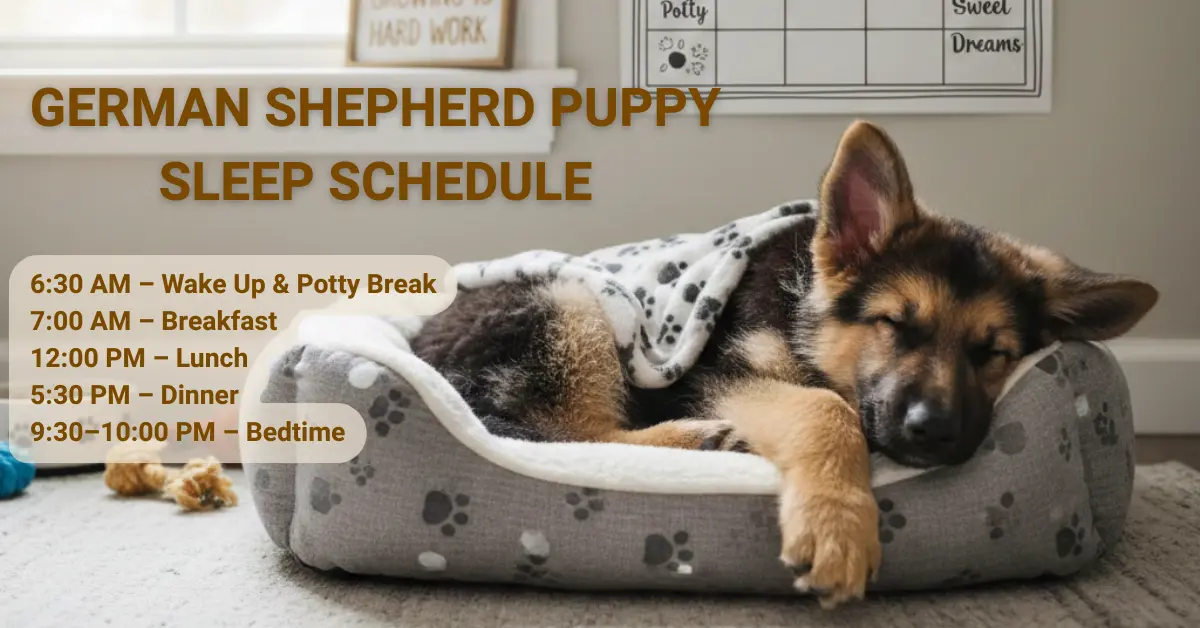
Wake up and potty break at 6:30 AM
Puppies need a trip outdoors right when they wake up this helps build good habits. Right away once their eyes open heading outside sets the pattern.
Breakfast at 7 AM
Every day around the same hour eating helps your gut keep a steady rhythm. That regularity tends to line up bathroom breaks without surprise timing.
7:30 AM light training and play
A few minutes of calm play can ease restlessness yet keep things quiet. Sometimes moving slowly works better than rushing through tasks.
Morning nap at 8:30 AM
Puppies need sleep after activity to prevent overtired behavior.
10:30 AM potty break and social time
A pause then quiet interaction or gentle exposure to surroundings helps build confidence.
Lunch at noon
Puppies under a year do best with breakfast lunch and dinner spaced out. Meal timing helps their fast growing bodies keep steady energy. Three times daily fits how often tiny stomachs empty.
Midday nap at 12:30 PM
Most days this rest stretches out longer than others tied closely to how bodies build and repair. Growth leans heavily on it.
3 PM training play potty
Practice built step by step keeps attention sharper while making directions stick better.
Dinner at 5:30 PM
Beside sleeping well eating earlier helps your stomach do its job. A gap between mealtime and bed gives the body time to break things down.
6:30 PM quiet games or time with family
Start calm instead of wild play soft moments matter more. Quiet times replace loud ones without losing connection.
Final potty break 9:00 PM
Later on a quiet stroll helps settle the young dog or just a brief outdoor visit.
Bedtime 9:30 to 10:00 PM
Puppy goes into its bed spot now. Hush nearby sounds after that happens.
Puppies grow well when days mix play practice and downtime. A rhythm forms through steady routines that include breaks between learning moments. Sleep settles into place more easily this way. Movement builds strength yet quiet time repairs muscles plus calms the mind. Each part feeds the next flow matters most.
How to Help a German Shepherd Puppy Sleep Through the Night
Puppies often wake up at night leaving their people puzzled. A German Shepherd pup might zoom around when others are tired. By three months many start sleeping longer stretches. With steady habits nighttime calm usually arrives by four months. Patience matters more than strict rules. Each dog adjusts on its own timeline.
A steady routine each day helps puppies feel secure. When naps meals training and play happen around the same time nights tend to go smoother. Late afternoon snoozing might make it harder for them to fall asleep later. So keep those last few hours active instead of drowsy. Predictability shapes better sleep patterns without extra effort.
A soft rhythm at night helps puppies settle. One hour prior ease away from loud games or fast movement. Instead of active moments try slow talking low lights close presence signs that rest follows soon. Right before sleep step outside together one last time so the bladder empties fully.
Later in the evening hold off on meals give the last one a few hours before sleep. This gap helps little stomachs settle and prevents midnight accidents. Water is fine anytime though go light after dark so bedtime stays calm. Digestion works better when it is not rushed near lights out.
Puppies often settle more easily when they have a snug spot to rest. A crate or set corner works well since it feels like a sheltered hideaway which supports nighttime routine. Comfort matters though too many distractions can keep them awake. Safety comes first keep the place quiet familiar steady.
Wait a moment when your puppy cries after dark. Not every little noise means trouble puppies often squirm while getting used to new nights. Only step in if you think they truly need to go outside. Sticking to the routine staying calm helps them catch on over time. Sleep through the night becomes easier for both of you slowly but surely.
Ideal German Shepherd Puppy Sleep Routine First 8 Weeks
Early Sleep and Natural Rhythm
Early mornings often find the pup deep in rest. Because so much change happens inside nearly every hour includes some form of recovery through dozing. Brain pathways grow fast while nerves stretch into new connections each nap supports these shifts. Instead of fixed times for sleeping little ones follow inner cues. What matters most is warmth quiet and space to curl up without disturbance. Routine takes a back seat when biology leads the way.
Most German Shepherd pups spend around twenty to twenty two hours each day asleep during their initial eight weeks. Throughout both daylight and darkness rest comes in bursts each stretch generally running just an hour or so. They stir mostly when needing food relief or comfort from cold. Awake time stays brief by nature pushing them past that may harm growth or cause strain. Long stretches without sleep simply do not suit their young bodies.
Most puppies haven’t learned to sleep through the whole night. Waking up more than once isn’t unusual at this stage. After a quick feed or some reassurance they’ll often drift back off right away. Short bursts of movement may pop up between naps. Their ability to hold urine is still very limited. Bathroom breaks after dark come with the territory.
Rest Environment and Daily Flow
Most of the time newborn pups do better without strict routines. Instead of setting fixed hours let their body clock guide rest periods early on. A calm space helps keep it cozy shielded from shouting or too much touching. Once they eat or have soft contact just leave them be. Peaceful spots matter more than rules at this stage.
Rest breaks between play keep things steady during daylight hours. Too much fuss too often might disrupt nap times adding strain without reason. After meals pups tend to drift off on their own this pattern supports their body’s natural timing.
Puppies need lots of quiet naps early on this rhythm shapes how they grow. Rest at this stage builds steady nerves strong bodies a sharper mind down the road. Sleep patterns set now echo far into their future days.
German Shepherd Puppy Sleep Patterns and Potty Breaks
Most of the time a steady bedtime shapes how well a German Shepherd pup learns bathroom rules. When little dogs know what comes next their bodies follow suit fewer messes happen that way. Nights and naps fall into place when days repeat themselves almost exactly.
Right after they wake up German Shepherd pups typically have to pee. Each time they rise from naps or overnight rest out comes the urge. Because of this rhythm matching their sleeping patterns with toilet visits helps them catch on fast where and when works best. During the first few weeks expect the need roughly every two to three hours even through the dark hours.
Puppies need daytime rest simply because exhaustion clouds their awareness. When they skip sleep accidents happen bladders give out cues get ignored. After eating or playing a planned nap keeps things steady. Too much excitement fades when routines include downtime. Calmness grows where fatigue once ruled. Rest follows activity just like breathing follows running. Control returns when the mind stops racing.
Peeing during the night often ties directly to how well a pup handles indoor routines. When pups are small they just do not have the physical control to last through dark hours which is why timed trips outside guided by an alert system cut down messes while shaping dependable habits. With age comes better bodily function allowing those middle of the night outings to slowly fade into fewer visits.
Puppies tend to keep their sleep spot clean helping them learn bathroom habits early. Because of this behavior a well sized crate can become a helpful part of routine training. Still if the space is too large or used incorrectly it might push a young dog past its limits. Only when set up right does such an area work without causing stress.
Every day runs smoother when meals naps and toilet breaks happen at similar times. Once bedtime settles into a rhythm learning where to go potty gets easier takes less time because tiredness slows everything down. With enough rest young dogs pick up patterns fast their bodies start expecting the right moments to relieve themselves. Predictable days build steady behavior without chaos creeping in.
German Shepherd Puppy Sleep and Crate Routine
Puppies often relax better if their days follow a steady rhythm. A consistent bedtime pairs naturally with time spent in a safe space like a crate. Instead of wandering aimlessly they begin to expect rest when entering it. With regular patterns naps grow longer. Nighttime stays quieter. Structure builds confidence during early months. Settling down becomes easier when surroundings feel familiar.
Puppies of the German Shepherd breed often feel more at ease when they sleep inside a crate since it mimics a quiet sheltered space. Because it feels like their own small sanctuary tension tends to fade faster. When young dogs link the crate with peace instead of restriction acceptance grows naturally over time. Starting this routine soon after arrival makes success far more likely. Good results usually come when each introduction happens gently filled with patience.
Puppies settle better when routine shapes their rest times. Tired bodies accept the crate more willingly especially following activity like feeding or learning tasks. After zooming around placing them inside becomes tougher energy resists confinement. Daytime sleeps woven into the hours keep exhaustion at bay because worn out pups fight quiet spaces harder. Predictable pauses mean less fuss smoother transitions.
When night falls using a crate works well. After one last trip outside to go potty settle the puppy quietly inside their space. It’s common for young pups to stir during the night needing to pee. Right after they finish back into the crate they go this teaches sleep belongs to dark hours not games or wandering. Each time you repeat it the message grows clearer.
Beds inside the container need to feel cozy not harsh. Fresh air flows best when airflow stays steady through open sides. Stay clear of tucked away spots near basements or garages. Using tight spaces to scold shifts trust into worry messing up nighttime calm. Instead link the spot with quiet rest not consequences.
Puppies of the German Shepherd breed often settle faster when bedtime habits pair with a steady routine. A set sleeping pattern works hand in hand with enclosure practice to build comfort gradually. Nighttime calm follows naturally once boundaries are clear week after week. Confidence grows where repetition meets gentle guidance each evening. Over time reliable cues shape how these young animals respond to daily life around them.
German Shepherd Puppy Sleep Issues
Puppies of the German Shepherd breed often struggle with rest patterns early on. Not because they’re stubborn but because their days might lack shape. Energy runs high in these young ones minds quick to learn yet easily overwhelmed. Trouble settling is usually a sign that timing needs adjustment. Sleep hiccups appear often before twelve weeks pass. These moments reflect gaps in feeding play and quiet time rather than disobedience.
Puppies often cry at night especially during big changes like moving homes. Because they’re used to being close to their siblings lying alone can feel strange. A little whimpering now and then is expected. If it continues it may point to stress hunger or a need to go outside.
Puppies sometimes bounce off the walls because they are too tired. Many assume they need more play but what they truly lack is rest. When German Shepherds become overtired they may nip constantly run wildly bark or ignore instructions.
Most pups struggle to manage their own rest. When tiredness builds they push past it instead of winding down. Naps at irregular times disrupt rhythm. Growth spurts add extra imbalance. Without guidance they miss cues for sleep.
Waking up too soon can come from inconsistent bedtime routines late eating or overstimulation before sleep. Once early waking becomes habit shifting it takes patience and consistency.
Growth phases can also disrupt sleep. As puppies develop rapidly their need for rest temporarily increases which can unsettle established routines.
Puppies are still learning how to regulate themselves. What looks like defiance is usually development. Calm response and consistent timing work better than correction.
Solutions for an Irregular German Shepherd Puppy Sleep Schedule
Puppies often struggle with bedtime rhythm especially German Shepherds but consistency helps stabilize everything. Energy bursts timing shifts and development phases all play a role.
Set fixed wake and sleep times. Daily repetition builds internal timing and improves night rest quality.
Plan naps across the day. Skipping rest leads to overtired behavior and harder bedtimes later.
Reduce stimulation before sleep. Replace active play with calm interaction and low light environments.
Ensure proper daytime activity. Without exercise puppies become restless yet too much activity leads to exhaustion crashes. Balance is key.
Keep sleeping space consistent. Changing locations confuses the puppy and slows adjustment.
German Shepherd Puppy Sleep Patterns Home Type Differences
Sleep needs stay similar across environments but routines change based on household activity.
In structured homes where owners leave for work puppies benefit from scheduled naps and crate time. Midday checks and evening calm routines help maintain balance.
In busy family homes stimulation is higher which can lead to overtired puppies if rest is not enforced. Children should recognize when puppies need downtime.
Across all environments German Shepherd puppies need long hours of sleep daily. Routine matters more than location in shaping stable behavior.
Frequently Asked Questions
1. How much sleep does a German Shepherd puppy need?
A German Shepherd puppy typically needs between 14 and 22 hours of sleep per day, depending on its age. Younger puppies require more sleep to support rapid growth and development.
2. Is it normal for a German Shepherd puppy to sleep a lot?
Yes, excessive sleeping is normal in puppies. Sleep helps support brain development, muscle growth, immune function, and learning.
3. At what age do German Shepherd puppies sleep through the night?
Most German Shepherd puppies start sleeping for longer stretches at night between 12 and 16 weeks of age, though some may still need occasional nighttime potty breaks.
4. Why is my German Shepherd puppy so sleepy?
German Shepherd puppies are naturally sleepy because their bodies and brains are developing rapidly. Growth spurts, training, play, and socialization can also increase their need for rest.
5. Should I wake my German Shepherd puppy from a nap?
Generally, no. Puppies need uninterrupted sleep for healthy development. Unless it’s necessary for feeding, medication, or a veterinary reason, it’s best to let them wake naturally.
6. Why does my German Shepherd puppy get hyper when tired?
Overtired puppies often become more energetic instead of settling down. Common signs include zoomies, nipping, barking, and difficulty focusing during training sessions.
7. Can a German Shepherd puppy sleep in a crate at night?
Yes, many German Shepherd puppies sleep well in a crate. A properly sized crate can provide a secure sleeping environment and help establish healthy bedtime and house training routines.
Final Thoughts on Your German Shepherd Puppy Sleep Schedule
Puppies grow through sleep as much as through play. Rest shapes learning mood and physical development across every stage. Without enough downtime behavior becomes unsettled and progress slows. With structure and consistency puppies adapt more easily to training and daily life.
Sleep also supports house training crate acceptance and emotional balance. When routines stay predictable puppies understand what comes next which reduces stress. Over time these habits form stable behavior patterns that carry into adulthood.
Each German Shepherd puppy develops at its own pace so observation and adjustment matter. With steady guidance calm structure and patience sleep patterns become reliable and supportive of healthy growth.
References
- American Kennel Club. German Shepherd Dog Breed Information. Available from: https://www.akc.org/dog-breeds/german-shepherd-dog/
- American Veterinary Medical Association. Pet Care Resources and Puppy Health Guidance. Available from: https://www.avma.org
- Merck Veterinary Manual. Growth and Development of Dogs. Available from: https://www.merckvetmanual.com
- Cornell University College of Veterinary Medicine. Puppy Health and Behavior Resources. Available from: https://www.vet.cornell.edu