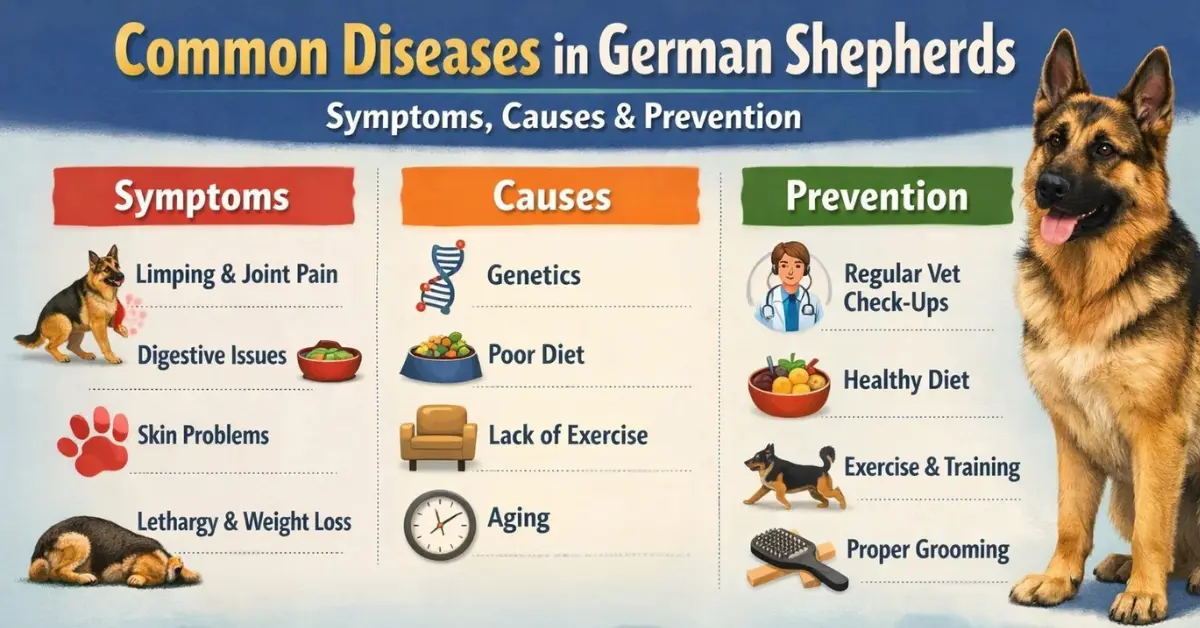
Common diseases in German Shepherds include hip dysplasia, elbow dysplasia, degenerative myelopathy, bloat (gastric dilatation volvulus), exocrine pancreatic insufficiency, allergies, and several inherited genetic disorders. While many German Shepherds live long and healthy lives, their size, body structure, and genetic background can increase the risk of certain health conditions.
Early detection, proper nutrition, regular exercise, responsible breeding, and routine veterinary care can significantly reduce the impact of many German Shepherd health issues. Recognizing the warning signs of disease before they become severe is one of the most effective ways to protect your dog’s long term health and quality of life.
In this guide, you’ll learn about the most common diseases in German Shepherds, their symptoms, causes, treatment options, prevention strategies, and the early warning signs every owner should know.
Table of Contents
ToggleCommon German Shepherd Diseases at a Glance
| Common Disease | Main Symptoms |
|---|---|
| Hip Dysplasia | Limping, stiffness, difficulty standing |
| Elbow Dysplasia | Front leg lameness, pain after exercise |
| Degenerative Myelopathy | Weakness in hind legs, difficulty walking |
| Bloat (GDV) | Swollen abdomen, retching, restlessness |
| Exocrine Pancreatic Insufficiency | Weight loss, diarrhea, increased appetite |
| Allergies | Itching, skin redness, ear infections |
German Shepherd Health Issues
• Most German Shepherds show sharp minds, deep devotion, because they were built for tasks demanding both
• Yet being purebred often brings hidden risks few spot at first glance
• Knowing what troubles might rise gives owners firmer ground when planning ahead
• With steady attention to needs, quite a few live fully, moving well past common setbacks
Genetics and Structure
• Genetics shape many health problems seen in german shepherds more than most realize
• Because of their large frame and angled back, pressure builds in hips and ligaments as they age
• When breeders prioritize vet checks and proper body alignment, outcomes tend to improve
• Animals from thoughtful pairings usually face less trouble down the road than those from careless matches
Growth and Development
• Big dogs come with big growing pains
• When German Shepherds shoot up fast, their joints often pay the price
• What they eat as pups shapes how strong their bodies become later
• Moving too much or too little while young can change how well they get around as adults
Daily Habits Impact
• Most people underestimate how daily habits affect their dogs
• Moving around each day, along with puzzles or games, eases pressure on stiffening joints
• Being too heavy piles extra stress onto bones and muscles over time
• When pets sit too long or gain excess pounds, problems often show up sooner
• A steady pace of movement keeps things working smoother behind the scenes
Early Detection
• Most issues fade when spotted fast, thanks to steady checkups and smart choices at home
• Care that learns from experience tends to catch trouble before it grows large
Common Health Issues in German Shepherds
General Insight
• Strong and smart, German Shepherds carry genetic traits that influence how they age
• Because of their build, certain conditions show up more often than in other dogs
• Spotting signs early changes how owners handle health down the road
• Problems tend to creep in slowly, so knowing what to watch for makes a difference later
• Care shifts from fixing things to stopping them before they start
Early Risk Factors
• Big bodies growing fast strain hips, nerves, bones
• Puppies from sketchy family trees often get sick sooner because of it
• Careful breeders step in with good food and steady movement to keep things stable early on
General Health Outlook
• Most German Shepherds never get severely sick
• When fed right, kept at a healthy weight, given things to think about, also seen by vets regularly, they tend to move well even when old
• Being aware of frequent health issues helps pet parents notice red flags sooner
Common Problem Areas
• Joints
• Nerves
• Digestion
• Skin
Hip Dysplasia in German Shepherds
Causes
• Looseness in the hip shows up because the joint fails to develop right
• Bones do not fit tightly, rubbing begins, bringing swelling over time
• Puppies might inherit weak joints from their parents
• Fast growing bodies add stress if food fuels too much size too soon
• Heavy pups running hard face more wear than lighter ones
Early Signs
• Puppies might seem stiff when they first get up
• Trouble standing
• Less eagerness to leap
• Shorter stamina
• Hop like run with both back legs moving together
Diagnosis and Care
• Doctors check the body first, then use scans
• Early spotting means less trouble later
• Eating right supports movement
• Staying light on feet matters
• Gentle daily movement helps
Advanced Treatment
• Medicine for discomfort
• Surgery in severe cases
• Active years still possible with proper care
Elbow Dysplasia
Causes
• Wobbly elbows show up during growth
• Forearm bones do not fit right
• Faulty genes play a big role
Symptoms
• Limping in front leg
• Stiffness after rest
• Weight shifting backward
• Pain worse with activity
Treatment
• Joint checks and scans
• Weight management
• Adjusted movement
• Surgery if severe
• Rehab to rebuild strength
Degenerative Myelopathy
Condition Overview
• Starts around midlife
• Genetic issue damaging the spine
• Signals between brain and legs weaken
Symptoms
• Wobbly walking
• Dragging back legs
• Knuckling under
• Gradual paralysis
Management
• No cure available
• Gene testing and exams help confirm
• Support devices help mobility
• Focus on comfort and quality of life
Bloat Also Known As Gastric Dilatation Volvulus
Causes
• Gas buildup leading to stomach twisting
• Fast eating
• Exercise after meals
• Stress
• Family history
Symptoms
• Swollen belly
• Dry heaving
• Restlessness
• Rapid breathing
• Collapse
Prevention and Treatment
• Emergency vet care required
• Surgery often needed
• Smaller meals
• Slow feeding
• Avoid activity after eating
Exocrine Pancreatic Insufficiency
Overview
• Pancreas does not produce enough digestive enzymes
• Common in German Shepherds
Symptoms
• Weight loss despite eating
• Frequent loose stools
• Increased hunger
• Dull coat
• Fatigue
Treatment
• Blood test diagnosis
• Lifelong enzyme supplements
• Diet adjustments
Allergies and Skin Conditions
Causes
• Food allergies
• Environmental triggers like pollen or dust
• Genetic tendency
Symptoms
• Scratching
• Chewing paws
• Red skin
• Repeated ear infections
Treatment
• Elimination diets
• Skin or blood tests
• Avoid irritants
• Special diets
• Medicated washes
• Supplements or medications
Common Genetic Health Issues in German Shepherds
Overview
• Caused by selective breeding
• Passed through family lines
• Not always visible early
Prevention
• Genetic testing
• Responsible breeding
• Early vet screening
Hemophilia
Key Points
• Blood clotting disorder
• Inherited condition
Symptoms
• Prolonged bleeding
• Nosebleeds
• Internal bleeding
Management
• Blood tests
• Avoid injuries
• Limit surgeries
• Regular monitoring
Von Willebrand’s Disease
Overview
• Missing clotting protein
Symptoms
• Excessive bleeding
• Easy bruising
Management
• Blood tests
• Avoid certain medications
• Careful planning for procedures
Inherited Eye Disorders
Condition
• Progressive retinal atrophy
Symptoms
• Night blindness
• Gradual vision loss
Care
• Early detection
• Home adjustments
• Dogs adapt well over time
Common Early Signs of Illness in German Shepherds
Physical Signs
• Stiff joints
• Limping
• Difficulty climbing
Digestive Signs
• Diarrhea
• Vomiting
• Weight loss
• Appetite changes
Behavioral Changes
• Anxiety
• Withdrawal
• Irritability
Skin and Coat Changes
• Itching
• Hair loss
• Redness
• Ear infections
Preventing Common Health Issues in German Shepherds
Daily Prevention
• Balanced diet
• Controlled exercise
• Weight management
• Mental stimulation
Veterinary Care
• Regular checkups
• Vaccinations
• Blood tests
• Parasite control
Breeding Awareness
• Choose responsible breeders
• Verify genetic testing
Healthy Eating and Good Food Choices
Nutrition Basics
• Balanced protein and fat
• Proper calcium and phosphorus
• Portion control
Supplements
• Glucosamine
• Chondroitin
• Omega fatty acids
Exercise Regularly but Not Too Hard
Balanced Activity
• Moderate daily exercise
• Avoid overexertion
• Include mental stimulation
Monitoring
• Watch for limping
• Adjust intensity
• Provide rest
Routine Veterinary Checkups
Importance
• Detect hidden issues early
• Monitor weight and joints
What’s Included
• Physical exams
• Blood tests
• Vaccinations
• Dental checks
Genetic Testing and Responsible Breeding
Key Points
• DNA testing reduces risks
• Avoid breeding unhealthy dogs
• Know family history
German Shepherd Life Span and Ongoing Health Needs
Aging Changes
• Joint stiffness
• Reduced mobility
• Slower metabolism
Care for Seniors
• More frequent vet visits
• Adjusted diet
• Gentle exercise
When to Seek Veterinary Care
Emergency Signs
• Collapse
• Swollen belly
• Breathing difficulty
• Uncontrolled bleeding
Non Emergency Signs
• Persistent limping
• Ongoing digestive issues
• Skin problems
• Weight changes
Protecting Your German Shepherd from Common Diseases
Daily Care
• Observe behavior
• Maintain routine
• Provide mental and physical activity
Long Term Health
• Early detection
• Preventive care
• Responsible breeding
Frequently Asked Questions
1. What is the most common health problem in German Shepherds?
Hip dysplasia is one of the most common health problems in German Shepherds. This inherited joint condition can cause pain, stiffness, reduced mobility, and arthritis as the dog ages.
2. Are German Shepherds prone to genetic diseases?
Yes, German Shepherds are predisposed to several genetic conditions, including hip dysplasia, elbow dysplasia, degenerative myelopathy, hemophilia, and certain eye disorders. Responsible breeding and genetic testing can help reduce these risks.
3. How can I prevent health problems in my German Shepherd?
You can reduce the risk of many health issues by providing a balanced diet, maintaining a healthy weight, ensuring regular exercise, scheduling routine veterinary checkups, and choosing dogs from health tested breeding lines.
4. What are the early signs of illness in a German Shepherd?
Common early warning signs include limping, stiffness, vomiting, diarrhea, weight loss, appetite changes, excessive scratching, hair loss, lethargy, and behavioral changes such as anxiety or withdrawal.
5. What is bloat in German Shepherds, and why is it dangerous?
Bloat, also known as gastric dilatation volvulus (GDV), occurs when the stomach fills with gas and twists. It is a life threatening emergency that requires immediate veterinary treatment and can become fatal if left untreated.
6. At what age do German Shepherds develop joint problems?
Joint conditions such as hip dysplasia and elbow dysplasia may begin during puppyhood but often become more noticeable as German Shepherds reach adulthood. Symptoms can worsen with age if not properly managed.
7. How long do German Shepherds typically live?
Most German Shepherds have a lifespan of 9 to 13 years. Proper nutrition, regular exercise, preventive healthcare, and early detection of medical conditions can help support a longer and healthier life.
Final Thoughts on Common Diseases in German Shepherds
German Shepherds are intelligent, loyal, and active dogs, but like many purebred breeds, they can be prone to certain inherited and age related health conditions. Common diseases in German Shepherds such as hip dysplasia, elbow dysplasia, degenerative myelopathy, bloat, exocrine pancreatic insufficiency, and skin allergies can affect their quality of life if left undetected or untreated.
Understanding the symptoms, causes, and risk factors associated with these conditions allows owners to take a proactive approach to their dog’s health. Regular veterinary checkups, proper nutrition, responsible breeding practices, weight management, and appropriate exercise can significantly reduce the risk of many common German Shepherd health issues.
Early detection remains one of the most effective tools for protecting your dog’s long term well being. By recognizing warning signs and seeking veterinary care when needed, owners can help their German Shepherd live a healthier, more comfortable, and more active life for years to come.
References
- American Kennel Club. German Shepherd Dog Breed Information and Health Resources.
- American Veterinary Medical Association. Pet Health and Preventive Care Resources.
- Merck Veterinary Manual. Canine Musculoskeletal, Digestive, and Genetic Disorders.
- World Small Animal Veterinary Association. Global Guidelines for Canine Health, Nutrition, and Preventive Care.