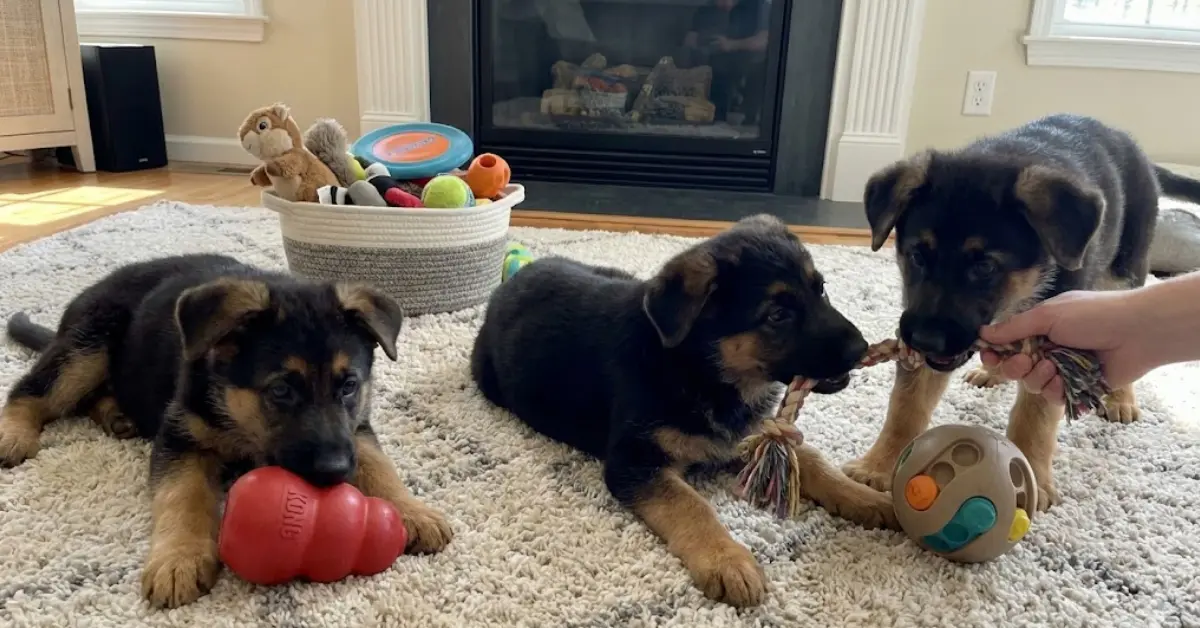
Best toys for German Shepherd puppies are less about filling a toy box and more about shaping everyday behavior. These puppies are naturally strong, curious, and mentally alert, even at a young age. The right toys help channel that energy in a positive way, while poor choices often lead to chewing problems, restlessness, and frustration for new owners.
The first step is choosing toys by purpose, not appearance. A well-balanced toy setup supports three daily needs: calming chewing, focused interaction, and controlled play. When these needs are met, puppies are less likely to chew furniture or demand constant attention. Buying too many toys at once usually has the opposite effect, overwhelming the puppy and reducing interest.
Best toys for German Shepherd puppies should also match durability to your puppy’s chewing style. German Shepherd puppies don’t gently nibble; they test toys with steady pressure. A useful rule is to check flexibility with your hands. Toys that collapse easily rarely last, while extremely hard toys often get ignored. A little resistance keeps your puppy engaged without encouraging destructive chewing.
Next comes supervision. Every new toy should be observed during the first few play sessions. Some puppies chew calmly, while others pull at seams or try to tear pieces off. Catching this early helps prevent safety issues and saves money on replacements. If a toy shows damage, it should be removed immediately.
Rotation is the fourth step and one many first-time owners overlook. Leaving all toys out all the time often leads to boredom. Rotating toys every few days keeps interest high and helps you learn which toys actually work for your puppy. Familiar toys feel exciting again after a short break. Here’s a practical insight from hands-on experience: the most valuable toys are the ones that help your puppy settle, not just burn energy. Calm chew toys during rest periods often prevent evening restlessness and unwanted chewing.
It’s also important to remember that toys don’t replace interaction. Even the best toys for German Shepherd puppies are most effective when paired with short, intentional play sessions. A few focused minutes together builds better habits than long periods of unsupervised play.
By following this step-by-step approach, toy choices become simpler and more purposeful. Once this foundation is in place, selecting teething toys, interactive toys, and exercise toys becomes much easier as your German Shepherd puppy grows.
This content is for informational purposes only. Always supervise your German Shepherd puppy during play and consult a veterinarian or trainer if unsure about toy safety.
Understanding Your German Shepherd Puppy’s Toy Needs
Understanding what your German Shepherd puppy needs from toys makes daily life much easier, especially for first-time owners. These puppies are not casual players. From a young age, they are alert, curious, and eager to use both their minds and their mouths. When toys match those natural instincts, behavior improves without constant correction.
One of the biggest toy needs for a German Shepherd puppy is chewing. Chewing helps puppies manage excitement, release tension, and settle themselves after activity. It is not limited to teething. Even outside that phase, chewing remains a calming behavior. When puppies don’t have appropriate chew options, they naturally look for alternatives like furniture legs, shoes, or hands.
Mental engagement is another major need that often gets overlooked. German Shepherds were bred to think, problem-solve, and stay focused. Puppies that lack mental stimulation often become restless, vocal, or destructive indoors. Toys that require gentle problem-solving, such as nudging, pawing, or searching, help use that mental energy in a productive way.
Physical movement is the third core need, but it should be guided rather than chaotic. Puppies need opportunities to move their bodies, yet too much uncontrolled activity can lead to overstimulation. Toys that encourage short, structured play sessions help burn energy while maintaining focus and manners.
A common mistake new owners make is assuming one toy can meet all three needs. In reality, no single toy does everything well. Chew toys support calm behavior, interactive toys support focus, and play toys support movement. When these roles are clear, toy selection becomes much easier.
Pay close attention to how your puppy interacts with toys. Some German Shepherd puppies chew slowly and methodically, while others try to dismantle toys piece by piece. These patterns offer useful clues about which toy styles are safe and which should be avoided.
Here’s a practical insight from experience: if your puppy loses interest in a toy, remove it for several days instead of discarding it. Reintroducing it later often renews interest and prevents unnecessary purchases.
When toy choices align with your puppy’s natural needs, daily routines feel calmer and more predictable. Understanding these needs sets the foundation for choosing teething toys, interactive toys, and exercise toys that actually work as your German Shepherd puppy grows.
Best Teething Toys for German Shepherd Puppies: Safe, Soothing, and Chew-Approved Options
Teething is one of the most challenging stages for German Shepherd puppy owners, especially if you’re experiencing it for the first time. During this phase, chewing isn’t just a habit—it’s a way for your puppy to relieve discomfort and stay calm. Choosing the right teething toys makes a noticeable difference in how smoothly this stage passes.
The best teething toys for German Shepherd puppies strike a balance between firmness and comfort. Toys that are too soft are often destroyed quickly, which can become a safety issue. On the other hand, toys that are extremely hard tend to be ignored and don’t offer much relief. A teething toy should resist steady chewing while still having enough flexibility to feel soothing on sensitive gums.
Texture plays a bigger role than shape during teething. Toys with gentle ridges, grooves, or raised patterns help massage the gums and hold a puppy’s attention longer. Smooth toys may look appealing but often fail to keep interest once chewing begins. Simple designs usually work better than complex ones at this stage.
Size is another important factor. Teething toys should be large enough that your puppy can’t fit the entire toy in their mouth. Oversized toys encourage safer chewing and reduce the risk of swallowing pieces. Toys designed for small breeds are rarely suitable for German Shepherd puppies, even when they are young.
Safety should always come first. Avoid teething toys with glued seams, thin edges, or detachable parts. German Shepherd puppies tend to test toys thoroughly, especially during teething. Any toy that starts to crack, fray, or shed pieces should be removed immediately.
Here’s a practical tip many owners find helpful: offer teething toys during calm moments, not just playtime. Puppies often chew the most when they are settling down after activity. Having a reliable teething toy available during rest periods can prevent chewing on furniture or hands.
Another useful practice is rotating teething toys every few days. This keeps them interesting without overwhelming your puppy. Too many options at once can actually increase frustration instead of relieving it.
When chosen carefully, teething toys provide comfort, protect your home, and help your puppy learn healthy chewing habits. These safe, soothing, chew-approved options create a smoother transition through teething and prepare your German Shepherd puppy for more advanced toys in the next stages of growth.
Top Teething Toys That Actually Work for German Shepherd Puppies
When German Shepherd puppies start teething, their chewing becomes more focused and more determined. This is the stage where many toys that seemed fine a few weeks earlier suddenly lose appeal or fall apart. The teething toys that actually work are not the most colorful or complicated ones, but the ones that consistently meet your puppy’s need for comfort and resistance.
Textured rubber toys are often the most dependable choice during this phase. They provide steady pressure without being harsh, which helps soothe sore gums. Raised patterns or grooves give puppies something to work against and tend to keep their attention longer than smooth surfaces. These toys are especially useful during quiet moments when your puppy is settling down.
Another category that works well is firm, slightly flexible chew toys that hold their shape under pressure. These toys allow puppies to chew rhythmically, which many find calming. Toys that bend too easily often get shredded, while toys that are overly rigid are frequently ignored. That middle ground is where most teething success happens.
Cooling-friendly teething toys can also be effective when used thoughtfully. Briefly cooling a toy can provide relief and reduce restlessness. The key is to avoid freezing toys solid. Extremely cold or rock-hard toys often discourage chewing and may lead puppies to seek softer, less appropriate items instead.
Avoid toys that depend on squeakers, hard plastic parts, or thin edges. While these features may grab attention at first, they rarely satisfy chewing urges and often break down quickly under sustained pressure. Once pieces start coming loose, the toy is no longer safe.
Here’s a practical insight many owners learn through trial and error: puppies prefer teething toys that feel predictable. Toys that suddenly squeak, collapse, or change texture mid-chew can frustrate a teething puppy and shorten playtime. Consistent resistance encourages calm, focused chewing.
Supervision remains important even with high-quality teething toys. Check toys daily, especially along textured areas where wear appears first. German Shepherd puppies are persistent chewers, and damage can happen faster than expected as their teeth strengthen.
It also helps to offer teething toys during rest periods, not just active play. Puppies often chew most when winding down. Providing a reliable teething toy at these times can prevent chewing on hands, furniture, or household items.
The teething toys that truly work for German Shepherd puppies are simple, durable, and comforting. When those needs are met, teething becomes a manageable phase instead of a daily struggle.
The 5 Best Toys for German Shepherd Puppies Based on Age & Energy Level
German Shepherd puppies go through noticeable changes in energy and focus as they grow, and their toys should change along with them. Choosing toys based on age and energy level helps prevent overstimulation, frustration, and unwanted chewing. Instead of buying everything at once, it’s more effective to match toys to what your puppy can actually handle at each stage.
1. Soft Chew Toys for Young Puppies
Very young German Shepherd puppies benefit from softer chew toys that offer comfort without requiring too much effort. At this stage, chewing is more about exploration and soothing than destruction. These toys work best during quiet moments and help establish good chewing habits early.
2. Textured Teething Toys for Growing Puppies
As energy and chewing strength increase, textured teething toys become essential. These toys provide enough resistance to satisfy chewing urges while helping puppies stay calm. They are especially useful during teething phases when furniture and hands suddenly become tempting targets.
3. Beginner Interactive Toys for Mental Focus
Once puppies show curiosity and problem-solving behavior, simple interactive toys can be introduced. These toys encourage thinking without overwhelming your puppy. Short sessions with these toys help burn mental energy and improve focus indoors.
4. Lightweight Tug Toys for Controlled Play
For puppies with rising energy levels, lightweight tug toys support healthy interaction. These toys are best used during short, supervised play sessions. They help channel excitement while reinforcing boundaries and preventing rough play habits.
5. Gentle Fetch Toys for Movement
As coordination improves, soft fetch toys encourage movement without encouraging nonstop running. Controlled fetch sessions help burn energy while keeping play structured and safe for growing bodies.
A practical insight many owners discover is that toy intensity should match the puppy’s daily energy, not just age. Some days call for calm chewing, others for active play. Rotating these five toy types allows you to adjust without overstimulating your German Shepherd puppy.
By choosing toys that align with age and energy level, you create a smoother daily routine and reduce problem behaviors before they start.
The 10 Best German Shepherd Puppy Toys for Chewing, Play, and Training
Finding toys that serve chewing, play, and training needs all at once can make life with a German Shepherd puppy much smoother. These puppies are strong and focused learners—so toys that support both physical outlets and mental engagement work best. Below are ten reliable options that many experienced owners find genuinely useful, rather than gimmicky.
- Durable Rubber Chew Rings– These are great for everyday chewing and help satisfy the urge to gnaw without damaging furniture or shoes.
- Textured Teething Toys – With ridges and grooves, these soothe sore gums and keep puppies engaged longer than smooth toys.
- Knot Rope Toys – Useful for gentle tug play with you. They also help exercise the jaw and clean teeth if used properly.
- Puzzle Feeders – Toys that hide small treats encourage problem-solving and focus, helping reduce boredom-related chewing.
- Soft Fetch Toys – Lightweight and easy to carry, these are perfect for short fetch sessions that burn energy without overstimulating.
- Interactive Treat Balls – Slightly more challenging than simple puzzle toys, these work well for mentally active puppies and help build patience.
- Flexible Rubber Bones – Tougher than soft toys but still forgiving on young teeth, these give satisfying resistance for chewing sessions.
- Beginner Puzzle Blocks – Simple puzzles that require nudging or lifting a flap help build focus without overwhelming your puppy.
- Tug Toys with Handles – A slightly more durable tug option for older puppies; great for controlled play sessions with you.
- Plush with Reinforced Seams (Supervised Only) – These are best for gentle play and comfort, but only under close supervision to avoid loose pieces.
A helpful insight from hands-on experience is to match the toy type to both your puppy’s mood and the time of day. Chew toys work best after meals or naps when your puppy is calm. Puzzle and interactive toys are excellent when you need focused engagement, like when settling in for the evening.
Avoid overwhelming your puppy with all ten at once. Rotate them every few days to keep interest high and maintain good behavior. With the right variety, you’ll support chewing needs, structured play, and early training—creating a happier, more balanced German Shepherd puppy.
Best Toys for German Shepherds That Grow With Your Puppy
One of the smartest ways to build a lasting toy collection for your German Shepherd is to choose toys that grow with them. Instead of replacing toys every few months as your puppy develops stronger jaws and higher energy, selecting adaptable toys saves effort and keeps your puppy engaged for longer periods.
Durable chew toys made from resilient rubber or reinforced materials are a strong starting point. These toys can handle gentle chewing during early puppyhood and continue to hold up as adult teeth come in. Unlike lightweight or flimsy toys that wear out quickly, sturdy chew toys often stay useful well into adolescence and beyond.
Another excellent option is adjustable puzzle toys. These toys allow you to increase difficulty as your puppy becomes more confident and curious. A simple treat ball, for example, can later be replaced with a multi-step puzzle feeder. This gradual progression helps your German Shepherd stay mentally stimulated as their problem-solving skills improve.
Tug toys with reinforced stitching are also well-suited for growing puppies. Early on, softer tug toys support controlled interaction and bonding. As your puppy gains strength, tougher versions can be introduced for short, supervised sessions. When used correctly, tug toys encourage engagement without promoting rough behavior.
Interactive treat-dispensing toys are another category that adapts well over time. In the beginning, toys that release treats with light nudging work best. As your puppy matures, more challenging versions that require rolling or tipping help build patience and focus.
A practical insight many owners discover is that toys advertised as long-lasting don’t always stay interesting. Toys that allow gradual increases in challenge tend to hold attention longer than toys with a fixed level of difficulty. Rotating these adaptable toys helps maintain interest without constant buying.
Strength-focused chew toys, such as thick rubber bones, often become reliable long-term options. These provide a safe outlet for chewing and reduce reliance on softer toys that may no longer be suitable.
Choosing toys that grow with your German Shepherd supports consistent routines, saves money, and keeps your puppy engaged through every stage of development.
Best Interactive Toys to Keep German Shepherd Puppies Mentally Stimulated
German Shepherd puppies are thinkers as much as they are movers, and interactive toys help satisfy that mental drive without turning playtime into chaos. These toys invite your puppy to problem-solve, focus, and stay engaged, which in turn reduces boredom-driven chewing and restless behavior.
Start with simple puzzle toys that reward effort. Toys with hidden treat compartments or sliding panels encourage your puppy to nudge, paw, and investigate. For many puppies, the challenge of working for a reward keeps them focused far longer than toys that move or squeak. If a puzzle is too easy, gradually introduce slightly more complex versions so your puppy stays interested without feeling frustrated.
Treat-dispensing balls work well for German Shepherds because their rolling action requires sustained attention and gentle movement. Roll it a few feet and watch your puppy learn to control their bite and movement to get the treat out. This kind of interactive play builds patience and focus, especially during indoor breaks or quieter parts of the day.
Avoid overly noisy toys as your puppy grows; some puppies become fixated on the sound rather than engaging thoughtfully. Instead, choose toys that respond to your puppy’s actions in predictable ways, which builds confidence and reduces impulsive behavior.
Interactive toys are most effective when used for short, intentional sessions rather than all day. Just ten focused minutes can help your German Shepherd puppy settle more calmly afterward, supporting better behavior throughout the day.
Toys That Encourage Healthy Exercise for German Shepherd Puppies
German Shepherd puppies have a lot of energy, but simply letting them run wild does not always lead to healthy habits. The right toys encourage movement in a controlled, positive way that supports coordination, focus, and confidence as your puppy grows.
Soft fetch toys are one of the best options for healthy exercise. They are lightweight, easy for puppies to carry, and gentle on developing mouths. Keep fetch sessions short and structured. Toss the toy a short distance and encourage your puppy to bring it back calmly. This helps burn energy while reinforcing attention and recall without overstimulation.
Tug toys are another effective exercise option when used correctly. Short tug sessions allow puppies to use their strength and release excitement in a guided way. It’s important to set clear boundaries by starting and stopping the game on your terms. Pausing frequently helps prevent rough behavior and teaches impulse control.
Rolling or push-style toys can also encourage gentle movement. Toys that move when nudged with a nose or paw help puppies stay active indoors without excessive running or jumping. These toys are especially useful during bad weather or quieter parts of the day.
Avoid toys that encourage nonstop sprinting or repeated jumping, especially for young puppies. High-impact play may seem fun, but controlled movement is better for developing bodies. Gentle exercise builds strength and coordination without unnecessary strain.
A helpful practice is offering exercise toys at predictable times, such as after naps or between short training sessions. This creates a routine that helps your German Shepherd puppy release energy calmly.
When exercise is guided by the right toys, puppies stay active, focused, and better behaved throughout the day.
How to Choose the Right Toys for a German Shepherd Puppy: A Practical Buying Guide for First-Time Owners
Choosing the right toys for a German Shepherd puppy starts with purpose, not appearance. Look for toys that support chewing, mental focus, and controlled play rather than flashy designs. Size matters, so always choose toys made for medium to large breeds to avoid safety risks. Check durability by pressing the toy with your fingers; it should resist without being rock hard. Introduce new toys under supervision and observe how your puppy uses them. Finally, avoid buying too many at once. A few well-chosen toys rotated regularly are far more effective than a crowded toy box.
What to Avoid When Buying Toys for German Shepherd Puppies
When buying toys for a German Shepherd puppy, avoid items that are too small, overly soft, or poorly constructed. Toys with thin seams, glued parts, or detachable pieces can break apart quickly and become unsafe. Hard plastic toys are also a poor choice, as they offer little comfort and may lead your puppy to chew inappropriate items instead. Be cautious with plush toys, as many German Shepherd puppies try to tear them open rather than play gently. Lastly, avoid buying too many toys at once, as too much choice often leads to boredom rather than engagement.
How Often Should You Rotate Toys for a German Shepherd Puppy?
Rotating toys regularly helps keep a German Shepherd puppy interested and prevents boredom-related chewing. A good rule is to rotate toys every three to five days rather than leaving everything out at once. Keep one or two familiar chew toys available and store the rest out of sight. When toys are reintroduced after a short break, they feel new again and regain value. Pay attention to which toys your puppy engages with most and rotate based on interest and energy level. Regular rotation also helps you spot worn toys early and remove them before they become unsafe.
When to Replace Puppy Toys as Your German Shepherd Grows
Puppy toys should be replaced as your German Shepherd grows stronger and chewing habits change. If a toy shows cracks, frayed edges, or loose pieces, it should be removed immediately. As adult teeth come in, toys that were once suitable may no longer hold up safely. A good practice is to inspect toys weekly, especially chew toys that get heavy use. You may also need to replace toys that your puppy has outgrown in size, as smaller toys can become a safety risk. Replacing toys at the right time keeps play safe and supports healthy chewing habits.
Creating a Balanced Toy Routine for a Happy, Well-Behaved German Shepherd Puppy
A balanced toy routine helps a German Shepherd puppy feel secure, focused, and easier to manage throughout the day. Rather than offering toys randomly, it’s more effective to assign them a purpose within your daily routine. This approach teaches your puppy when to play, when to focus, and when to settle.
Start by separating toys into three groups: chew toys, interactive toys, and exercise toys. Chew toys are best used during calm moments, such as after meals or when your puppy is resting. These toys encourage relaxation and prevent chewing on household items. Interactive toys work well during short, supervised sessions when you want your puppy to use their brain. Exercise toys should be reserved for active playtimes with you, helping burn energy in a controlled way.
Consistency is key. Offering the same type of toy at similar times each day helps your puppy know what to expect. This predictability reduces overstimulation and makes transitions between activity and rest smoother.
A practical tip is to rotate toys regularly so they stay interesting without overwhelming your puppy. Keep a few favorites available and store the rest out of sight. When toys are reintroduced, they regain value.
A balanced toy routine is not about constant entertainment. It’s about guiding energy in healthy ways. When toys are used intentionally, German Shepherd puppies are calmer, more focused, and more likely to develop good habits that last into adulthood.
Conclusion: Choosing the Right Toys for Your German Shepherd Puppy
Choosing the best toys for a German Shepherd puppy is less about buying more and more about choosing with purpose. When toys are selected based on chewing needs, mental stimulation, and controlled exercise, they naturally support better behavior and calmer routines. Puppies that have the right outlets for their energy are less likely to develop destructive habits or demand constant attention.
Throughout puppyhood, toy needs will change as strength, focus, and confidence grow. Teething toys provide comfort during sensitive stages, interactive toys help channel intelligence, and exercise toys support healthy movement without overstimulation. Rotating toys, supervising early use, and replacing worn items all play an important role in keeping play safe and effective.
Most importantly, toys work best when paired with short, intentional interaction. A few focused minutes of play or problem-solving often do more than hours of unsupervised activity. When you understand how your puppy uses toys and adjust accordingly, daily life becomes calmer and more predictable.
By choosing toys thoughtfully and using them intentionally, you create a balanced routine that supports healthy chewing, focused play, and long-term good habits as your German Shepherd puppy grows.
FAQs
1. What are the best toys for German Shepherd puppies?
The best toys for German Shepherd puppies include durable chew toys, textured teething toys, simple interactive puzzle toys, and lightweight exercise toys. Each type supports a different need such as calming chewing, mental stimulation, or controlled movement.
2. How many toys does a German Shepherd puppy need?
Most German Shepherd puppies do best with a small selection of 5–8 toys rotated regularly. Too many toys at once can cause boredom rather than engagement.
3. Are chew toys enough for a German Shepherd puppy?
No, chew toys are important but not enough on their own. German Shepherd puppies also need interactive toys for mental focus and exercise toys for controlled physical activity.
4. What toys are safe for teething German Shepherd puppies?
Safe teething toys are medium-firm, slightly flexible, and made for medium to large breeds. Avoid toys with thin edges, glued seams, or detachable parts.
5. How often should I rotate my German Shepherd puppy’s toys?
Rotating toys every 3–5 days helps keep them interesting. Store unused toys out of sight and reintroduce them later to renew interest.
6. Can German Shepherd puppies use plush toys?
Plush toys can be used under close supervision, but many German Shepherd puppies try to tear them apart. Reinforced plush toys are safer, but they should not be left unattended.
7. How do I know if a toy is too hard for my puppy?
If a toy does not give slightly when pressed with your fingers, it may be too hard. Extremely rigid toys are often ignored and may not soothe chewing needs.
8. When should I replace my German Shepherd puppy’s toys?
Replace toys immediately if they show cracks, frayed edges, loose pieces, or size issues. Toys should also be upgraded as your puppy’s chewing strength increases.
9. Are interactive toys good for German Shepherd puppies?
Yes, interactive toys are excellent for German Shepherd puppies. They help reduce boredom, improve focus, and use mental energy in a productive way when used in short sessions.
10. Do toys replace playtime with my German Shepherd puppy?
No, toys do not replace interaction. The best results come from combining toys with short, intentional play sessions that build engagement, structure, and good habits.