Raising a German Shepherd puppy feels a lot like raising a tiny, furry athlete. They grow fast, burn energy endlessly, and rely on us to get their nutrition right. But here’s the truth most new GSD owners learn the hard way: even small feeding mistakes can lead to big problems later—digestive issues, weak bones, poor growth, bad behavior, you name it.
I’ve owned German Shepherds for years, and I’ve made some of these mistakes myself—sometimes without realizing it until a vet pointed it out. This guide covers the common German Shepherd puppy feeding mistakes you must avoid, along with simple, real-world advice you can use today.
Why Feeding Your German Shepherd Puppy Properly Matters
German Shepherds are large-breed, high-energy dogs. Their growth plates, muscles, and joints develop rapidly during their first year. What they eat—and how you feed them—directly affects:
- Their height and bone structure
- Joint health (hip and elbow dysplasia risks)
- Immune strength
- Energy levels and behavior
- Lifelong digestion comfort
The scary part?
Many owners don’t even know they’re making mistakes until symptoms appear.
That’s why understanding the right feeding habits early on makes everything smoother—for you and for your pup.
The Most Common German Shepherd Puppy Feeding Mistakes
Below are the feeding mistakes I’ve seen the most—both from new GSD parents and from my own early experiences.
Mistake #1 – Feeding Too Much or Too Little
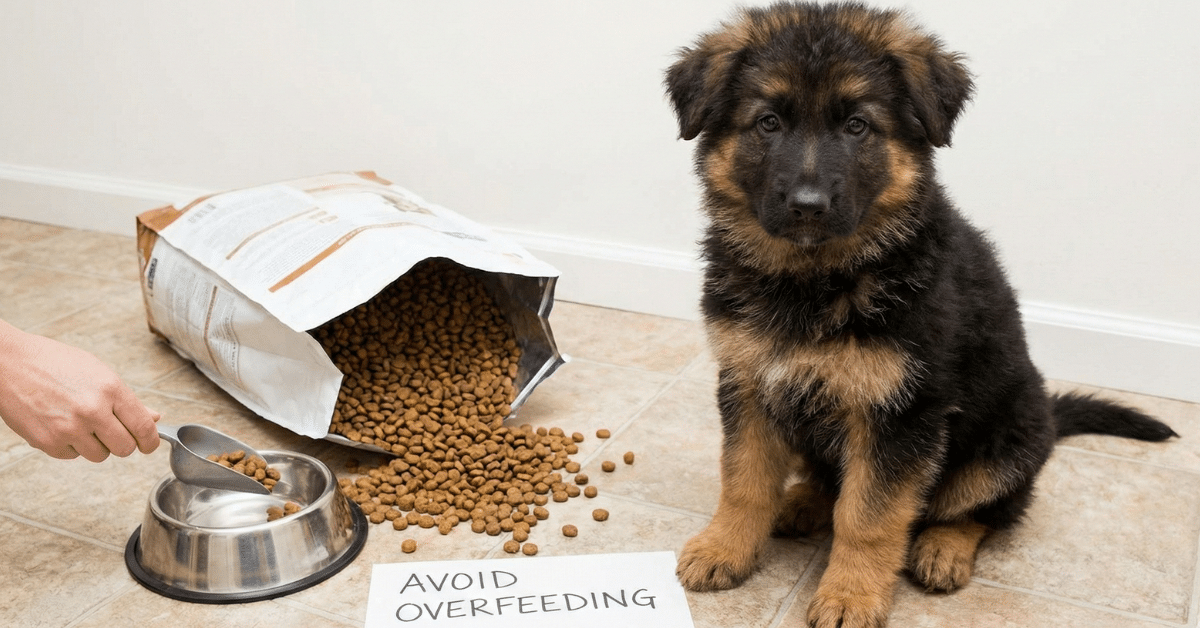
If there’s one mistake I see constantly, it’s misjudging portion size. With German Shepherd puppies, overfeeding and underfeeding both come with serious consequences.
Overfeeding German Shepherd Puppies
Too much food can cause:
- Rapid weight gain
- Joint stress
- Growth disorders
- Diarrhea
- Constant bloating
I once fostered a 4-month-old GSD puppy who looked chubby and adorable—until the vet warned that his fast weight gain could trigger lifelong hip issues.
Signs you’re overfeeding:
- Visible fat rolls
- Heavy breathing after light play
- Loose stool
- Puppy seems lethargic instead of playful
Underfeeding German Shepherd Puppies
On the other hand, underfeeding leads to:
- Rib visibility
- Low energy
- Slow or stunted growth
- Weakened immunity
A lot of new owners assume, “My puppy is thin because he runs a lot.” But thin ribs and tired eyes usually point to nutritional deficiency.
Mistake #2 – Feeding Too Few or Too Many Meals Per Day
I get asked a lot: How many times a day should a German Shepherd eat?
Here’s a simple schedule that works well:
| Puppy Age | Meals Per Day | Notes |
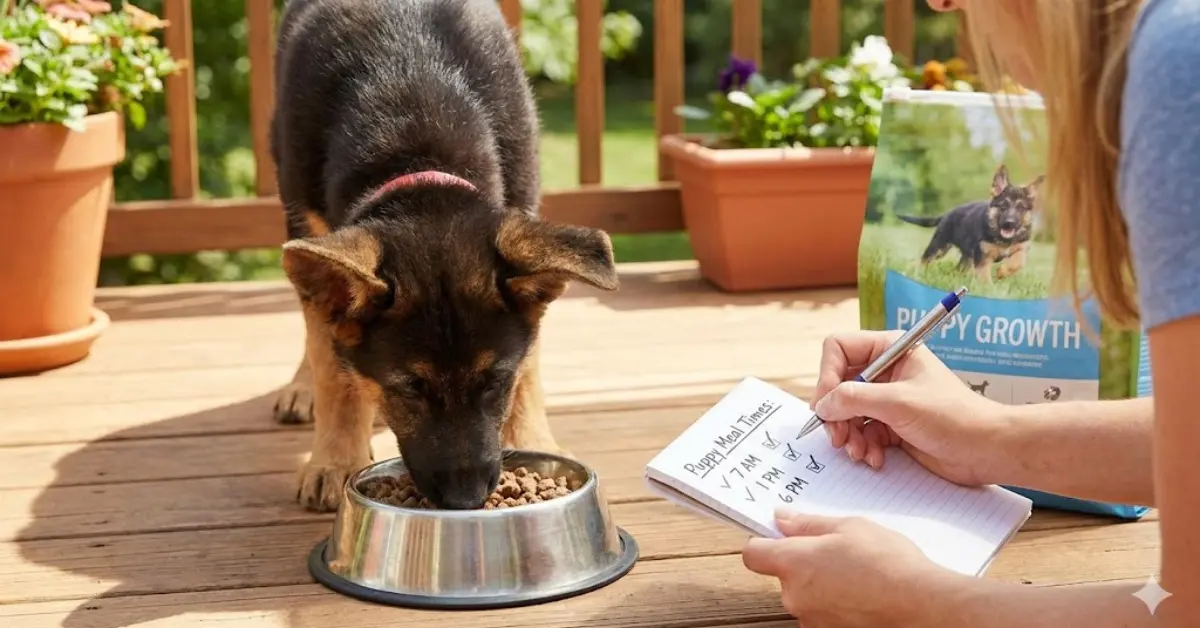
| 8–12 weeks | 4 meals | Small, frequent meals prevent hypoglycemia |
| 3–6 months | 3 meals | Growth picks up; digestion improves |
| 6–12 months | 2–3 meals | Transition slowly |
| 12+ months | 2 meals | Most adult GSDs thrive on 2 |
Many people feed their GSD puppies only one or two meals. That’s too little. Their stomachs aren’t ready for large loads of food at once.
If you’re ever unsure how often to feed a German Shepherd, stick with smaller, more frequent meals during the first few months.
Mistake #3 – Switching Food Too Quickly
This one hits hard because GSD puppies have sensitive stomachs. Any sudden food change can cause:
- Diarrhea
- Vomiting
- Gas
- Temporary appetite loss
A German Shepherd puppy diet should always transition slowly. Here’s a simple step-by-step approach:
7-Day Safe Food Transition
- Day 1–2: 75% old food + 25% new
- Day 3–4: 50% old + 50% new
- Day 5–6: 25% old + 75% new
- Day 7: 100% new food
Go even slower if your puppy has any history of stomach issues.
Mistake #4 – Giving Human Food Without Understanding the Risks
We’ve all done this. You’re eating something, those puppy eyes lock onto you, and suddenly you feel like the worst person if you don’t share.
Most human foods, though, are terrible for German Shepherd puppies.
Foods That Can Harm a GSD Puppy
- Cheese (too much can trigger diarrhea)
- Cooked bones (splinter risk)
- Chocolate
- Onions and garlic
- Spicy foods
- Bread dough
Even meats require caution—too much fat can cause pancreatitis.
If you want to share food, stick to simple, safe items like:
- Plain boiled chicken
- Unsalted pumpkin
- Carrot sticks
- Plain rice
But even then—keep moderation in mind.
Mistake #5 – Not Accounting for Treats in the Diet
Puppies burn calories fast, but treats add up quicker than most people realize.
A common mistake feeding GSD puppies is giving:
- Too many training treats
- Big chews every day
- High-calorie biscuits
In my early days, I once gave a puppy almost 20–25 training treats in one session. I thought he needed them to learn. He ended up with diarrhea for two days.
Safe Treat Guideline
Treats should make up no more than 10% of daily calories.
You can also use:
- Kibble pieces as rewards
- Freeze-dried meat in small bits
- Low-calorie training treats
Mistake #6 – Choosing the Wrong Type of Puppy Food
Not all commercial dog foods are created equal. Some brands label their food “for all breeds,” but German Shepherd puppies need large-breed puppy formulas.
These foods have:
- Controlled calcium levels
- Balanced phosphorus
- Slower calorie density
- Optimal protein for joint-friendly growth
What You Want in a GSD Puppy Food
- Named meat proteins (chicken, lamb, beef)
- DHA for brain development
- No artificial colors
- Moderate fat
- Correct calcium-to-phosphorus ratio (1:1 to 1.5:1)
Good feeding starts with good ingredients.
Mistake #7 – Free-Feeding (Leaving the Bowl Full All Day)
Leaving food out all day seems convenient, but it causes problems:
- Overeating
- Irregular digestion
- Difficult potty training
- Behavioral issues (resource guarding)
German Shepherds thrive on structure. Scheduled feeding also helps you track:
- Appetite changes
- Digestive health
- Weight gain patterns
If you’re wondering how often to feed a German Shepherd, a fixed daily routine always works better than unlimited access.
Mistake #8 – Ignoring Hydration
Hydration affects everything: digestion, body temperature, joint health, and energy.
A GSD puppy should always have access to clean, fresh water, but avoid:
- Letting them drink too much immediately after exercise
- Letting water bowls go uncleaned for days
- Giving flavored or sugary drinks
A dehydrated puppy will seem tired, drooly, and uninterested in food.
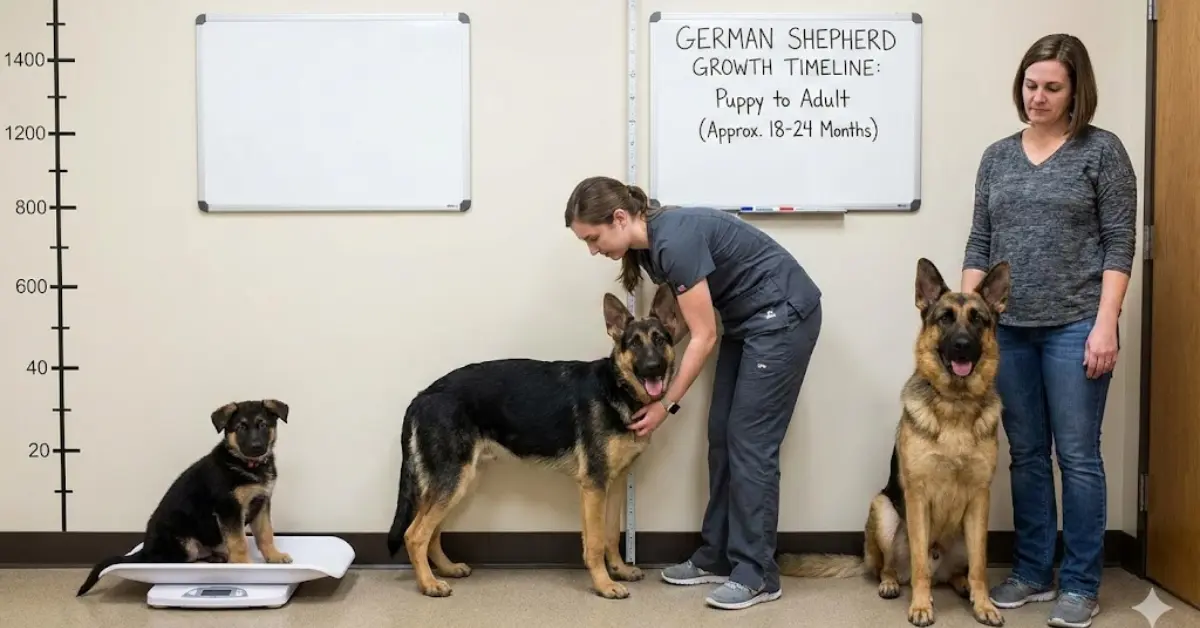
Mistake #9 – Not Monitoring Your Puppy’s Growth
One thing I learned quickly: every German Shepherd puppy grows differently.
Some look lean for months before suddenly filling out. Others bulk up early.
To avoid feeding mistakes:
- Weigh your puppy every 2 weeks
- Track growth using a GSD puppy growth chart
- Adjust food based on visible body condition
A Simple Body Condition Check
You should be able to:
- Feel the ribs but not see them
- See a slight waist from above
- Notice an abdominal tuck from the side
This quick visual check works better than blindly following the bag’s feeding guidelines.
Mistake #10 – Not Recognizing Diet-Related Health Problems Early
Some common German Shepherd puppy diet problems include:
- Soft stool
- Excessive shedding
- Dry or flaky skin
- Gas and bloating
- Constant hunger
- Dull coat
Often, these signs point to:
- Incorrect portion sizes
- Food allergies
- Poor-quality diet
- Overfeeding or underfeeding
If symptoms persist for more than two or three days, it’s better to talk to your vet than guess.
A Simple Step-by-Step Feeding Routine for GSD Puppies
Here’s a routine I’ve personally followed with great success.
Step 1: Set Feeding Times
Choose 3–4 daily feeding slots depending on age.
Step 2: Measure the Food
Use a standard cup—no guessing.
Step 3: Give 10–15 Minutes to Eat
Remove the bowl afterward to prevent grazing.
Step 4: Keep Fresh Water Nearby
But avoid water overload right after meals.
Step 5: Include Training Treats in the Daily Calorie Count
Helps prevent sudden weight gain.
Step 6: Observe Stools
Firm, brown stool means diet is working well.
Step 7: Adjust Based on Growth
If ribs are visible → increase slightly.
If belly looks round or droopy → decrease slightly.
This simple process prevents 90% of feeding mistakes.
Conclusion
Feeding a German Shepherd puppy the right way isn’t complicated—it just requires consistency and awareness. Once you avoid the common mistakes most new owners make, everything becomes smoother: better digestion, stable growth, more energy, and fewer vet visits.
Every GSD puppy is unique, but the basics remain the same—balanced food, proper portions, structured meals, and careful observation.
Your puppy depends on you to set the foundation. And trust me, when you get the feeding right, you’ll see it—in their coat, their confidence, and the way they bounce through life.
FAQs
1. How much should I feed my German Shepherd puppy?
It depends on age and activity, but most puppies eat between 2–4 cups per day split into multiple meals. Adjust based on body condition to avoid overfeeding or underfeeding.
2. What is the best feeding schedule for a German Shepherd puppy?
Younger pups need 4 meals a day. By six months, switch to 3 meals. After one year, most do well with 2 meals.
3. Can feeding mistakes affect a GSD’s joints?
Yes. Overfeeding and rapid growth are major contributors to joint issues, especially hip and elbow dysplasia in German Shepherds.
4. Should I worry if my puppy seems always hungry?
Some GSD puppies act like they could eat forever. If you’re feeding proper amounts, check for parasites or high-calorie treat intake.
5. Can I switch my German Shepherd puppy’s food often?
Avoid frequent changes. GSD puppies have sensitive stomachs, so switching too often can lead to diet problems and diarrhea.
6. How often should I check my puppy’s weight?
Every two weeks is ideal. Regular tracking helps prevent diet-related growth issues.