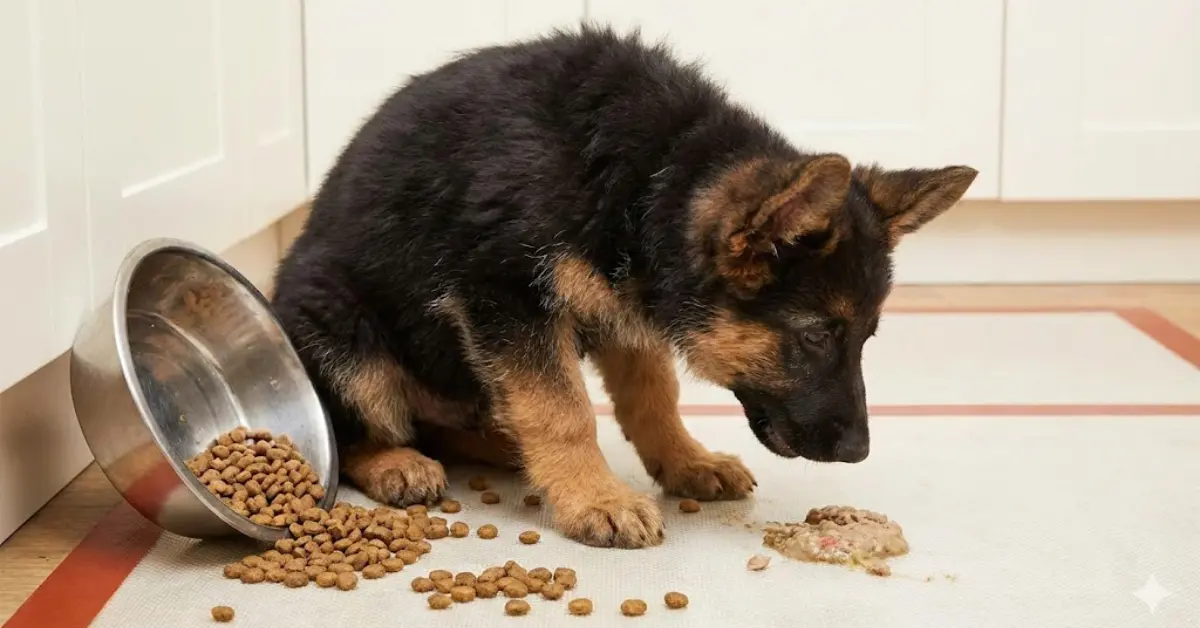
Seeing your German Shepherd puppy vomiting after eating can be alarming, especially when it happens without warning. Many owners immediately fear serious illness, but in my experience working with German Shepherd puppies for over a decade, this issue is often linked to feeding habits and a puppy’s still-developing digestive system. That said, repeated vomiting should never be ignored, particularly in large-breed puppies.
German Shepherds are known for their enthusiasm at mealtime. A puppy eating too fast vomiting episode is one of the most common scenarios I see. Puppies gulp food, swallow air, and irritate the stomach lining, leading to an upset stomach shortly after meals. In other cases, sudden food changes, overfeeding, or rich treats can trigger puppy vomiting causes that appear mild but worsen if left uncorrected.
I’ve worked with owners whose puppies vomited daily until simple feeding adjustments were made, such as using slow-feeder bowls, reducing portion sizes, or spacing meals more evenly. These small changes often resolve a puppy upset stomach within days, without medication or stress.
This guide will walk you through why vomiting happens, what is normal versus concerning, and how to respond safely at home. You’ll learn practical steps to reduce vomiting after meals, how to tell vomiting from regurgitation, and when veterinary care is necessary. Most importantly, you’ll gain the confidence to make informed decisions that protect your puppy’s health while avoiding unnecessary panic.
Is It Normal for a German Shepherd Puppy to Vomit After Eating?
Yes, it can be normal for a German Shepherd puppy to vomit after eating, but only in certain situations. If a puppy vomits occasionally and is otherwise active, playful, and eating well, it is often linked to eating too fast, mild digestive sensitivity, or a temporary upset stomach. In these cases, puppy vomiting but acting normal is usually not an immediate cause for alarm.
From years of working with German Shepherd puppies, I’ve seen this occur most often during growth phases, when puppies are enthusiastic eaters or adjusting to new food. Large-breed puppies have sensitive digestive systems, and small feeding mistakes can lead to short-term vomiting without serious illness.
However, vomiting is not normal if it happens repeatedly, after every meal, or is accompanied by lethargy, diarrhea, weight loss, or dehydration. Puppies under six months are especially vulnerable and can decline quickly.
The key is consistent observation. Occasional vomiting with normal behavior may resolve with simple feeding adjustments, but persistent symptoms should always be evaluated by a veterinarian to rule out underlying health issues.
Common Reasons a German Shepherd Puppy Vomits After Eating
There are several well-documented reasons why a German Shepherd puppy may vomit after eating, and most are related to feeding habits rather than disease. Based on long-term breed experience, the most common cause is eating too fast, which leads to excess air intake and stomach irritation. This often results in vomiting shortly after meals, especially in energetic puppies.
Another frequent reason is a sudden change in diet. German Shepherd puppies have sensitive digestive systems, and switching food without a gradual transition can overwhelm the gut. Overfeeding or large portion sizes can also stretch the stomach and trigger vomiting, even when the food itself is high-quality.
In some cases, vomiting is linked to food intolerance or sensitivity, particularly to certain proteins or additives. Intestinal parasites, which are common in young puppies despite routine deworming, may also cause vomiting after meals.
While many of these causes are manageable at home, repeated vomiting or additional symptoms should always be evaluated by a veterinarian to ensure your puppy’s health and safety.
Eating Too Fast
Puppy eating too fast vomiting is one of the most common issues seen in German Shepherd puppies. These puppies are naturally enthusiastic eaters and often swallow large amounts of food along with air. This rapid intake can irritate the stomach and cause vomiting within minutes of finishing a meal. In most cases, the puppy remains active and hungry afterward, which helps distinguish this from illness.
Using slow-feeder bowls, spreading food on a flat surface, or dividing meals into smaller portions are proven, practical fixes. From long-term breed experience, these simple changes often resolve vomiting without medication, making this a feeding habit issue rather than a health problem.
Sudden Diet Changes
A puppy food transition that happens too quickly can easily upset a German Shepherd puppy’s digestive system. Switching brands, formulas, or protein sources without a gradual introduction forces the gut to adapt too fast, leading to vomiting after meals.
I’ve seen many cases where vomiting stopped once owners followed a proper 7–10 day transition schedule. Mixing small amounts of new food with the old allows beneficial gut bacteria to adjust safely. Sudden diet changes are especially risky during growth phases, which is why veterinarians consistently recommend slow transitions for large-breed puppies.
Food Sensitivities or Intolerance
Food intolerance in puppies can cause repeated vomiting, even when feeding routines seem correct. German Shepherd puppies may react poorly to certain proteins, fillers, or artificial additives. Unlike allergies, intolerance usually causes digestive symptoms rather than skin issues.
In practice, these puppies often vomit after eating but otherwise appear normal. Identifying the trigger requires patience, careful ingredient tracking, and sometimes veterinary-guided elimination diets. From experience, switching to a limited-ingredient puppy formula often reduces symptoms and supports better digestion without unnecessary supplements.
Overeating or Portion Size Issues
Overfeeding is another overlooked cause of vomiting, especially in fast-growing German Shepherd puppies. Owners often assume more food equals better growth, but excessive portions can overload the stomach.
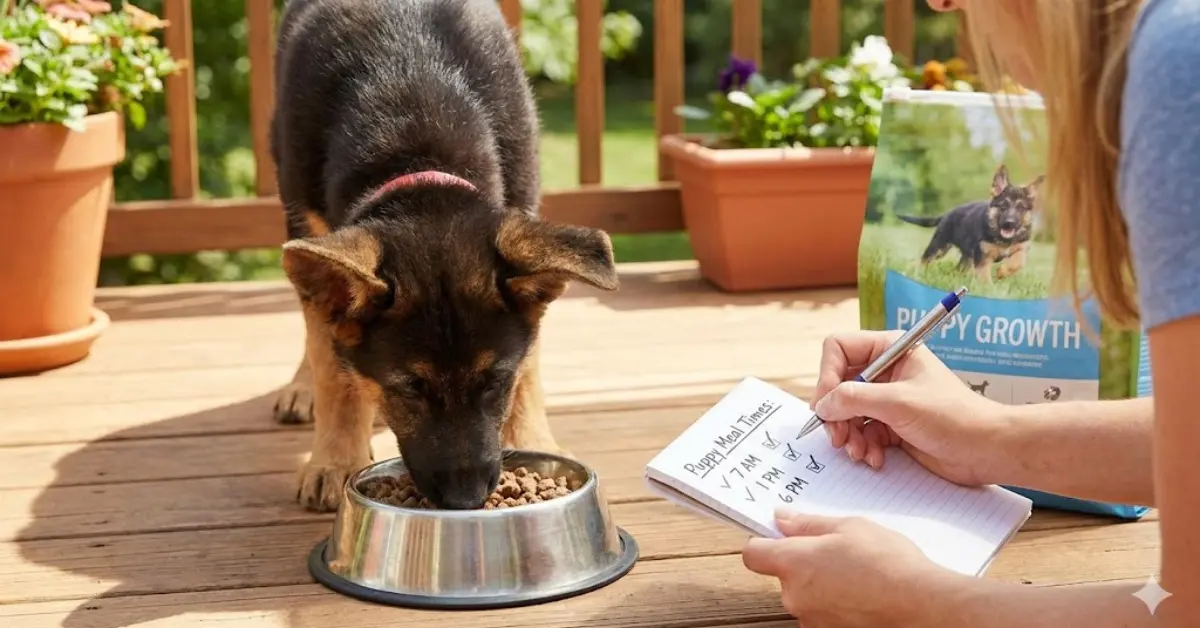
Following a structured puppy feeding schedule with measured portions helps prevent stomach stretching and digestive stress. I’ve worked with owners who eliminated vomiting simply by reducing meal size and increasing feeding frequency. Large-breed puppies benefit from controlled portions to support steady growth and help prevent digestive and orthopedic problems later in life.
Regurgitation vs True Vomiting
Understanding the difference between regurgitation and vomiting is critical for proper response. Regurgitation happens passively, often right after eating, and food appears undigested. Vomiting involves active retching and produces partially digested food or bile.
In German Shepherd puppies, eating too fast commonly causes regurgitation rather than true vomiting. This distinction matters because regurgitation is often a feeding mechanics issue, while vomiting may indicate stomach irritation or illness. Veterinarians use this difference to guide diagnosis, and owners who recognize it can respond more effectively at home.
German Shepherd Puppy Throwing Up After Eating but Acting Normal
When a German Shepherd puppy throws up after eating but is acting normal, it is understandably worrying, but this situation is often less serious than it appears. If your puppy is vomiting but playful, alert, and eager to eat again, the cause is commonly related to feeding speed, mild stomach irritation, or temporary digestive sensitivity rather than illness.
From years of breed-specific experience, I’ve seen many healthy puppies vomit occasionally during growth spurts or after gulping food too quickly. In these cases, careful observation is more helpful than immediate panic. Monitor how often vomiting occurs, what the vomit looks like, and whether your puppy’s behavior changes over time.
However, normal energy does not mean symptoms should be ignored. Repeated vomiting, even in a playful puppy, deserves attention. Simple steps like slowing meals, adjusting portions, and maintaining a consistent diet often resolve the issue.
The key is balance is to stay calm, observe patterns, and act early if vomiting becomes frequent or new symptoms appear.
What to Do If Your German Shepherd Puppy Vomits After Eating
If your German Shepherd puppy vomits after eating, the first step is to stay calm and observe. Occasional vomiting without behavior changes is often manageable at home. From practical experience, start by pausing food for a few hours to let the stomach settle, while ensuring fresh water is always available in small amounts.
Next, review feeding habits. Use a slow-feeder bowl, reduce portion sizes, and split meals into smaller, more frequent feedings. These steps address the most common triggers without medication. If food was recently changed, return to the previous diet and restart a gradual transition over 7–10 days.
When feeding resumes, offer a small amount and watch for reactions. Keep a simple log of meal timing, food type, and vomiting episodes, while this information is extremely helpful if veterinary advice is needed.
If vomiting continues beyond 24 hours, becomes frequent, or is paired with lethargy, diarrhea, or dehydration, contact a veterinarian promptly. Early action protects your puppy’s health and prevents complications.
Pause Feeding and Observe
When vomiting occurs, the safest first step is to pause feeding and observe your German Shepherd puppy closely. In many real-world cases, stopping food for 4–6 hours allows the stomach lining to calm down and reset. This approach is commonly recommended by veterinarians for mild digestive upset.
During this time, watch your puppy’s energy level, posture, and interest in food. If vomiting stops and your puppy remains alert, the issue is often temporary. However, repeated vomiting during the observation period is a clear signal to seek veterinary advice. This step helps differentiate a simple feeding-related issue from a developing medical concern.
Adjust Feeding Speed
Fast eating is a leading cause of post-meal vomiting in German Shepherd puppies. Using a slow feeder bowl is one of the most effective, vet-approved solutions I’ve seen over the years. These bowls force puppies to eat more slowly, reducing air intake and stomach irritation.
Other practical options include spreading food on a flat tray or hand-feeding small portions. Puppies that vomit due to speed often stop entirely once feeding pace is corrected. Adjusting feeding speed is low-risk, inexpensive, and addresses one of the most common secondary causes of vomiting without medication or stress.
Review Diet and Treats
A careful review of your puppy’s diet and treats is critical when vomiting occurs. Many German Shepherd puppies react poorly to sudden food changes, rich treats, or table scraps. From experience, even “healthy” treats can overwhelm a sensitive digestive system. Stick to one high-quality puppy formula and limit treats during recovery.
If vomiting began after introducing new food, revert to the previous diet and restart a gradual transition. Keeping ingredient lists simple helps identify triggers. Veterinarians often recommend eliminating unnecessary treats first before assuming serious digestive disorders.
Hydration Without Overdoing Water
Hydration is important, but overdoing water after vomiting can trigger another episode. Offer small amounts frequently rather than allowing your puppy to drink large volumes at once. In practice, a few sips every 10–15 minutes works well for puppies with mild stomach upset. Excessive water intake can stretch the stomach and worsen nausea.
Monitor urine output and gum moisture to assess hydration. If your puppy refuses water or shows signs of dehydration, veterinary care is essential. Balanced hydration supports recovery without adding stress to an already sensitive digestive system.
Foods and Feeding Mistakes That Can Cause Vomiting
Many cases of vomiting in German Shepherd puppies are directly linked to foods and feeding mistakes that trigger puppy digestive issues. One of the most common problems is table scraps. Human food is often too fatty, seasoned, or rich for a puppy’s developing digestive system and can irritate the stomach shortly after eating.
Rich treats, even those marketed for puppies, can also cause vomiting when given too frequently or in large amounts. Mixing multiple treat types in a single day makes it harder for the gut to process ingredients consistently. In my experience, limiting treats and sticking to one simple option often resolves vomiting quickly.
Inconsistent feeding times are another overlooked issue. Irregular meal schedules can lead to excessive hunger, rapid eating, and stomach acid buildup, all of which increase the risk of vomiting. Following a structured feeding routine with measured portions supports stable digestion.
Avoiding these common mistakes helps protect your puppy’s stomach and prevents unnecessary digestive stress.
When Vomiting Is a Sign of a Serious Problem
While occasional vomiting can be harmless, there are clear situations where it becomes a medical concern. Knowing when to call the vet for puppy vomiting is critical, especially for German Shepherd puppies, who can decline quickly if an issue is missed. Vomiting that happens frequently, lasts more than 24 hours, or occurs after every meal should never be ignored.
The presence of blood in vomit-whether bright red or dark and coffee-ground-like signals possible internal irritation or injury and requires immediate veterinary attention. Lethargy is another serious warning sign. If your normally active puppy becomes weak, withdrawn, or uninterested in food, vomiting may be part of a larger health issue.
Dehydration is especially dangerous in puppies. Dry gums, sunken eyes, reduced urination, or refusal to drink indicate urgent risk. From professional experience, early veterinary care in these cases dramatically improves outcomes and prevents life-threatening complications.
When to Contact a Veterinarian
Knowing when to seek professional care can prevent minor digestive issues from becoming serious health problems. Based on veterinary guidelines and real-world experience with German Shepherd puppies, contact a veterinarian immediately if you notice any of the following warning signs:
- Vomiting multiple times in a single day or after every meal
- Vomit containing blood, dark material, or an unusual odor
- Lethargy, weakness, or sudden behavior changes
- Refusal to eat or drink for more than 12 hours
- Signs of dehydration, such as dry gums, sunken eyes, or reduced urination
- Vomiting combined with diarrhea, fever, or abdominal pain
- Puppies under six months with ongoing vomiting, even if symptoms seem mild
- Suspected ingestion of a foreign object or toxin
From experience, early veterinary evaluation often leads to faster recovery and fewer complications. Trust your instincts and if something feels off or vomiting persists despite home care, professional guidance is the safest choice for your puppy’s health.
How to Prevent Vomiting After Eating
Preventing vomiting starts with supporting healthy puppy digestion through consistent feeding habits. One of the most effective steps is establishing a regular feeding routine. Feeding your German Shepherd puppy at the same times each day helps regulate stomach acid and prevents excessive hunger that leads to rapid eating.
Encouraging slow eating is equally important. Using slow-feeder bowls, dividing meals into smaller portions, or spreading food across a flat surface reduces air intake and stomach irritation. From long-term experience, puppies that slow down at mealtime show fewer digestive problems within days.
Gradual food changes are essential when switching diets. Always transition over 7–10 days, mixing increasing amounts of the new food with the old. This allows the digestive system to adapt safely. Avoid unnecessary treats and table scraps, especially during growth phases.
By maintaining consistency, monitoring reactions, and making thoughtful adjustments, most vomiting episodes can be prevented before they become recurring or stressful issues.
Conclusion
Vomiting after eating can be unsettling for any German Shepherd puppy owner, but in many cases, it is manageable with the right approach. As discussed throughout this guide, feeding habits, diet changes, and portion control play a major role in digestive health. Most puppies improve quickly once meals are slowed, routines are stabilized, and food transitions are handled gradually.
That said, it’s important to balance reassurance with responsibility. Occasional vomiting in an otherwise active puppy may not be serious, but repeated episodes, behavior changes, or signs of dehydration should never be ignored. Large-breed puppies like German Shepherds grow rapidly, and early digestive stress can affect their overall development if left unaddressed.
By observing patterns, making informed adjustments, and knowing when to seek veterinary care, you can protect your puppy’s health and avoid unnecessary worry. Consistent care, calm decision-making, and professional guidance when needed are the foundation of raising a healthy, confident German Shepherd puppy.
FAQs
1. Why does my German Shepherd puppy keep throwing up after eating?
German Shepherd puppies often throw up after eating because they eat too quickly, swallow excess air, or have sensitive digestive systems. Sudden diet changes, overeating, or rich treats can also irritate the stomach. If vomiting is frequent or worsening, a veterinarian should evaluate the puppy.
2. Is it normal for a German Shepherd puppy to vomit after meals?
Occasional vomiting after meals can be normal, especially if the puppy eats too fast or is adjusting to new food. Vomiting is not normal if it happens repeatedly, after every meal, or is accompanied by lethargy, diarrhea, or dehydration.
3. What should I do if my puppy vomits after eating?
Pause feeding for a few hours and observe your puppy’s behavior. Offer small amounts of water, then resume feeding with smaller portions using a slow feeder. If vomiting continues beyond 24 hours or other symptoms appear, contact a veterinarian.
4. Why is my puppy throwing up undigested food hours after eating?
Throwing up undigested food may be caused by regurgitation, eating too fast, or delayed digestion. Regurgitation usually happens without retching and produces undigested food. Ongoing episodes should be checked by a veterinarian.
5. Is it okay to feed my puppy again after vomiting?
You can usually feed your puppy again once vomiting has stopped and the stomach has rested for a few hours. Start with a small portion and monitor closely. If vomiting returns, stop feeding and seek veterinary advice.
6. Are German Shepherds known for sensitive stomachs?
Yes, German Shepherds are known to have sensitive digestive systems. Puppies are especially prone to stomach upset due to growth, food transitions, and fast eating. Consistent routines and gradual diet changes help reduce issues.
7. What foods commonly cause vomiting in German Shepherd puppies?
Common triggers include rich treats, table scraps, fatty foods, sudden food changes, and low-quality puppy food. Some puppies also react poorly to certain proteins or artificial additives.
8. How can I tell the difference between vomiting and regurgitation?
Vomiting involves retching and partially digested food or bile. Regurgitation is passive, happens soon after eating, and food appears undigested. Regurgitation is often linked to fast eating, while vomiting may signal irritation or illness.
9. When should I worry and call a veterinarian for puppy vomiting?
Call a veterinarian if vomiting is frequent, lasts more than 24 hours, contains blood, or is paired with lethargy, diarrhea, dehydration, fever, or refusal to eat. Puppies under six months should be monitored closely.
10. How can I prevent my German Shepherd puppy from vomiting after eating?
Feed measured portions, use slow-feeder bowls, keep feeding times consistent, and transition food gradually over 7–10 days. Avoid unnecessary treats and table scraps, especially during growth phases.