Understanding the German Shepherd lifespan is one of the most common concerns for both new and experienced owners. Over my years of working closely with this breed, I have seen how proper care, genetics, and daily routines directly influence how long a German Shepherd lives. On average, these dogs are known for their strength and intelligence, but longevity depends on more than breed reputation alone.
German Shepherds typically live longer when they receive balanced nutrition, regular exercise, and timely veterinary care. Factors such as responsible breeding, early health screening, and mental stimulation play a major role in supporting a healthy life. I have also observed that dogs raised in calm environments with consistent training often show better overall wellbeing as they age.
This guide is written to give clear and practical insight based on real world experience and trusted canine health knowledge. By understanding what affects lifespan and how owners can support each stage of life, you can help your German Shepherd enjoy more active and comfortable years.
What Is the Average German Shepherd Lifespan?
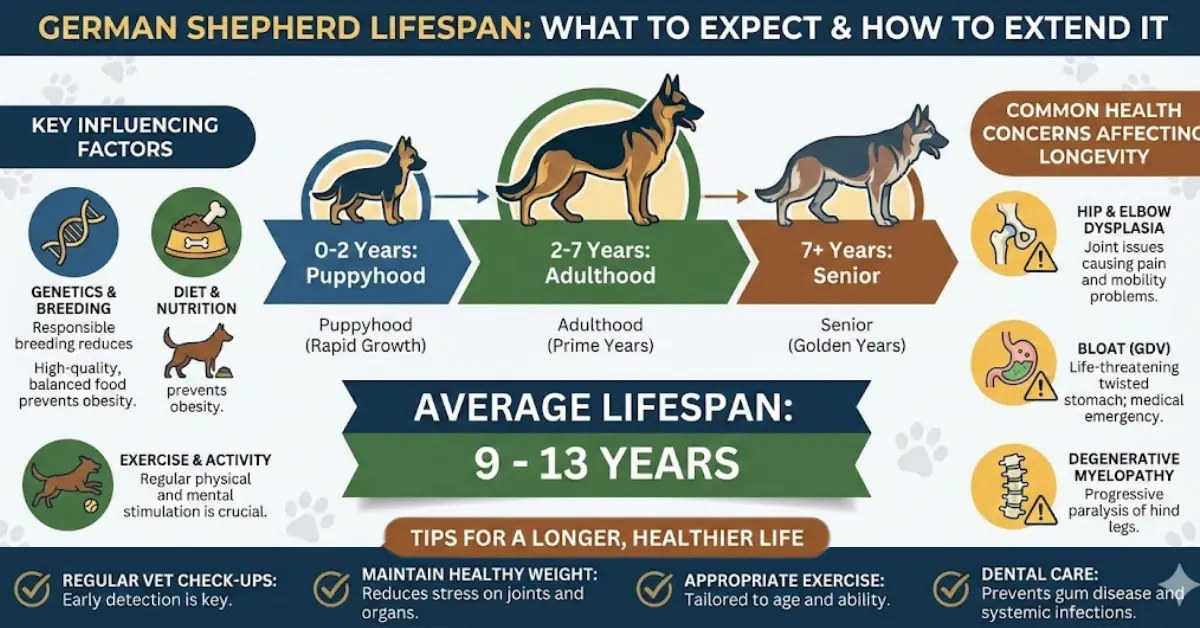
The average German Shepherd lifespan generally falls between 9 and 13 years. This range is based on long term breed data and real world ownership experience. Some dogs live beyond this range when genetics and care align well.
|
Category |
Average Lifespan |
|
Overall German Shepherd Lifespan |
9–13 years |
| Well-bred, well-cared dogs |
12–14 years |
| Poor breeding / poor care |
Under 9 years |
German Shepherd life expectancy is strongly influenced by daily lifestyle. Proper nutrition, healthy weight, and regular exercise help slow age related decline. Dogs that follow a structured routine tend to remain active longer.
Preventive veterinary care also plays a major role. Early health screenings, vaccinations, and dental care reduce long term risks. In my experience, dogs that receive consistent medical attention age with fewer complications.
Mental stimulation is equally important. Training, problem solving games, and social interaction support cognitive health. When physical and mental needs are met together, German Shepherds often enjoy a longer and more comfortable life.
Lifespan of Male vs Female German Shepherds
Male and female German Shepherds show small but noticeable lifespan differences. Females often live slightly longer than males. This is commonly linked to body size and hormonal factors.
|
Gender |
Average Lifespan | Notes |
|
Male German Shepherd |
9–12 years | Heavier build, higher joint strain |
| Female German Shepherd | 10–13 years |
Leaner frame, slightly longer lifespan |
Male German Shepherds are usually heavier and more muscular. This added weight can increase strain on joints and the heart over time. Joint issues may appear earlier if weight is not well managed.
Female German Shepherds tend to have leaner frames. This can reduce pressure on hips and elbows as they age. Spaying at the right time may also lower certain health risks.
That said, care matters more than gender. I have seen both males and females live long lives with proper diet, exercise, and veterinary support.
German Shepherd Lifespan Compared to Other Large Dog Breeds
Compared to other large dog breeds, German Shepherds have a balanced lifespan. Very large breeds like Great Danes often live shorter lives due to rapid aging. German Shepherds age at a steadier pace.
|
Breed |
Average Lifespan |
|
German Shepherd |
9–13 years |
| Labrador Retriever |
10–14 years |
| Golden Retriever |
10–12 years |
|
Great Dane |
7–10 years |
When compared with Labradors or Golden Retrievers, lifespan is quite similar. However, German Shepherds need closer attention to joint health. Early prevention makes a visible difference.
German Shepherds also age well mentally. With regular training and engagement, they stay alert into senior years. This mental strength supports better quality of life.
Overall, German Shepherds offer a strong balance of longevity, intelligence, and physical ability among large breeds.
Factors That Affect a German Shepherd’s Lifespan
Understanding the factors affecting German Shepherd lifespan helps owners make better long term decisions. From years of hands on experience with this breed, it is clear that how long German Shepherds live depends on more than genetics alone. Daily care, environment, and lifestyle choices play an equally important role.
|
Factor |
Impact on Lifespan |
|
Genetics & breeding |
High |
|
Diet & nutrition |
High |
| Exercise & activity |
Medium–High |
| Living environment |
Medium |
| Veterinary care |
High |
| Mental stimulation |
Medium |
German Shepherds are strong and adaptable, but they are also sensitive to neglect and inconsistency. Dogs that receive balanced nutrition, regular exercise, and preventive veterinary care tend to age more gracefully. Mental stimulation and emotional stability also influence overall health, especially as the dog enters senior years.
Early planning matters. Choices made during puppyhood often shape health outcomes later in life. Responsible breeding, controlled growth, and proper training reduce stress on joints and organs. When owners understand these influencing factors and act early, they significantly improve both lifespan and quality of life for their German Shepherd.
Genetics and Breeding Quality
Genetics play a foundational role in a German Shepherd’s lifespan. Dogs born from healthy, well screened parents often have fewer inherited health issues. In my experience, responsible breeding makes a noticeable difference in long term vitality.
Poor breeding practices increase the risk of hip dysplasia, elbow problems, and heart conditions. These issues may not appear early, but they often shorten lifespan over time. This is why breeder selection is critical.
Ethical breeders prioritize health testing, temperament, and structural balance. Puppies from such lines usually grow at a steadier pace and age more comfortably. This directly impacts how long German Shepherds live.
Genetics are not something owners can change later. Starting with a healthy foundation gives every other care effort a better chance to succeed. It is one of the most important early decisions an owner can make.
Diet and Nutrition for Longevity
Diet directly influences energy levels, immune strength, and organ health. German Shepherds require balanced nutrition that supports joints, digestion, and muscle maintenance. Poor diet choices often shorten lifespan.
High quality protein supports muscle without excessive weight gain. Controlled fat levels help protect the heart and joints. In my experience, dogs fed consistent, portion controlled meals age more slowly.
Overfeeding is a common issue. Extra weight increases stress on hips and elbows. This often leads to early mobility problems and reduced lifespan.
Nutrition should change with age. Puppies, adults, and seniors have different needs. Owners who adjust diet thoughtfully often see better long term health outcomes.
Exercise and Physical Activity Needs
Exercise is essential for both physical and mental health. German Shepherds need regular activity to maintain muscle tone and joint flexibility. Lack of movement often leads to stiffness and weight gain.
Balanced exercise is key. Too little activity causes decline, while excessive strain can damage joints. In my experience, structured daily exercise works best.
Activities like walking, training drills, and controlled play support healthy aging. Mental engagement during exercise also reduces stress and anxiety.
Consistent physical activity helps regulate weight, improve circulation, and maintain confidence. These factors together support a longer and more active life.
Living Environment (Indoor vs Outdoor Dogs)
Living environment has a strong impact on lifespan. German Shepherds raised indoors with their families often live longer than outdoor only dogs. Emotional security plays a major role.
Indoor dogs benefit from temperature control and closer health monitoring. Owners notice changes early and respond faster. This improves long term outcomes.
Outdoor only dogs face weather stress, isolation, and delayed care. These factors often shorten lifespan over time.
German Shepherds are social by nature. When they live close to their people, stress levels stay lower. A stable, safe environment supports both mental and physical health as the dog ages.
Common Health Problems That Impact German Shepherd Lifespan
German Shepherds are known for strength and intelligence, but certain health conditions can affect longevity. Understanding common German Shepherd health issues helps owners act early and reduce long term risks. From years of experience with this breed, early awareness often makes the difference between managed aging and shortened lifespan.
|
Health Issue |
Effect on Lifespan |
|
Hip & elbow dysplasia |
Reduced mobility, early decline |
|
Degenerative myelopathy |
Loss of movement in senior years |
| Bloat (GDV) |
Life-threatening emergency |
| Allergies & skin issues |
Indirect quality-of-life impact |
Some diseases that shorten German Shepherd lifespan develop slowly and show mild symptoms at first. Joint disorders, neurological conditions, and digestive emergencies are among the most serious concerns. Skin related problems may seem minor but can impact overall health when left untreated.
Regular veterinary checkups, early screening, and attentive daily care help catch issues before they progress. Responsible ownership also means recognizing subtle changes in movement, appetite, or behavior. When health problems are addressed promptly and managed correctly, many German Shepherds continue to live active and comfortable lives well into their senior years.

Hip and Elbow Dysplasia
Hip dysplasia and elbow dysplasia are among the most common joint issues in German Shepherds. These conditions occur when joints do not develop properly. Over time, this leads to pain, stiffness, and reduced mobility.
Symptoms may start subtly. Owners often notice difficulty standing, limping, or reluctance to exercise. In my experience, early signs are often overlooked until damage progresses.
Weight control and controlled exercise help reduce joint stress. Veterinary guidance and joint supportive nutrition also play a role. Severe cases may require medical or surgical management.
While dysplasia cannot be cured, early diagnosis improves quality of life. Proper care can slow progression and reduce its impact on lifespan.
Degenerative Myelopathy
Degenerative myelopathy is a progressive neurological disease seen in older German Shepherds. It affects the spinal cord and gradually weakens the hind legs. The condition is painless but deeply disabling.
Early signs include dragging paws or loss of coordination. As the disease advances, mobility becomes increasingly limited. From experience, progression varies between dogs.
There is no cure, but supportive care helps maintain comfort. Physical therapy and mobility aids can extend functional movement. Mental engagement remains important during this stage.
While degenerative myelopathy does not cause pain, it impacts independence. Early recognition helps owners prepare and support their dog responsibly.
Bloat (Gastric Dilatation Volvulus)
Bloat is a life threatening emergency that affects deep chested breeds like German Shepherds. It occurs when the stomach fills with gas and twists. Without immediate treatment, it can be fatal.
Symptoms include restlessness, a swollen abdomen, and repeated attempts to vomit. In my experience, timing is critical in survival.
Feeding smaller meals and avoiding exercise after eating reduces risk. Elevated bowls are not always recommended and should be discussed with a veterinarian.
Quick response saves lives. Owners who recognize early signs and act fast greatly improve survival chances.
Allergies and Skin Conditions
Allergies and skin conditions are common but often underestimated. Chronic itching, ear infections, and skin irritation affect overall wellbeing. Long term inflammation can weaken immune health.
Environmental allergens, food sensitivities, and parasites are typical triggers. Identifying the cause takes patience and proper testing.
Consistent treatment and dietary adjustments improve comfort. Healthy skin supports better overall health and energy levels.
While not directly life threatening, unmanaged skin issues reduce quality of life. Long term discomfort can contribute to stress and secondary infections if ignored.
How to Increase Your German Shepherd’s Lifespan
Learning how to extend German Shepherd lifespan starts with daily care and informed decisions. From years of experience with this breed, small consistent habits often have the biggest impact. Owners who focus on prevention rather than reaction usually help their dogs live longer and healthier lives.
Helping a German Shepherd live longer is not about extreme measures. It comes down to balance. Proper nutrition, routine exercise, emotional stability, and timely medical care work together. Ignoring one area often affects the others.
Early investment in health pays off later. Puppies raised with structure, training, and quality food age more smoothly than those with inconsistent routines. As dogs grow older, adjusting care to match their changing needs becomes essential. When owners stay observant and proactive, German Shepherds are more likely to enjoy both extended lifespan and better quality of life.
Best Diet for a Long Living German Shepherd
Diet plays a central role in long term health and energy. German Shepherds thrive on balanced meals that support joints, digestion, and immune function. Poor nutrition often leads to weight gain and early health decline.
High quality protein supports muscle without excessive strain. Healthy fats aid skin, coat, and brain health. In my experience, simple ingredient diets work better than heavily processed foods.
Portion control is critical. Overfeeding increases stress on hips and elbows. This often shortens mobility and overall lifespan.
Diet should evolve with age. Puppies, adults, and seniors require different nutrient levels. Owners who adjust feeding plans help their dogs age with strength and comfort.
Importance of Regular Vet Checkups
Routine veterinary checkups help catch problems early. Many health issues develop silently before symptoms appear. Regular exams allow early intervention.
Annual visits support vaccination schedules and health monitoring. Blood tests and joint evaluations provide valuable insight as dogs age. In my experience, early detection prevents serious complications.
Senior dogs benefit from more frequent visits. Small changes in behavior or weight often signal deeper issues. Professional guidance helps address them promptly.
Consistent vet care builds a complete health history. This improves decision making and long term treatment outcomes.
Preventive Care and Vaccinations
Preventive care reduces the risk of avoidable diseases. Vaccinations protect against serious infections that can shorten lifespan. Staying on schedule is essential.
Parasite prevention also matters. Fleas, ticks, and worms affect overall health. Long term exposure weakens immunity and causes discomfort.
Dental care is often overlooked. Poor oral health can impact the heart and organs. Regular cleaning supports overall wellbeing.
Preventive care is easier and safer than treatment. It protects health before problems become serious.
Mental Stimulation and Training
Mental health directly affects physical aging. German Shepherds need structure, learning, and engagement to stay balanced. Boredom often leads to stress and behavioral issues.
Training strengthens the bond between dog and owner. It also supports confidence and focus. In my experience, mentally active dogs age more gracefully.
Puzzle toys, obedience work, and social interaction keep the mind sharp. These activities reduce anxiety and promote calm behavior.
Mental stimulation supports emotional stability. A confident and relaxed dog is more resilient as it grows older.
German Shepherd Lifespan by Life Stage
Understanding German Shepherd lifespan by life stage helps owners provide the right care at the right time. From long term experience with this breed, health outcomes improve when care evolves as the dog ages. Each stage brings unique physical and emotional needs that directly influence longevity.
|
Life Stage |
Age Range | Care Focus |
|
Puppy |
0–1 year | Controlled growth, training |
| Adult | 1–7 years |
Weight control, exercise |
| Senior | 7+ years |
Mobility, comfort, vet care |
German Shepherd puppy lifespan is shaped early through nutrition, training, and controlled growth. As dogs move into adulthood, maintaining balance becomes the priority. In later years, senior German Shepherd care focuses on comfort, mobility, and disease prevention.
Many lifespan related issues begin quietly during earlier stages. When owners recognize stage specific needs and respond proactively, they reduce long term risks. Adjusting diet, exercise, and veterinary care at each phase supports a smoother aging process. This life stage approach allows German Shepherds to remain active, confident, and healthy for as long as possible.
Puppy Stage (0–1 Year)
The puppy stage is the foundation for lifelong health. Growth during this period is rapid, especially in bones and joints. Proper nutrition and controlled activity are essential.
Overfeeding or excessive exercise can damage developing joints. In my experience, slow and steady growth leads to stronger adults. Puppies need quality food formulated for large breeds.
Training should begin early but remain gentle. Positive reinforcement builds confidence and reduces stress. Mental stimulation supports healthy brain development.
Veterinary visits during this stage establish a health baseline. Vaccinations and early screenings protect against preventable diseases. Good habits formed now shape future wellbeing.
Adult Stage (1–7 Years)
The adult stage is the most active phase of life. German Shepherds reach full strength and mental maturity during this period. Maintaining balance becomes the key goal.
Regular exercise supports muscle tone and joint health. Structured activity works better than random high impact play. In my experience, consistency prevents injuries.
Diet should support energy without causing weight gain. Portion control becomes more important as metabolism stabilizes. Healthy adults age better.
Routine vet checkups help detect early changes. Addressing small issues now prevents major problems later in life.
Senior Stage (7+ Years)
The senior stage requires thoughtful adjustments. Energy levels decline, but mental awareness often remains strong. Comfort becomes the priority.
Senior German Shepherd care focuses on joint support and mobility. Softer exercise and weight management reduce strain. In my experience, small routine changes make a big difference.
Diet should support aging organs and digestion. Older dogs benefit from easier to digest meals and proper hydration.
More frequent veterinary visits are important. Early detection of age related conditions improves comfort and quality of life. Gentle training and companionship support emotional health in later years.
Oldest German Shepherds on Record
Stories of the oldest German Shepherds on record offer valuable insight into what long term care can achieve. While most German Shepherds live within an expected range, a few have exceeded it and reached remarkable ages. These cases help highlight patterns rather than miracles.
The longest living German Shepherds often share similar backgrounds. They were well bred, maintained a healthy weight, and received consistent veterinary care. From years of observing senior dogs, longevity usually reflects steady habits rather than one special factor.
The oldest German Shepherd age ever reported varies depending on documentation, but some individuals have lived well into their mid to late teens. These dogs were not pushed physically and lived low stress, structured lives. Their stories reinforce that genetics and daily care together shape lifespan. While not every dog will reach record ages, these examples show what is possible with responsible ownership and long term commitment.
What We Can Learn From Long Living German Shepherds
Long living German Shepherds provide practical lessons for everyday owners. One common pattern is weight control. Dogs that stayed lean placed less stress on joints and organs. This helped preserve mobility and comfort over time.
Another shared factor is consistent routine. Regular feeding times, predictable exercise, and calm environments reduce stress. In my experience, dogs that lived in stable homes aged more smoothly than those exposed to frequent change.
Early health management also plays a role. Owners who addressed minor issues before they escalated often extended their dog’s active years. Preventive care was prioritized over reactive treatment.
Mental engagement stands out as well. Older dogs that remained mentally stimulated stayed alert and responsive. Training, gentle play, and companionship supported emotional health.
These examples show that longevity is built slowly. Daily care choices made over many years shape how long and how well a German Shepherd lives.
Signs Your German Shepherd Is Aging
Recognizing aging German Shepherd signs early helps owners adjust care before problems progress. Aging is a natural process, but it does not happen overnight. From years of experience with this breed, changes often appear gradually and are easy to miss.
|
Sign |
What It Indicates |
|
Reduced energy |
Normal aging |
|
Joint stiffness |
Arthritis risk |
| Behavioral changes |
Cognitive aging |
| Vision/hearing loss |
Sensory decline |
Senior German Shepherd symptoms usually involve both physical and behavioral shifts. Slower movement, longer rest periods, and reduced stamina are common early indicators. Subtle changes in appetite, sleep patterns, or responsiveness may also signal aging.
Paying attention to these signs allows owners to support comfort and health. Early adjustments in diet, exercise, and veterinary care reduce strain on the body. Aging does not mean decline in quality of life. With awareness and proper care, German Shepherds can remain content, confident, and engaged well into their senior years.
Common Physical and Behavioral Changes in Senior German Shepherds
One of the first noticeable changes is reduced energy. Senior German Shepherds may tire faster during walks or prefer shorter activities. This shift is normal but should be monitored.
Stiffness after rest is another common sign. Joints may take longer to loosen, especially in colder weather. In my experience, gentle movement helps ease discomfort.
Behavioral changes may also appear. Older dogs can become more attached or seek quieter spaces. Some may show mild confusion or hesitation in familiar routines.
Changes in vision or hearing often develop slowly. Dogs may respond less quickly to commands. These signs should be discussed with a veterinarian.
Weight fluctuations and coat changes are also common. Regular monitoring and early care adjustments help manage senior needs effectively.
Final Thoughts on German Shepherd Lifespan and Longevity
German Shepherd lifespan and longevity are shaped by daily care, informed choices, and long term commitment. From years of experience with this breed, it is clear that no single factor determines how long a German Shepherd lives. Instead, lifespan is built slowly through consistent routines, responsible ownership, and early attention to health.
Understanding your dog’s needs at each life stage makes a meaningful difference. Puppies benefit from controlled growth and training, adults thrive with balance and structure, and seniors require comfort focused care. Owners who adapt their approach as their dog ages often see better mobility, confidence, and overall wellbeing.
Trustworthy veterinary guidance plays a critical role. Regular checkups, preventive care, and early intervention help manage issues before they limit quality of life. Mental stimulation and emotional stability are equally important. German Shepherds are intelligent and loyal dogs that thrive when they feel secure and engaged.
While genetics set the foundation, daily habits shape the outcome. With patience, awareness, and dedication, owners can help their German Shepherd enjoy not only a longer life but a healthier and more fulfilling one.
FAQs
1. How long does a German Shepherd usually live?
Most German Shepherds live between 9 and 13 years. Proper care, good genetics, and regular vet visits can influence this range.
2. What factors most affect a German Shepherd’s lifespan?
Genetics, diet quality, exercise routine, veterinary care, and living environment all play major roles in lifespan.
3. Do male or female German Shepherds live longer?
Female German Shepherds often live slightly longer than males, though individual care matters more than gender.
4. Can diet really help a German Shepherd live longer?
Yes. Balanced nutrition, proper portion control, and age appropriate food support long term health and mobility.
5. What health problems shorten a German Shepherd’s life?
Joint disorders, neurological conditions, bloat, and unmanaged chronic diseases can reduce lifespan if not addressed early.
6. At what age is a German Shepherd considered senior?
Most German Shepherds are considered senior around 7 years of age, though signs of aging may appear earlier or later.
7. Does exercise increase a German Shepherd’s lifespan?
Regular, controlled exercise helps maintain healthy weight, joints, and mental wellbeing, which supports longevity.
8. Are indoor German Shepherds healthier than outdoor dogs?
German Shepherds that live indoors with their families often experience lower stress and better health monitoring.
9. How often should senior German Shepherds see a vet?
Senior dogs benefit from veterinary checkups at least twice a year to monitor age related changes.
10. Can German Shepherds live beyond 13 years?
Some German Shepherds do live longer than average, especially with excellent care, strong genetics, and a low stress