German Shepherd puppy grooming is very different from grooming an adult dog. Puppies have softer skin, a lighter developing coat, and limited tolerance for long sessions. Early grooming should focus on comfort, safety, and building positive habits rather than heavy coat care.
Many first-time owners make common grooming mistakes without realizing it. Using adult grooming tools too early, bathing too often, or brushing with too much pressure can irritate a puppy’s skin. Avoiding early handling of paws, ears, and mouth can also lead to fear later.
This guide is created to help new owners approach German Shepherd puppy grooming with confidence. You will learn when to start brushing, bathing, nail trimming, and ear cleaning, along with safe tools to use. Most importantly, you will learn how to keep grooming sessions short, calm, and stress-free as your puppy grows.
This article is for informational purposes only and does not replace veterinary advice. Always consult a licensed vet or professional groomer for your puppy’s specific needs.
Why Grooming a German Shepherd Puppy Is Important
Early grooming plays a critical role in a German Shepherd puppy’s overall health and behavior. At this stage, grooming is not just about cleanliness—it supports healthy growth and helps your puppy become comfortable with regular handling. Consistent, gentle grooming sets the foundation for easier care throughout adulthood.
Health Benefits of Early Grooming
Regular grooming helps maintain healthy skin in German Shepherd puppies. Gentle brushing removes dirt, loose hair, and dead skin cells, reducing irritation and dryness. It also allows you to spot early signs of rashes, bumps, or infections before they become serious.
Early grooming supports proper coat development. Brushing improves blood circulation and helps the puppy coat transition smoothly into an adult double coat. This prevents matting and uneven shedding as your puppy grows.
Grooming also helps with parasite prevention. Routine coat checks make it easier to detect fleas, ticks, or mites early. Catching these issues quickly protects your puppy’s skin and reduces the risk of infection.
Behavioral & Training Benefits
Grooming helps desensitize your puppy to touch. Gentle handling of paws, ears, tail, and mouth teaches your puppy that being touched is safe and normal. This reduces anxiety as grooming routines become more frequent.
Early exposure reduces fear of grooming tools. Introducing brushes, nail clippers, and towels slowly prevents stress and resistance later. Puppies that learn early are more cooperative as adults.
Regular grooming also leads to easier vet visits. Puppies accustomed to handling are calmer during examinations, nail trims, and medical checks, making routine care less stressful for everyone.
German Shepherd Puppy Coat Type Explained
Understanding your German Shepherd puppy’s coat helps you groom correctly and avoid unnecessary damage. Puppies are born with a softer, lighter coat that changes as they grow. Knowing what is normal during this stage prevents over-grooming and improper tool use.
Puppy Coat vs Adult Double Coat
German Shepherd puppies start with a single, fluffy puppy coat that offers basic insulation. This coat is much softer and thinner than an adult coat and does not require aggressive brushing. Heavy deshedding tools should be avoided at this stage.
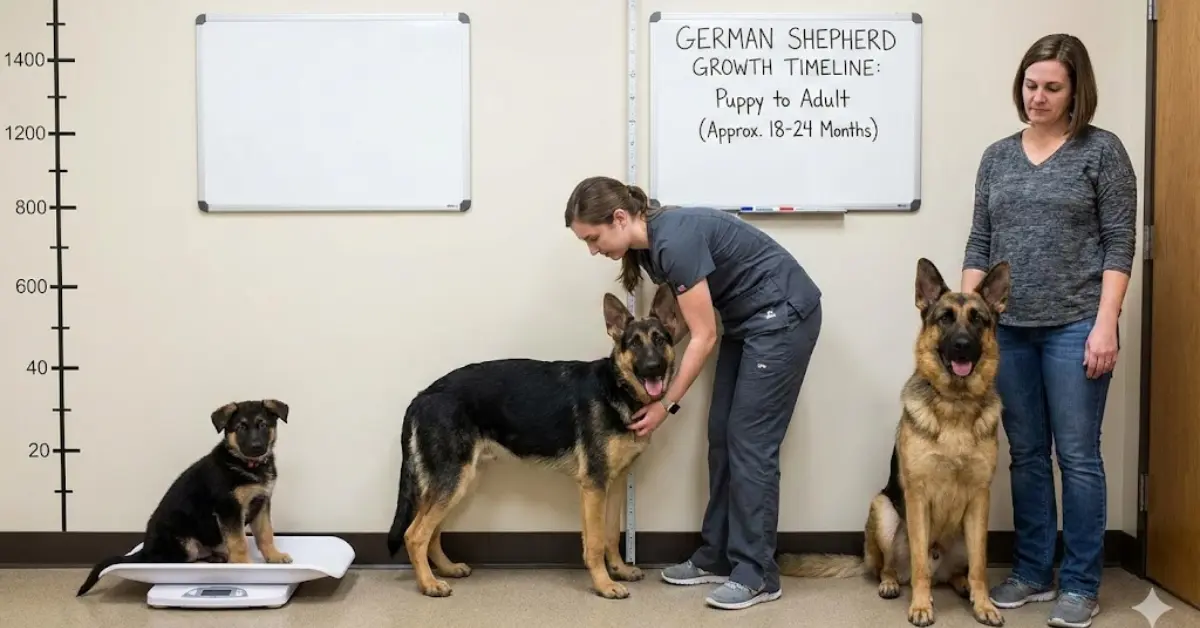
The coat transition usually begins around 8–12 weeks and continues until about 12 months of age. During this period, the puppy coat gradually sheds and the adult double coat develops. This change happens in phases, not all at once.
Does a German Shepherd Puppy Shed?
Yes, German Shepherd puppies do shed, but shedding is usually light at first. Early shedding is part of natural growth and coat development, not heavy seasonal shedding. Loose hair can be managed with gentle brushing.
Seasonal shedding typically becomes noticeable closer to adulthood. Puppy shedding is developmental, while adult shedding follows seasonal patterns. Understanding this difference helps you groom appropriately without over-brushing or stressing your puppy’s skin.
German Shepherd Puppy Grooming Schedule
Following a consistent grooming schedule keeps your German Shepherd puppy clean, healthy, and comfortable. A routine also helps your puppy become familiar with grooming tasks, reducing stress as they grow. The schedule below is designed to be simple, safe, and easy for new owners to follow.
Weekly Grooming Routine
Brushing should be done 2–3 times per week using a soft or puppy-safe brush. This removes loose hair, supports healthy skin, and helps your puppy get used to being groomed.
Check your puppy’s ears weekly for dirt, redness, or odor. Do not clean unless needed, but early checks help you spot issues before they worsen.
Inspect paws during each grooming session. Look for cracks, debris, or irritation between paw pads, especially after outdoor play.
Monthly Grooming Routine
Bathing should be limited to once every 4–6 weeks unless your puppy gets very dirty. Over-bathing can dry out sensitive puppy skin.
Trim nails every 3–4 weeks, depending on growth and activity level. Short, frequent trims are safer than letting nails grow too long.
Teeth cleaning can be introduced once or twice a month at first. This helps your puppy get used to oral care without stress.
Grooming Schedule by Age
8–12 weeks: Focus on gentle brushing, brief handling, and positive exposure to grooming tools.
3–6 months: Increase brushing frequency and introduce nail trimming and occasional baths.
6–12 months: Establish a full grooming routine as the adult coat begins to develop.
How to Brush a German Shepherd Puppy
Brushing is one of the most important parts of German Shepherd puppy grooming. It keeps the coat clean, supports skin health, and helps your puppy get comfortable with regular handling. Brushing should always be gentle and stress-free, especially during the early months.
Best Brushes for German Shepherd Puppies
A soft bristle brush is ideal for young puppies. It removes loose hair without irritating sensitive skin and is perfect for early grooming sessions.
A puppy-safe slicker brush can be used as your puppy grows. It helps manage light shedding and smooths the coat without pulling when used gently.
A rubber grooming brush is useful for short sessions and massage-like brushing. Many puppies find it calming and less intimidating.
Step-by-Step Brushing Process
Start by preparing your puppy in a calm, quiet area. Let them sniff the brush and reward relaxed behavior with praise or treats.
Brush in the direction of hair growth using light pressure. Short strokes are safer and more comfortable than long, heavy brushing.
Handle sensitive areas carefully, including the belly, behind the ears, and legs. Stop if your puppy shows signs of discomfort.
Brushing Mistakes to Avoid
Avoid using undercoat rakes on puppies. These tools are designed for adult double coats and can damage puppy skin.
Do not over-brush or brush aggressively. Too much pressure can cause irritation and make grooming stressful.
Never brush wet fur, as it can pull hair and increase the risk of skin irritation.
How to Bathe a German Shepherd Puppy
Bathing a German Shepherd puppy should be done carefully to protect sensitive skin and natural oils. Puppies do not need frequent baths, and over-bathing can cause dryness or irritation. A gentle, calm approach helps prevent fear and makes future baths easier.
How Often Should You Bathe a Puppy?
The ideal bathing frequency for a German Shepherd puppy is once every 4–6 weeks. This keeps the coat clean without stripping essential oils that protect the skin.
A bath may be needed sooner if your puppy rolls in dirt, develops an odor, or has visible mud on the coat. Spot cleaning is often enough between full baths.
Best Shampoo for German Shepherd Puppies
Always use a puppy-specific shampoo made with mild, pH-balanced ingredients. Look for formulas with oatmeal or aloe to soothe sensitive skin.
Avoid shampoos with harsh chemicals, strong fragrances, or human products. These can cause dryness, itching, and allergic reactions in puppies.
Step-by-Step Puppy Bathing Guide
Use lukewarm water, never hot or cold. Test the temperature with your hand before wetting your puppy.
Wash gently using slow, massaging motions and avoid the eyes and ears. Rinse thoroughly to prevent residue buildup.
Dry your puppy safely with a soft towel and keep them warm until fully dry. Avoid high heat from hair dryers, especially for young puppies.
Nail Trimming for German Shepherd Puppies
Regular nail trimming is an important part of German Shepherd puppy grooming. Long nails can cause discomfort, affect walking, and increase the risk of injury. Starting early helps your puppy become comfortable with paw handling and nail care.
How Often to Trim Puppy Nails
Puppy nails grow quickly and usually need trimming every 3–4 weeks. Fast growth is common during the first few months, even if nails appear small.
Indoor puppies often need more frequent trims because their nails wear down less naturally. Outdoor puppies may need slightly fewer trims, but regular checks are still important.
Nail Trimming Tools
Nail clippers are simple and effective for puppies when used carefully. Choose small, puppy-sized clippers for better control.
Grinders are another option and work well for smoothing edges. They are quieter and safer for some puppies but may require extra time for acclimation.
How to Trim Nails Without Hurting the Puppy
Trim only the tip of the nail and avoid the quick, which contains nerves and blood vessels. In light-colored nails, the quick is visible as a pink area.
If bleeding occurs, stay calm and apply styptic powder or cornstarch to stop it. Short, frequent trims reduce the risk of cutting too close.
Ear Cleaning for German Shepherd Puppies
Ear care is an important part of German Shepherd puppy grooming, especially as their ears begin to stand and airflow changes. Regular checks help prevent infections, but over-cleaning can cause irritation. The goal is to keep ears clean, dry, and healthy.
How Often Should You Clean Puppy Ears?
Puppy ears should be checked weekly but cleaned only when necessary. If the ears look clean and have no odor, cleaning is not required.
Most German Shepherd puppies need ear cleaning once every 3–4 weeks or after swimming or bathing. Cleaning too often can disrupt the ear’s natural balance.
Safe Ear Cleaning Method
Use a vet-approved puppy ear cleaner and soft cotton balls or gauze. Gently wipe the visible part of the ear without inserting anything deep into the canal.
Avoid cotton swabs, alcohol-based solutions, or hydrogen peroxide. These products can irritate the ear canal and increase infection risk.
Signs of Ear Infection
Watch for redness, swelling, strong odor, head shaking, or frequent scratching. These are common signs of an ear infection.
If symptoms persist or worsen, see a veterinarian promptly. Early treatment prevents pain and long-term ear problems.
Teeth & Oral Care for German Shepherd Puppies
Oral care is often overlooked but plays a key role in a German Shepherd puppy’s long-term health. Starting early helps prevent plaque buildup and gum issues. Gentle introduction is essential to avoid stress and resistance.
When to Start Brushing Puppy Teeth
You can start brushing your puppy’s teeth as early as 8–12 weeks of age. Begin with short sessions and focus on letting your puppy get used to having their mouth touched, especially during the teething stage, when gums may be sensitive.
Early exposure helps puppies accept tooth brushing as part of their routine. Even brushing a few teeth at first is enough to build the habit.
Best Puppy Toothpaste & Brushes
Always use puppy-specific toothpaste, as human toothpaste is unsafe for dogs. Look for mild flavors designed to be swallowed safely.
A soft-bristled puppy toothbrush or finger brush works best. These are gentle on gums and easier to control during early training.
How to Make Teeth Brushing Stress-Free
Start slowly and keep sessions brief. Use calm praise and rewards to create a positive experience.
Brush at a relaxed time, not when your puppy is tired or overstimulated. Consistency and patience help make tooth brushing a normal part of grooming.
Paw, Skin & Coat Care
Proper paw, skin, and coat care helps keep your German Shepherd puppy comfortable and healthy. Regular checks allow you to catch minor issues early before they become painful. Gentle handling during these checks also builds trust.
Paw Pad Care
Check your puppy’s paw pads weekly for cracks or dryness. Dry or cracked pads can be uncomfortable and may need a vet-approved paw balm.
Look closely for foreign objects such as small stones, thorns, or debris lodged between the pads. Removing them early prevents irritation and infection.
Skin Issues in German Shepherd Puppies
Dry skin is common in puppies and can be caused by over-bathing or harsh products. Use puppy-safe shampoos and avoid frequent baths to protect natural oils.
Hot spots may appear as red, irritated patches and often develop from moisture or scratching. Early grooming and drying help reduce risk.
Allergies can cause itching, redness, or excessive licking. If symptoms persist, consult a veterinarian to identify triggers and treatment options.
Grooming Tools Checklist
Having the right grooming tools makes German Shepherd puppy grooming safer and more effective. Using puppy-appropriate tools reduces discomfort and helps prevent skin or coat damage. This checklist covers essentials every new owner should have.
Must-Have Grooming Tools
Brushes are essential for maintaining a healthy puppy coat. Choose soft bristle or puppy-safe slicker brushes designed for gentle grooming.
Shampoo should always be puppy-specific and free from harsh chemicals. Mild, pH-balanced formulas protect sensitive skin and natural oils.
Nail clippers made for puppies allow precise trimming and reduce the risk of injury. Smaller clippers provide better control during early trims.
Optional but Helpful Tools
A grooming table can help keep your puppy secure during grooming sessions. It improves posture and reduces strain for both you and your puppy.
Deshedding gloves are useful for light shedding and gentle massage. They are a good alternative for puppies that are nervous around traditional brushes.
Professional Grooming vs At-Home Grooming
Both professional grooming and at-home grooming have their place in German Shepherd puppy care. Understanding when to use each option helps you protect your puppy’s comfort and safety. The right choice depends on your puppy’s age, temperament, and grooming needs.
When to Use a Professional Groomer
A professional groomer may be helpful for first baths, nail trimming, or if you are unsure about proper techniques. Groomers are trained to handle puppies safely and can identify early skin or coat issues.
Professional grooming is also useful as your puppy grows and the adult coat begins to develop. Occasional visits can support at-home grooming routines.
How to Prepare Your Puppy for Groomer Visits
Start by getting your puppy comfortable with handling at home. Regular brushing, paw touching, and short grooming sessions reduce anxiety.
Before a groomer visit, expose your puppy to new sounds and environments. Bringing familiar treats or toys can help your puppy stay calm during the appointment.
Common German Shepherd Puppy Grooming Mistakes
Avoiding common grooming mistakes is essential for keeping your German Shepherd puppy healthy and comfortable. Many issues arise from misunderstanding puppy coat and skin needs. Correct grooming habits early prevent long-term problems.
Shaving the coat is a serious mistake. German Shepherd puppies rely on their developing coat for temperature regulation and skin protection. Shaving can damage coat growth and increase the risk of sunburn and skin irritation.
Over-bathing can strip natural oils from your puppy’s skin. Frequent baths often lead to dryness, itching, and sensitivity. Stick to a gentle bathing schedule unless your puppy is visibly dirty.
Skipping grooming during shedding is another common issue. Even light puppy shedding requires regular brushing to remove loose hair and prevent matting. Consistent grooming keeps the coat healthy and reduces future grooming challenges.
Final Thoughts on Grooming Your German Shepherd Puppy
Grooming your German Shepherd puppy is an important part of raising a healthy and confident dog. Early grooming is not about perfection but about creating positive, stress-free experiences. Consistency and patience make a lasting difference.
Short, gentle grooming sessions help protect your puppy’s skin and developing coat. Regular brushing, basic hygiene, and routine checks allow you to spot issues early. These habits also make grooming easier as your puppy grows.
By following a structured grooming routine and using puppy-safe tools, you set your German Shepherd puppy up for long-term comfort and cooperation. With the right approach, grooming becomes a bonding experience that supports your puppy’s overall well-being.
FAQs
1. How often should I groom my German Shepherd puppy?
German Shepherd puppies should be brushed 2–3 times a week, with bathing limited to once every 4–6 weeks. Regular grooming helps maintain skin health and builds positive habits early.
2. When should I start grooming my German Shepherd puppy?
You can start gentle grooming as early as 8 weeks old. Early exposure to brushing, paw handling, and ear checks helps prevent fear and resistance later.
3. Can I use adult grooming tools on a German Shepherd puppy?
No, adult grooming tools like undercoat rakes are too harsh for puppies. Always use puppy-safe brushes and tools designed for sensitive skin and developing coats.
4. Do German Shepherd puppies shed a lot?
German Shepherd puppies shed lightly as their coat develops. Heavy shedding usually starts closer to adulthood and follows seasonal patterns.
5. How often should I bathe my German Shepherd puppy?
Bathing once every 4–6 weeks is ideal unless your puppy gets very dirty. Over-bathing can dry out the skin and cause irritation.
6. Is nail trimming necessary for German Shepherd puppies?
Yes, puppy nails should be trimmed every 3–4 weeks. Regular trimming prevents discomfort, posture issues, and accidental injuries.
7. How do I clean my German Shepherd puppy’s ears safely?
Use a vet-approved puppy ear cleaner and clean only when needed. Avoid cotton swabs and never insert anything deep into the ear canal.
8. What shampoo is best for German Shepherd puppies?
Use a puppy-specific, pH-balanced shampoo with mild ingredients like oatmeal or aloe. Avoid human shampoos and harsh chemicals.
9. Should I brush my German Shepherd puppy’s teeth?
Yes, tooth brushing can start at 8–12 weeks using puppy-safe toothpaste. Early oral care helps prevent plaque and gum disease.
10. Can I take my German Shepherd puppy to a professional groomer?
Yes, professional groomers can help with early grooming if they are experienced with puppies. Preparing your puppy with at-home handling makes visits less stressful.