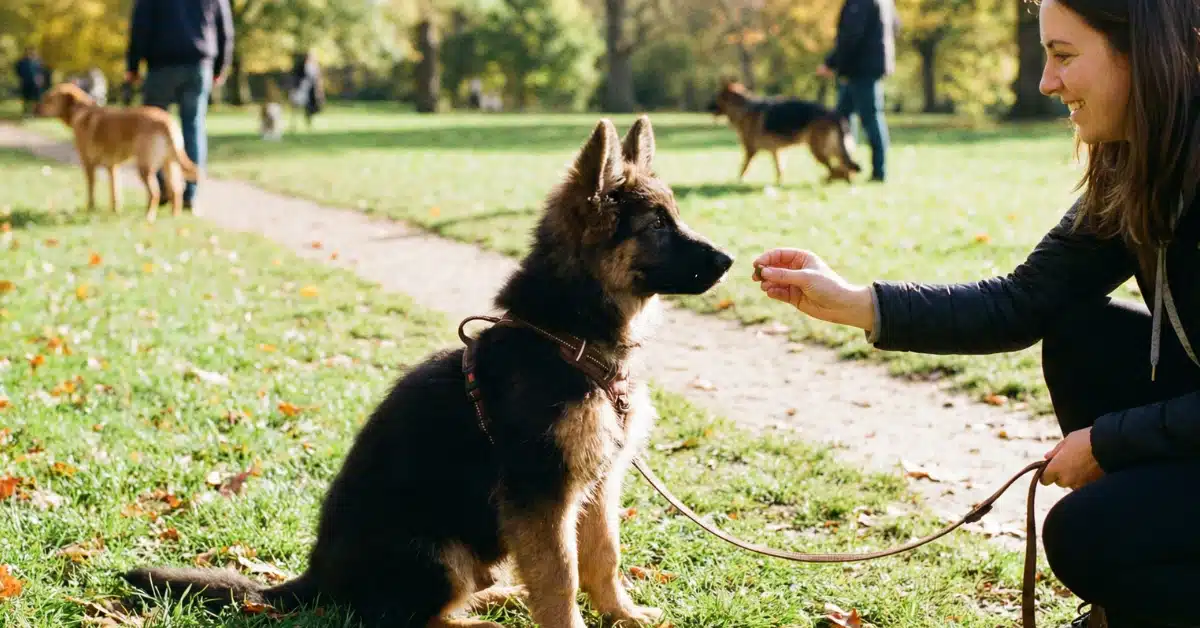
I still remember the first time I clipped a leash onto an 8-week-old German Shepherd pup. He stared at it like I had handed him a space helmet. Then he tried chewing it. Then he tried running in circles. If you’re nodding right now, trust me—this is all totally normal.
German Shepherd puppy leash training isn’t just about walking. It’s about teaching your little fur rocket how to trust, follow, and understand the world through you.
And when you get it right?
Walks become peaceful, bonding moments instead of chaotic tug-of-war sessions.
Let’s break it all down in a way that feels real, doable, and built from experience.
Why German Shepherd Puppies Struggle With the Leash at First
GSD puppies are naturally curious, sensitive, and full of energy. A leash feels weird to them—it limits freedom, makes sounds they’re not used to, and adds gentle pressure they don’t understand yet.
Here’s what most owners don’t realize:
A leash is not “just a leash.” To a puppy, it’s a brand-new language.
Common first reactions include:
- Chewing the leash
- Pulling in the opposite direction
- Sitting and refusing to move
- Getting overly excited
- Trying to chase everything that moves
If your puppy has done any of these, you’re absolutely on track.
The Right Age to Start Leash Training (And Why Earlier Is Better)
You can start gsd puppy leash training as early as 8–10 weeks. At this age:
- They learn faster
- They adapt to new equipment more easily
- They haven’t yet developed strong pulling habits
- They’re still naturally following you around the house
The earlier you introduce the leash, the smoother the whole training journey becomes.
Essentials You Need Before You Begin
I’ve seen many new owners jump straight into walks without preparing the basics. But having the right gear makes a huge difference.
What You Need
- A lightweight 4–6 foot leash
- A well-fitted harness or flat collar
- Soft treats (tiny pieces)
- A quiet indoor space
- A calm mindset (your energy matters more than you think)
For very young puppies, a harness often works better because collars may feel uncomfortable when the puppy pulls suddenly.
Step-by-Step German Shepherd Puppy Leash Training (Realistic & Gentle)
Below is the exact method I’ve used over the years to teach a GSD puppy to walk on leash without pulling or panicking.
Think of it as a simple roadmap.
Step 1 — Let Your Puppy Explore the Leash Indoors
Don’t rush outdoors yet.
Put the leash and collar on the floor and let your puppy sniff them, paw at them, or even chew a little.
Puppies learn with their mouth—it’s okay.
Goal: Make the leash feel boring and safe.
Step 2 — Clip the Leash On (But Don’t Move Yet)
Clip the leash onto your puppy for short periods while they play indoors.
At first:
- Let the leash drag behind
- Don’t pick it up
- Don’t guide them
You’re simply letting them understand that having something attached is normal.
Tip: Keep sessions short—2 to 3 minutes.
Step 3 — Teach “Follow Me” Indoors
Now gently pick up the leash.
Take one step backward.
If your puppy moves toward you, praise instantly.
This tiny moment is the foundation of walking on leash.
I usually use a happy “Yes!” or “Good!”
Avoid yelling or dragging—it breaks trust quickly.
Repeat for 3–5 minutes.
Step 4 — Start Walking a Few Steps at a Time
Now walk around your living room or hallway.
If your puppy:
- Follows → Reward
- Pulls → Stand still
- Stops → Kneel, encourage gently
A light, predictable routine works better than trying to do a perfect 20-minute walk on day one.
Step 5 — Add Simple Indoor Turns
Once they follow you indoors, practice slow left and right turns.
German Shepherds love direction.
Teaching them to follow your body early stops pulling before it begins.
Step 6 — Move Outdoors (But Keep It Short at First)
Take your puppy outside only when:
- They are comfortable indoors
- They understand the leash isn’t scary
- They follow you for at least 10 steps without hesitation
The first outdoor training sessions should be 3–5 minutes.
There are too many distractions outside; short lessons work best.
Step 7 — Reward Calm Walking
Each time your puppy walks next to you—even for one second—mark it:
- “Yes!”
- Treat
- Gentle praise
This teaches them that walking beside you is the most rewarding place to be.
Over time, reduce treats gradually but never remove praise.
Step 8 — Practice Daily (Consistency > Length)
A beginner-friendly leash training schedule for puppies looks like:
| Session | Duration | Location |
| Morning | 3–5 minutes | Indoors |
| Afternoon | 5 minutes | Backyard / Quiet street |
| Evening | 2–3 minutes | Indoors |
These micro-sessions add up fast and prevent overwhelm.
How to Stop Pulling Before It Becomes a Habit
One of the most common complaints I’ve heard over the years is:
“My German Shepherd puppy pulls like crazy. What am I doing wrong?”
Here’s the truth:
GSDs are strong, smart, and energetic. If you don’t show them how to walk, they will choose their own rules.
The “Stop Every Time They Pull” Method
This works beautifully with GSDs.
When your puppy pulls:
- Stop walking
- Wait
- When they turn toward you → praise
- Continue walking
This teaches them:
“Pulling gets me nowhere. Staying close gets me forward.”
The “Change Direction” Method
This method is especially good for hyperactive puppies.
When your puppy bolts forward:
- Calmly turn around
- Walk the opposite direction
- Reward when they catch up politely
After 3–5 repetitions, your puppy starts watching you instead of leading you.
Real-Life Problems You May Face (And How to Fix Them)
Problem 1 — Puppy Sits or Refuses to Move
This usually happens when:
- They’re scared
- They’re overwhelmed
- The leash feels uncomfortable
Fix:
Kneel down, talk softly, offer a tiny treat near your leg.
Don’t pull—pulling makes puppies freeze even more.
Problem 2 — Puppy Keeps Chewing the Leash
Totally normal.
Fixes:
- Redirect with a toy
- Keep walks short
- Use a cloth leash (less tempting to chew)
Chewing usually fades within 1–2 weeks of consistent training.
Problem 3 — Puppy Pulls Toward People or Dogs
German Shepherds are social and alert.
Fixes:
- Create distance
- Ask for a “sit”
- Reward calm behavior
- Use a happy voice to keep their focus on you
Don’t force greetings—teach calmness first.
Problem 4 — Puppy Gets Too Excited at the Start of Walks
Your puppy is overflowing with energy.
Fix:
Start with 5 minutes of indoor warm-up play.
Burning a little energy first makes leash manners 10x easier.
People Also Ask (Realistic Q&A Inside the Article)
How long does it take to teach a GSD puppy to walk on leash?
Most German Shepherd puppies learn basic leash manners in 2–4 weeks with daily practice. A full calm walk may take 2–3 months.
How do I train my German Shepherd puppy to stop pulling?
Use a mix of stopping every time they pull and rewarding calm walking.
Consistency beats strength.
Can I start German Shepherd puppy leash training indoors?
Absolutely. Indoor practice is one of the easiest ways to build confidence without distractions.
How long should a GSD puppy walk daily?
Short, frequent walks are better:
- 5–10 minutes at a time
- Multiple sessions throughout the day
Large-breed puppies shouldn’t take long walks yet.
When Is It Safe to Take Your GSD Puppy for Outdoor Walks?
Even though you can leash train early, wait until your puppy has had their second round of vaccinations before walking in public places.
Safe outdoor areas before that:
- Your yard
- A clean driveway
- A quiet, low-traffic lane you trust
Health comes before miles.
Tips for Keeping Training Fun (For Both of You)
These simple ideas keep your puppy motivated:
- Use high-value treats like chicken or cheese pieces
- Keep sessions short
- End on a positive note
- Mix training with play
- Celebrate small wins
I’ve learned that GSD puppies do best when training feels like a game and not a chore.
Common Mistakes to Avoid
These mistakes make leash training harder:
- Starting outdoors too soon
- Using a heavy or thick leash on a tiny puppy
- Pulling the leash to control the puppy
- Expecting long walks from a young pup
- Inconsistent training
- Getting frustrated or tense
Your puppy reads your energy. Calm owner = calm puppy.
A Quick Recap for Busy Owners
If you just want the essentials, here’s the heart of everything above:
- Start indoors
- Keep sessions tiny
- Reward following
- Stop when they pull
- Gradually move outdoors
- Use gentle encouragement
- Stay consistent
Small routines build big results.
Conclusion: Leash Training a GSD Puppy Is a Journey, Not a Race
German Shepherd puppies are incredibly smart, loyal, and eager to learn. When you approach leash training German Shepherd pups with patience, short sessions, and a calm mindset, you build something much bigger than walking skills—you build trust.
And trust is the foundation of every great GSD-human bond.
Enjoy each step (literally).
Your puppy is learning the world through you.
FAQs
1. How do I start gsd leash training tips for a very shy puppy?
Begin indoors where there are no distractions. Use gentle, happy encouragement and reward even the smallest movement toward you.
2. Can I teach gsd puppy to walk on leash without treats?
Yes, but treats help speed up learning. You can eventually switch to praise and affection once your puppy understands the basics.
3. Is it okay if my German Shepherd puppy walks behind me?
Yes, as long as they are comfortable. Many young puppies prefer following until they gain confidence.
4. How often should I practice gsd puppy leash training each day?
Two to three short sessions (3–5 minutes each) are enough in the beginning.
5. My puppy pulls toward smells—what should I do?
Pause, wait for them to look back at you, reward, and then continue walking.
6. Should I avoid meeting other dogs during early leash training?
Yes, keep distance until your puppy learns basic focus and calmness.
7. Does leash training get harder during teething?
Yes, because puppies chew more. Redirect with toys and keep training short.
8. What age should a German Shepherd puppy master walking on a leash?
Most GSDs gain reliable leash manners between 6–9 months with steady practice.