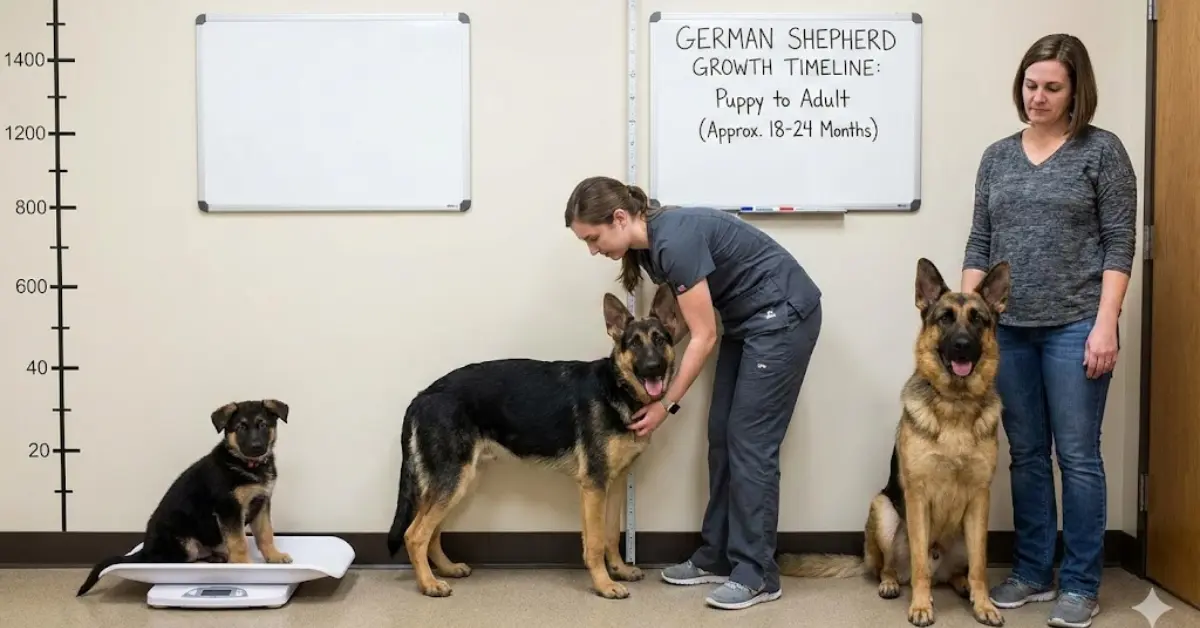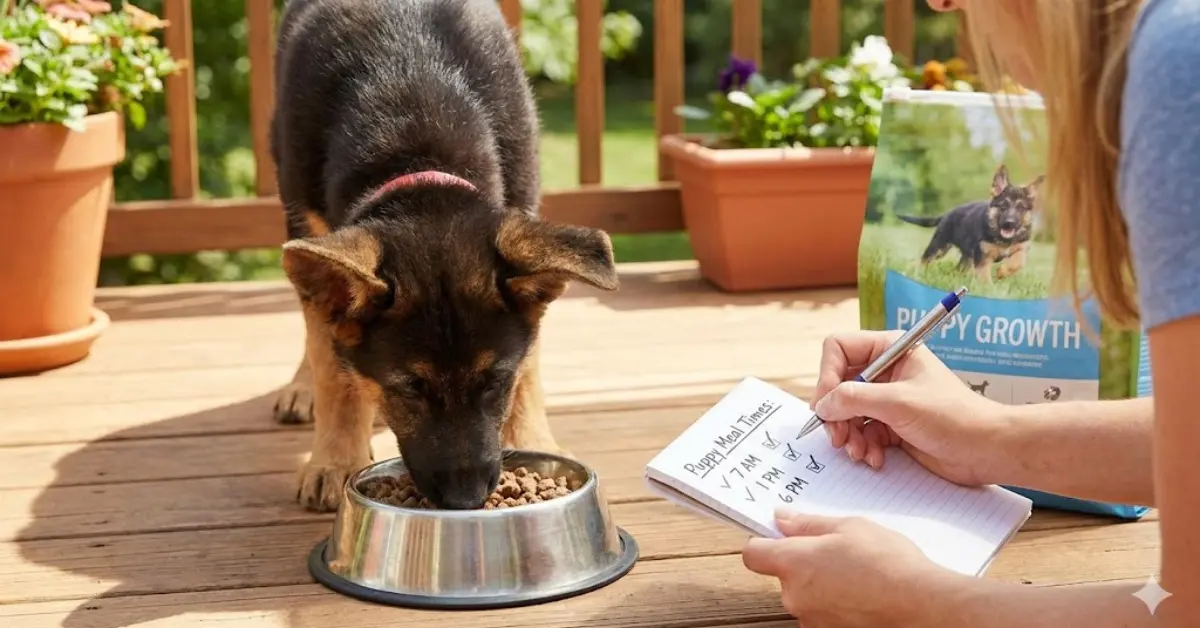
A German Shepherd should typically eat two meals per day as an adult, while puppies require three to four meals daily depending on age. Young puppies under 12 weeks usually need four small meals. Between 3 and 6 months, three meals per day works best. Most healthy adult German Shepherds thrive on two balanced meals spaced evenly apart. Seniors often remain on a twice daily schedule, though portion adjustments may be necessary.
The ideal feeding schedule depends on age, activity level, metabolism, and overall health. Consistency matters more than complexity. Structured meal timing supports digestion, energy stability, and helps reduce the risk of bloat, a serious condition seen in large deep chested breeds.
German Shepherds are athletic, intelligent, and built for performance. They are not casual grazers. They thrive on structure, including structured mealtimes.
Many owners ask, how often do German Shepherds eat and whether feeding frequency changes with age. The answer is yes. A growing puppy has very different nutritional demands than a working adult or a senior companion.
According to the American Kennel Club and the American Veterinary Medical Association, large breed dogs require carefully managed feeding schedules to support controlled growth and digestive health. Overfeeding or irregular meal timing can contribute to obesity, joint stress, and gastrointestinal issues.
This guide provides a complete breakdown of the German Shepherd feeding schedule by age, practical portion advice, and common mistakes to avoid.
German Shepherd Feeding Schedule by Age
Feeding frequency changes as your dog matures. Growth rate, metabolism, and stomach capacity all evolve during development.
8 to 12 Weeks Old
At this stage, puppies grow rapidly. Their stomachs remain small, but energy needs are high.
How many meals a day for a German Shepherd puppy at this age?
Four small meals daily.
Spacing meals evenly prevents blood sugar dips and supports steady growth. Choose a large breed puppy formula that follows Association of American Feed Control Officials guidelines for balanced growth.
3 to 6 Months Old
This is the lanky growth phase. Puppies shoot up in height and begin building muscle.
How often should I feed my German Shepherd puppy now?
Three meals per day.
You can gradually transition from four to three meals around 12 weeks. Monitor body condition closely. Ribs should be palpable but not visible.
6 to 12 Months Old
Growth begins slowing, though development continues.
Most dogs do well on:
Two to three meals daily.
Many owners transition to two meals around 9 to 12 months, depending on size and maturity.
Adults 1 to 7 Years
Healthy adults typically eat:
Two meals per day.
Morning and evening feeding works well. Splitting meals reduces stomach overload and may help lower the risk of gastric dilatation volvulus, commonly called bloat.
Seniors 7 Years and Older
Older dogs usually stay on two meals daily. Some benefit from slightly smaller portions spread evenly to maintain energy and digestion.
German Shepherd Feeding Chart
Below is a simplified comparison table. Individual calorie needs vary based on weight, activity level, and food formulation. Always consult your veterinarian for exact portion sizes.
|
Age Range |
Meals Per Day | Primary Focus | Notes |
|
8–12 weeks |
4 | Controlled growth | Small frequent meals |
| 3–6 months | 3 | Muscle development |
Monitor weight closely |
| 6–12 months |
2–3 |
Gradual maturity | Transition to adult formula near 12 months |
| 1–7 years | 2 | Maintenance |
Avoid overfeeding |
| 7+ years | 2 | Joint and weight support |
Consider senior diet |
This table serves as a general German Shepherd feeding chart rather than a strict rulebook.
Portion Size Ranges by Weight
Feeding frequency answers how often, but portion size answers how much. Both matter equally.
German Shepherds vary widely in size. Females often weigh between 50 to 70 pounds, while males commonly range from 65 to 90 pounds or more. Activity level further influences daily intake.
Below is a general portion framework for healthy adult dogs eating commercial dry food. Exact amounts depend on calorie density per cup.
- 50 to 60 pounds: typically 2 to 3 cups per day
- 60 to 75 pounds: typically 3 to 3.5 cups per day
- 75 to 90 pounds: typically 3.5 to 4.5 cups per day
- Highly active working dogs: may require more based on energy expenditure
These totals should be divided into two meals for adults.
For puppies, portion size changes rapidly as growth progresses. A German Shepherd puppy feeding guide should adjust amounts every few weeks during the first six months. Large breed puppy formulas usually include feeding charts based on age and projected adult weight. Follow those closely rather than guessing.
Remember that one brand’s “3 cups” may contain significantly more calories than another’s. Always check the label for calories per cup before deciding on quantity.
If your dog consistently leaves food behind or seems constantly hungry, reassess portions rather than automatically increasing feeding frequency.
Calorie Guidance Explanation
Calories determine portion size more than volume does. Two cups of different foods can contain very different energy levels.
A growing puppy requires more calories per pound of body weight than an adult because development demands energy for bone, muscle, and organ growth. However, large breed puppies must grow steadily, not rapidly. Controlled calorie intake helps reduce excessive strain on developing joints.
Adult German Shepherds need calories primarily for maintenance and activity. A working police dog or agility competitor may require substantially more energy than a companion dog living in an apartment. Climate also plays a role. Dogs in colder environments often burn more calories maintaining body temperature.
Senior dogs usually require slightly fewer calories due to reduced metabolism and activity. Overfeeding during this stage contributes to weight gain, which places stress on hips and elbows.
Rather than focusing only on “cups per day,” evaluate:
- Calories per cup listed on the bag
- Your dog’s activity level
- Body condition
- Veterinary guidance during annual exams
When owners understand calorie density, they make more precise feeding decisions and avoid accidental overfeeding.
Feeding Guidelines for German Shepherd Puppies vs Adults
The nutritional difference between puppies and adults extends beyond frequency.
Puppies Need:
- Higher protein and fat for growth
- Controlled calcium and phosphorus levels
- Multiple small meals
- Strict weight monitoring
Large breed puppy diets help regulate bone development. Rapid growth increases the risk of orthopedic conditions such as hip dysplasia.
Adults Need:
- Balanced protein for muscle maintenance
- Controlled calories to prevent obesity
- Consistent meal timing
- Portion control
The feeding guidelines for German Shepherd puppies vs adults reflect differences in metabolism and skeletal development.
Why Two Meals a Day Is Ideal for Most Adults
Some owners consider feeding once daily for convenience. That approach rarely benefits a German Shepherd.
Two meals per day offer:
- Better digestion
- More stable energy
- Reduced hunger related anxiety
- Lower stomach distension per feeding
The ASPCA and many veterinarians recommend splitting daily intake for large breeds. Feeding once daily can increase hunger driven behaviors and may increase stress on the digestive system.
How Often Do German Shepherds Eat Based on Activity Level?
A working police dog burns far more calories than a household companion.
Adjust feeding frequency and portion size if your dog:
- Participates in agility or protection sports
- Works in law enforcement or service roles
- Runs long distances daily
Active dogs may benefit from slightly smaller pre activity meals and a larger post activity meal. Avoid intense exercise immediately after eating. Allow at least one hour of rest.
Common Feeding Mistakes Owners Make
Even experienced owners slip into habits that affect health.
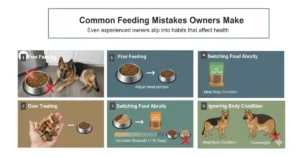
1. Free Feeding
Leaving food available all day encourages overeating. German Shepherds tend to eat what is placed in front of them.
2. Over Treating
Training rewards add up quickly. Adjust meal portions accordingly.
3. Switching Food Abruptly
Sudden dietary changes can upset digestion. Transition gradually over seven to ten days.
4. Ignoring Body Condition
The scale matters less than body composition. You should feel ribs easily without pressing hard.
Common Myths About Feeding German Shepherds
Myth 1: One Big Meal Builds a Stronger Dog
False. Muscle develops through balanced nutrition and exercise, not meal size.
Myth 2: Puppies Should Eat as Much as They Want
Overfeeding accelerates growth too quickly. Controlled growth supports joint health.
Myth 3: Raw Diet Automatically Solves Digestive Issues
Diet choices require careful planning. The AVMA emphasizes safe food handling and balanced formulation.
When Protective Behavior Becomes Problematic
German Shepherds possess strong guarding instincts. Structure and routine influence behavior, including feeding time.
Resource guarding may develop if:
- Meals feel unpredictable
- Food competition occurs in multi dog homes
- Owners accidentally reinforce possessive behavior
If your dog growls or snaps during feeding, consult a certified trainer or veterinarian. Early intervention prevents escalation.
For deeper behavior insights, see [German Shepherd Temperament and Personality].
Who Should Not Get a German Shepherd?
This breed demands commitment.
A German Shepherd may not suit:
- Sedentary households
- Owners unwilling to train consistently
- Families without time for exercise
- People uncomfortable managing a strong protective instinct
They thrive with structure, mental stimulation, and leadership. If you prefer a low maintenance breed, reconsider carefully.
Explore more in [German Shepherd Exercise Requirements].
Building a Reliable German Shepherd Puppy Feeding Guide
When creating your personal German Shepherd puppy feeding guide, focus on:
- Consistent meal timing
- Measured portions
- High quality large breed puppy formula
- Regular veterinary checkups
- Slow controlled growth
Pair feeding structure with early training. Review [German Shepherd Puppy Training Guide] for foundational obedience tips.
Signs You Are Feeding the Right Amount
Your dog likely receives appropriate portions if:
- Energy levels remain steady
- Stool consistency looks firm
- Ribs feel palpable but not prominent
- Coat appears glossy
Adjust portions seasonally if activity shifts.
Understanding Body Condition Scoring
The scale alone does not determine whether your German Shepherd is at a healthy weight. Body condition scoring provides a more accurate assessment.
Veterinarians commonly use a 1 to 9 scale, where:
- 1 represents severe underweight
- 5 represents ideal condition
- 9 represents obesity
A healthy German Shepherd should score around 4 or 5.
You should be able to feel the ribs easily without pressing hard. From above, the waist should be visible behind the ribs. From the side, the abdomen should tuck upward rather than hang straight down.
If ribs are clearly visible from a distance, your dog may be underweight. If you cannot feel ribs without firm pressure, excess fat is likely present.
Regular body condition checks help you adjust portions before weight issues develop. This method is more reliable than relying solely on numbers from a scale.
When in doubt, ask your veterinarian to assess body condition during routine visits. Small adjustments early prevent long term joint stress and metabolic complications.
Frequently Asked Questions
1. How many times a day should a German Shepherd eat?
Adult German Shepherds typically eat two meals daily. Puppies need three to four meals depending on age.
2. How often should I feed my German Shepherd puppy?
Puppies under 12 weeks eat four times daily. From 3 to 6 months, reduce to three meals. Transition to two meals near adulthood.
3. Can I feed my German Shepherd once a day?
Veterinarians generally recommend splitting meals into two portions to support digestion and reduce bloat risk.
4. When should I switch from puppy to adult food?
Most German Shepherds transition around 12 months, though large males may benefit from staying on puppy food slightly longer under veterinary guidance.
5. How do I know if my German Shepherd is overweight?
You should feel the ribs easily without pressing hard. A visible waist from above indicates healthy body condition.
6. Do senior German Shepherds need a different feeding schedule?
Frequency usually remains twice daily. Calorie density may decrease to prevent weight gain.
Conclusion
Feeding a German Shepherd requires intention, not guesswork. Puppies need multiple small meals to support controlled growth. Healthy adults thrive on two structured meals daily. Seniors benefit from consistent timing with adjusted portions.
A well planned German Shepherd feeding schedule by age supports digestion, weight management, and long term joint health. Combine proper nutrition with exercise, training, and veterinary care.
A structured feeding plan supports long term health, stable digestion, and balanced development in German Shepherds.
References
The following veterinary and canine health authorities were consulted to align this article with established nutrition and large breed feeding standards:
- American Kennel Club. Dog Nutrition Tips and Feeding Guidelines.
- American Veterinary Medical Association. Pet Nutrition and Body Condition Scoring Resources.
- Association of American Feed Control Officials. Official Publication and Nutrient Profiles for Dogs.
- American Society for the Prevention of Cruelty to Animals. General Dog Care and Nutrition Guidelines.
- World Small Animal Veterinary Association Global Nutrition Committee. Guidelines on Selecting and Evaluating Pet Foods.