If you’ve recently brought home a German Shepherd puppy, you probably already know that your life has changed forever. These dogs aren’t just pets; they are shadows, guardians, and high-energy athletes wrapped in a thick coat of fur. But along with the puppy breath and the “land shark” biting phase comes a very serious responsibility: deciding when to have them fixed.
For years, the standard advice from almost every vet was to get it done at six months. It was the “gold standard.” However, as we’ve learned more about the specific physiology of large, fast-growing breeds, that advice has shifted. Deciding when to spay a german shepherd puppy is no longer a one-size-fits-all answer. It’s a decision that balances reproductive health against long-term skeletal integrity.
In my years living with and writing about this breed, I’ve seen owners rush into it only to deal with joint issues later, and I’ve seen others wait too long and face health scares like pyometra. It’s a bit of a balancing act. Let’s break down the current science, the risks, and the real-world factors that will help you decide the best age for your girl.
The “Old School” vs. The “New Science”
Back in the day, the goal of early spaying was mostly about population control and preventing mammary tumors. While those are still valid concerns, we have to look at the German Shepherd as an individual.
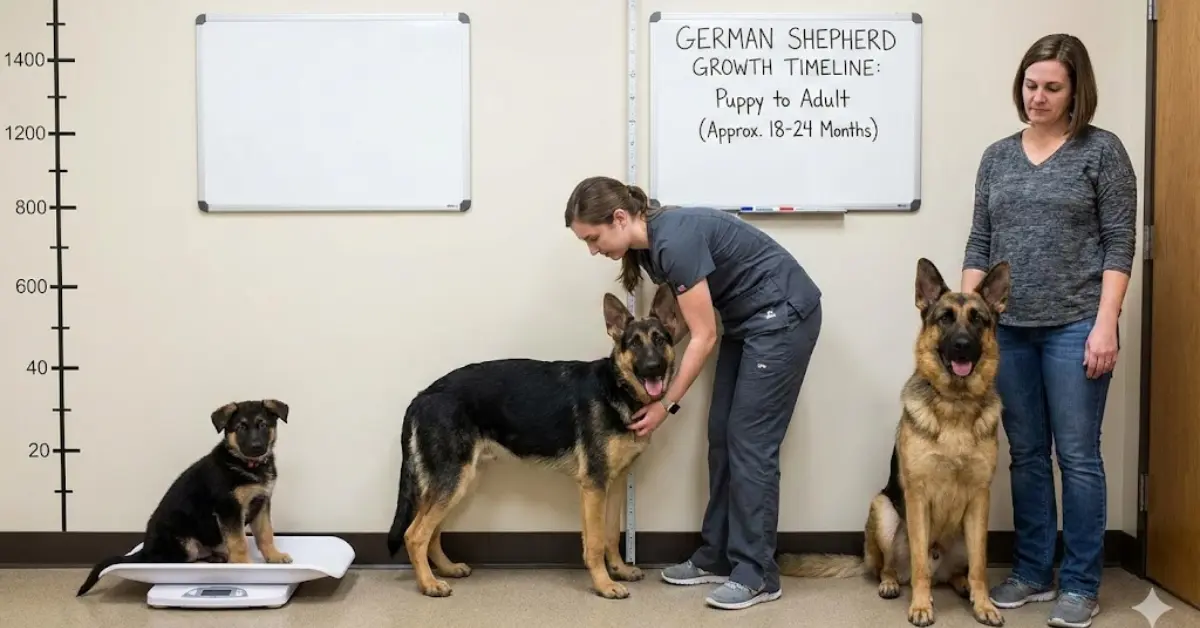
Unlike a Chihuahua, a German Shepherd is a heavy-boned, deep-chested breed. They don’t finish growing until they are at least two years old. Their growth plates—the areas at the ends of the long bones that eventually “close” and harden—rely on sex hormones (estrogen and testosterone) to signal when to stop growing.
When you remove those hormones too early by spaying, the bones keep growing longer than they should. This can lead to a leggy, out-of-proportion dog and, more importantly, a much higher risk of hip and elbow dysplasia.
Why the 6-Month Rule is Fading
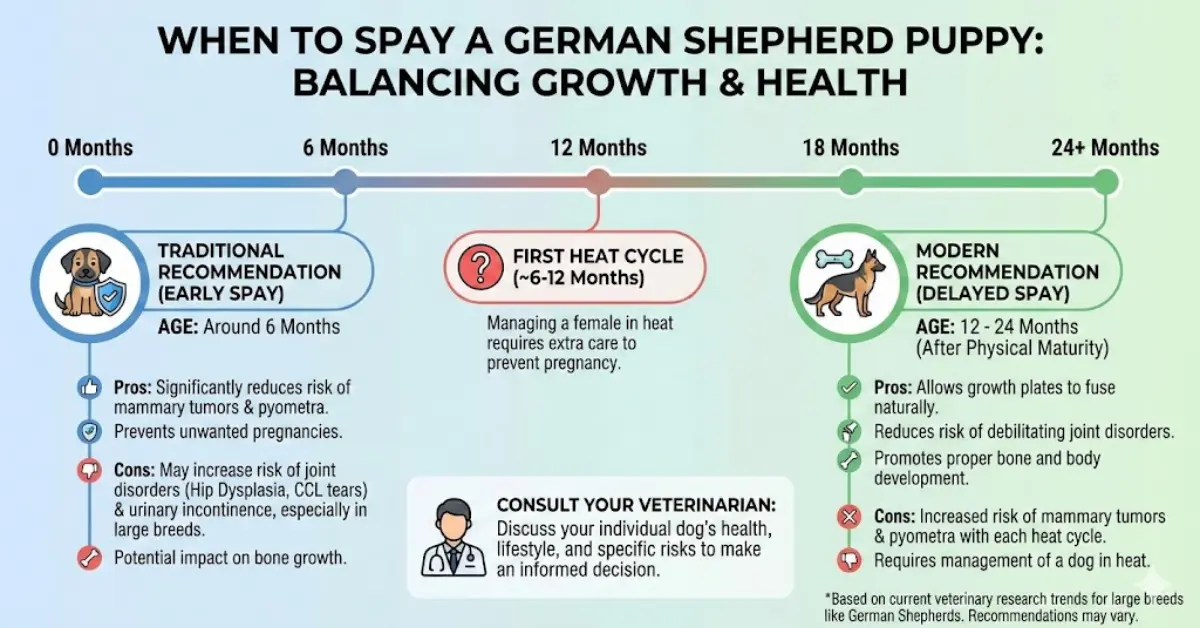
I remember talking to a vet about a decade ago who insisted that neutering a german shepherd at 6 months was the only way to go. But recent studies, specifically from UC Davis, have shown that GSDs spayed before a year old have a significantly higher rate of joint disorders. For a breed already prone to “bad hips,” we don’t want to give nature any extra help in causing problems.
Health Benefits and Risks: The Great Trade-Off
There is no “perfect” time that is 100% risk-free. It’s about choosing which risks you are most comfortable managing.
Pros of Waiting (Spaying After 12–24 Months)
- Stronger Joints: Allowing the growth plates to close naturally helps prevent ACL tears and hip dysplasia.
- Physical Maturity: Your GSD will develop the proper “look”—a broader chest and better muscle tone.
- Lower Cancer Risk: Some studies suggest a lower risk of certain cancers, like hemangiosarcoma, when hormones are kept longer.
Cons of Waiting
- The Heat Cycle: You will have to manage at least one or two “heats,” which can be messy and require keeping her strictly away from male dogs.
- Pyometra Risk: This is a life-threatening uterine infection that can happen in intact females. The older they get, the higher the risk.
- Mammary Tumors: The risk of breast cancer increases slightly with every heat cycle she goes through before being spayed.
At What Age Should I Neuter My German Shepherd? (Male vs. Female)
While this guide focuses on spaying, many owners ask, “at what age should i neuter my german shepherd?” if they have a male. The logic is very similar. Males need that testosterone for muscle development and bone density.
Generally, for males, waiting until they are 18 to 24 months old is becoming the consensus among breed enthusiasts. For females, the best age to spay a german shepherd puppy is often cited as being after her first heat, typically between 12 and 18 months, depending on her specific development.
Quick Comparison: Spay Timing at a Glance
|
Age Range |
Pros | Cons |
| 6–9 Months | Zero risk of pregnancy; lowest risk of mammary tumors. |
High risk of joint issues; growth plates may not close properly. |
|
12–18 Months |
Better joint health; allows for one heat cycle to mature the endocrine system. | Risk of “accidental” litters; dealing with the mess of a heat cycle. |
| 2 Years+ | Full skeletal and mental maturity achieved. |
Highest risk of pyometra; behavioral habits may be more “set.” |
Handling the Heat Cycle: What No One Tells You
If you decide to wait until your german shepherd puppy is older, you’re going to deal with a heat cycle. I’ve been through this, and while it’s not the end of the world, it does require a plan.
A GSD’s first heat usually happens between 9 and 15 months. It lasts about 3 weeks. During this time, she’ll have some bloody discharge (doggy diapers are your best friend here) and she might act a little “off”—maybe extra clingy or a bit moody.
Crucial Safety Note: You cannot leave a female in heat alone in a backyard, even with a fence. Male dogs can be incredibly creative and persistent when they smell a female in heat. I’ve heard stories of “fence-jumping” Romeos that would surprise you!
Step-by-Step: Preparing for the Spay Surgery
Once you’ve decided on the right time—whether that’s 14 months or 2 years—you need to prepare. German shepherd spay recovery is a bit more intense than it is for smaller dogs because GSDs are hard to keep still.
1. The Pre-Op Consultation
Talk to your vet about a blood panel. This ensures her liver and kidneys are healthy enough to handle the anesthesia. Since GSDs can be sensitive to certain medications, it’s a good safety net.
2. The Night Before
Usually, you’ll need to withhold food after 8:00 PM the night before surgery to prevent vomiting while under anesthesia. Water is usually fine, but check with your vet.
3. The Big Day
When you drop her off, bring a familiar blanket or a t-shirt that smells like you. GSDs are famously “Velcro dogs,” and having your scent can help lower their anxiety in the kennel.
4. Post-Surgery Setup
Have a “recovery zone” ready at home. This should be a crate or a small room with no furniture she can jump on.
- The Cone of Shame: She will hate it. Consider an inflatable “donut” collar or a recovery suit (basically a doggy onesie) as they are often more comfortable for large breeds.
- Leash Walks Only: No zoomies in the yard for at least 10–14 days. This is the hardest part of owning a GSD!
People Also Ask
Is 6 months too early to spay a German Shepherd?
For many GSDs, yes. Because they are a large, slow-maturing breed, spaying at 6 months can interrupt vital growth hormones. Most modern research suggests waiting until at least 12 months to protect their joints.
How long is the recovery for a GSD spay?
The external incision usually heals in about 10 to 14 days. However, internal healing takes longer. You’ll need to restrict heavy exercise for about two weeks to ensure she doesn’t develop a seroma (fluid buildup) or tear her internal stitches.
Will spaying my German Shepherd change her personality?
It shouldn’t “change” who she is, but it can settle some hormone-driven behaviors. However, it’s a myth that spaying will automatically make a dog lazy or fat. That usually comes down to diet and exercise!
Signs Your Puppy is Ready for Her Procedure
In my experience, you can tell a GSD is maturing when their “look” shifts from lanky puppy to a more filled-out adult. Here are a few signs that you might be at the best age to spay a german shepherd puppy:
- She has finished her first heat: This proves her reproductive system has matured.
- Growth has leveled off: You aren’t noticing those “weekly” height increases anymore.
- The vet gives the green light: A quick X-ray can actually confirm if the growth plates have closed if you want to be 100% sure.
Personal Experience: The “Too Early” Mistake
Years ago, I followed the standard advice and spayed my GSD female at exactly six months. By the time she was four, she was already showing signs of “bunny hopping” and stiffness in her rear. After talking to specialists, I realized that her early spay likely contributed to her hip issues because she grew too tall too fast, putting extra leverage on her joints.
Since then, with my subsequent dogs, I’ve always waited until at least 14 months. The difference in their bone structure and overall “sturdiness” was night and day. It’s a bit more work to manage a heat cycle, but for 10+ years of better mobility, I’d make that trade every single time.
Summary of Recommendations
If you are looking for a definitive answer on when should a german shepherd be spayed, here is the most common expert consensus:
- For Family Pets: Wait until after the first heat, usually around 12–15 months.
- For Working/Sport Dogs: Many wait until 2 years to ensure maximum bone density and muscle maturity.
- Early Spay (6–9 months): Only recommended if you absolutely cannot manage the risk of a heat cycle or if there are local shelter laws you must follow.
Final Thoughts
Deciding when to spay a german shepherd puppy isn’t something you should feel pressured into. It’s a conversation between you and a vet who understands the specific needs of large breeds. Remember, you are the advocate for your dog’s long-term health. Whether you choose 12 months or 18 months, the goal is the same: a happy, healthy GSD that can stay active by your side for as long as possible.
Take a deep breath—you’re doing a great job just by asking these questions and doing the research. Your pup is lucky to have an owner who cares this much!