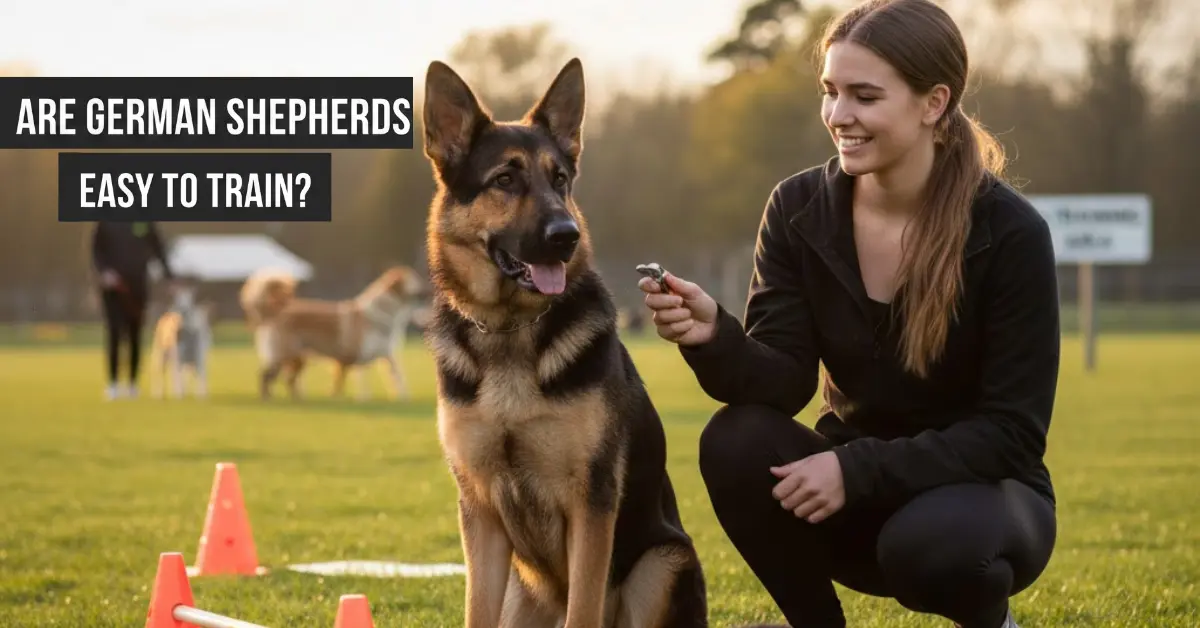
Yes, German Shepherds are generally easy to train. They are highly intelligent, eager to work, and strongly motivated to bond with their owners. Their natural drive and focus make them one of the most trainable dog breeds in the world.
However, their intelligence and energy also mean they need consistent guidance, structure, and daily mental stimulation. Without proper training and leadership, they can become stubborn or develop unwanted behaviors. In short, German Shepherds are not hard to train, but they are not low-effort dogs either.
If you are willing to invest time and consistency, training a German Shepherd can be deeply rewarding.
Understanding the German Shepherd Mindset
Before answering “are German Shepherds easy to train” in detail, it helps to understand how they think.
German Shepherds were developed as a working dog breed. They were bred to herd livestock, guard property, and assist humans with complex tasks. Today, they excel in police work, search and rescue, military service, protection sports, and competitive obedience. Organizations like the American Kennel Club recognize them as one of the most versatile and capable breeds in the world.
Their original purpose still shapes their mindset today. German Shepherds are problem solvers. They look for direction. They scan their environment constantly and respond quickly to movement, sound, and human cues. Unlike companion breeds that were developed primarily for affection, German Shepherds were bred to think, assess, and act.
Working Line vs Show Line German Shepherds
Not all German Shepherds are identical in temperament or drive. Bloodline plays a significant role in training intensity and behavior.
Working line German Shepherds are bred primarily for performance and functional ability. These dogs often come from police, military, or sport breeding programs. They typically have:
- Higher prey drive
• Stronger work motivation
• Greater stamina
• Intense focus
• Faster response to training cues
Because of this, working line dogs are often highly trainable, but they require experienced handling and consistent mental stimulation. Without structured outlets, their drive can turn into restlessness or frustration.
Show line German Shepherds are bred more for conformation standards and balanced temperament suitable for family settings. They often have:
- Moderate drive levels
• Slightly calmer energy
• Strong loyalty
• Good trainability with less intensity
While still intelligent and capable, show line dogs may be somewhat easier for first time owners because their working drive is usually less extreme.
How Drive Levels Affect Trainability
Drive refers to a dog’s internal motivation to perform tasks. In German Shepherds, this often includes prey drive, food drive, toy drive, and defense drive.
Higher drive dogs tend to learn quickly because they are strongly motivated. However, they can also become distracted or overstimulated if training lacks structure. Lower drive dogs may be easier to manage in daily life but may require more creative motivation during training sessions.
Genetics heavily influence these drive levels. Two German Shepherds can differ significantly in intensity even if they are raised in similar environments. Understanding your dog’s lineage helps explain why some individuals feel naturally easier to train than others.
So, how smart are German Shepherds?
They rank among the most intelligent dog breeds. Intelligence in dogs shows up in several ways:
- Ability to learn new commands quickly
- Strong memory retention
- Problem solving skills
- Sensitivity to human cues
This high intelligence is a double edged sword. They learn good habits quickly. They also learn bad habits just as fast. When their natural drive is channeled correctly, they become exceptionally reliable partners. When it is neglected, that same intelligence can lead to challenging behaviors.
German Shepherd Temperament and Trainability
The key to trainability lies in temperament.
The typical German Shepherd temperament includes:
- Confidence
- Loyalty
- Alertness
- Protective instincts
- Strong work drive
These traits make training smoother when handled correctly. They want direction. They want a job. They thrive when they know what is expected.
However, they do not respond well to inconsistency. If you let them pull on the leash one day and correct them the next, confusion sets in. Clear rules matter.
For a first time owner German Shepherd, this is especially important. Beginners can succeed, but structure and research are essential.
Are German Shepherds Hard to Train?
This is one of the most searched questions online: are German Shepherds hard to train?
The honest answer: No, but they require commitment.
They are not stubborn in the traditional sense. They are independent thinkers. If training feels repetitive, unclear, or boring, they may disengage. This does not mean they cannot learn. It means they need engagement.
Here is how they compare to other popular breeds:
| Trait | German Shepherd | Labrador Retriever | Bulldog |
|---|---|---|---|
| Intelligence | Very high | High | Moderate |
| Work Drive | Very strong | Moderate | Low |
| Energy Level | High | Moderate to high | Low |
| Sensitivity to Training | Very responsive | Very responsive | Less responsive |
| Best for Beginners | With guidance | Yes | Yes |
While all three breeds can be trained successfully, their motivations and energy levels differ significantly. Bulldogs tend to be less responsive because they were not developed as working partners that required precision tasks or sustained focus. Their moderate intelligence combined with lower drive means they may learn more slowly and require more repetition.
Labrador Retrievers are generally easier for beginners because they combine high intelligence with a naturally cooperative and forgiving temperament. They are eager to please and typically less intense than German Shepherds, making training feel smoother for new owners.
German Shepherds, on the other hand, possess a stronger work drive and higher mental intensity. This makes them extremely capable but also means they require clearer structure, consistent rules, and more mental stimulation than Labradors.
The Best Way to Train a German Shepherd
The best way to train a German Shepherd involves three pillars:
- Consistency
- Structure
- Positive reinforcement
Positive Reinforcement Training
Modern trainers and organizations such as the American Veterinary Medical Association recommend positive reinforcement training. This method rewards desired behaviors instead of punishing mistakes. It is rooted in operant conditioning, a learning principle in which behaviors followed by rewarding outcomes are more likely to be repeated.
German Shepherds respond especially well to:
- Treats
• Praise
• Toys
• Clear verbal markers
Because German Shepherds are highly intelligent and perceptive, punishment based methods often backfire. Intelligent breeds quickly associate harsh corrections with the handler rather than with the specific behavior. This can reduce trust, increase stress levels, and create avoidance behaviors. While punishment may suppress unwanted actions temporarily, it does not teach the dog what to do instead. Over time, this can lead to confusion, anxiety, or defensive reactions.
Positive reinforcement works differently. When a German Shepherd performs a behavior and immediately receives something valuable, the brain releases dopamine, strengthening that neural pathway. The key word here is immediately. Timing is critical. Rewarding within one to two seconds of the desired behavior ensures the dog clearly connects action and outcome. Random or delayed treats weaken this association and slow learning.
Clear marker words such as “yes” or the use of a clicker further improve precision. A marker acts as a bridge between the exact moment of correct behavior and the delivery of the reward. For a fast thinking breed like the German Shepherd, this clarity dramatically accelerates training progress.
Positive reinforcement builds confidence, strengthens the owner dog bond, and encourages active engagement. Confident dogs learn faster, retain commands longer, and remain motivated to work.
How to Train a German Shepherd Puppy
Early training makes a huge difference.
If you are wondering how to train a German Shepherd puppy, start the moment they come home. Puppies absorb information quickly.
Start With Basic Obedience
Focus on:
- Sit
- Stay
- Come
- Down
- Leave it
Short sessions work best. Five to ten minutes at a time keeps attention sharp.
Socialization Is Critical
Expose your puppy to:
- Different people
- Various environments
- Sounds and surfaces
- Other vaccinated dogs
The AKC emphasizes early socialization to prevent fear-based behaviors later in life.
Leash Training Early
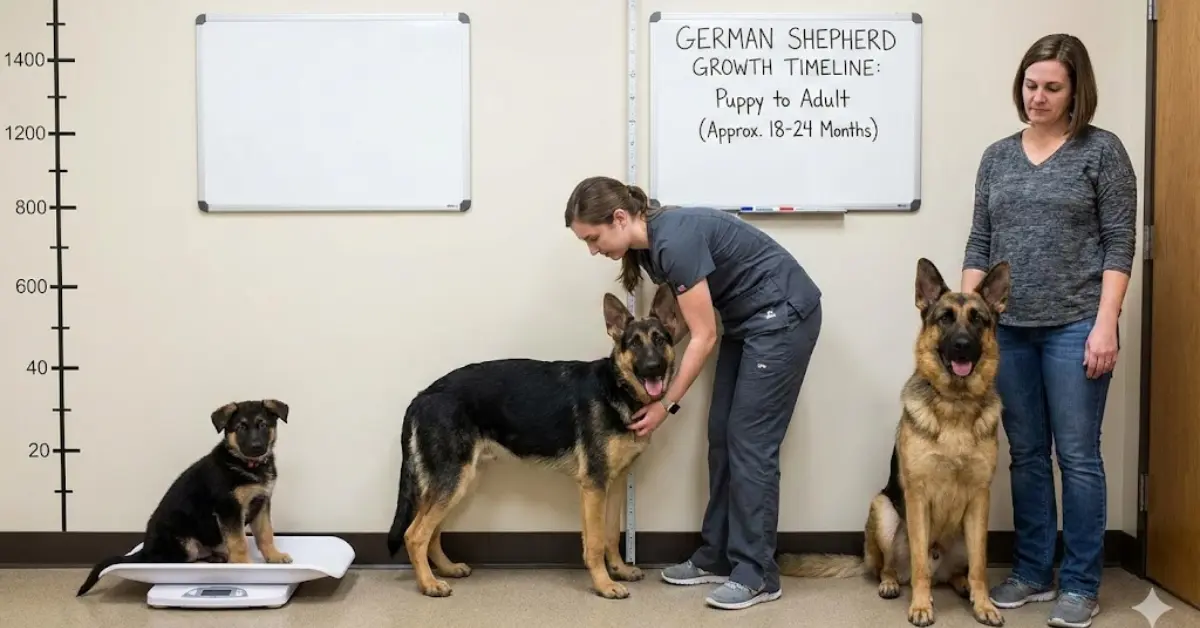
Leash training should begin immediately. German Shepherds grow fast. A 15-pound puppy pulling is cute. A 75-pound adult pulling is not.
Teach loose-leash walking from day one. Reward the puppy for staying beside you.
German Shepherd Obedience Training: Why It Matters
Formal German Shepherd obedience training builds structure and control.
Because of their size and strength, obedience is not optional. It is essential.
Key benefits:
- Improved focus
- Better impulse control
- Stronger owner bond
- Safer interactions with others
Group obedience classes can also help with socialization and accountability. They are especially helpful for first-time owners.
When Protective Behavior Becomes a Problem
German Shepherds are protective by nature. That is part of their appeal. They are wired to notice changes in their environment and respond to potential threats.
However, healthy protection and problematic reactivity are not the same thing.
Confidence based guarding comes from stability. A confident German Shepherd may bark once or twice to alert you, then relax when you signal that the situation is safe. Their body language remains balanced, posture is upright but not rigid, and they recover quickly once the perceived threat is removed.
Fear based aggression, on the other hand, stems from insecurity. The dog may display stiff posture, intense staring, growling, lunging, or prolonged barking. Recovery takes longer, and the dog may remain hyper vigilant even after reassurance. Fear based responses tend to escalate if not addressed early.
Warning signs that protection is crossing into reactivity include:
- Excessive barking at guests
• Lunging at strangers
• Guarding resources aggressively
• Inability to relax around visitors
• Heightened response to minor stimuli
Protection should look like alertness, not sustained aggression.
Proper socialization and obedience training help channel these instincts appropriately. Controlled exposure is especially important. This means gradually introducing the dog to new people, environments, and situations in a structured way while reinforcing calm behavior.
Exposure should be intentional and positive, not overwhelming. Flooding a dog with stressful situations can worsen defensive behavior.
If mild reactivity appears, a certified professional dog trainer with experience in working breeds is often appropriate. They can refine obedience, impulse control, and handler communication.
However, if aggression includes biting, severe lunging, intense fear responses, or inability to recover after triggers, a certified veterinary behaviorist should be consulted.
Behaviorists can evaluate underlying anxiety, assess neurological or medical contributors, and create a structured behavior modification plan.
Early intervention is critical. The longer reactive patterns are rehearsed, the more deeply they become ingrained. With structured guidance, most German Shepherds can learn to express their protective instincts in a controlled and appropriate manner.
Common German Shepherd Training Challenges
Even easy-to-train dogs present challenges.
High Energy
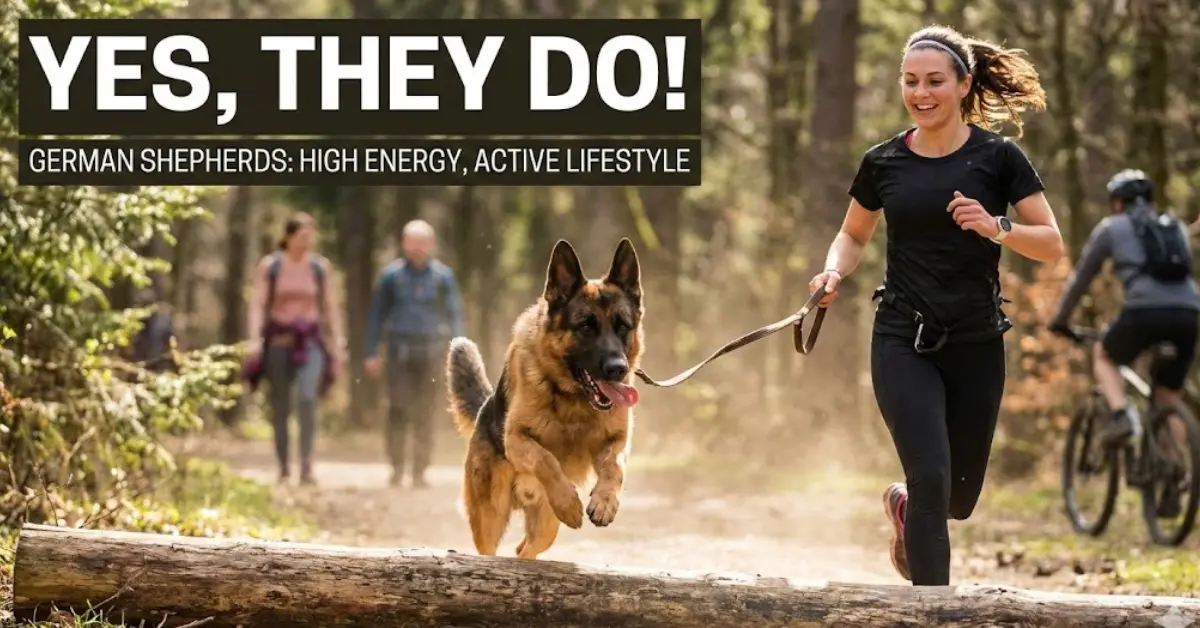
They need daily physical activity and mental stimulation. A bored German Shepherd creates their own entertainment. Usually, that means chewing something important.
A bored German Shepherd left alone for 8 hours may start digging, chewing drywall, or excessive barking.
These behaviors are rarely signs of defiance. More often, they are outlets for unspent energy and mental frustration.
Adolescence Phase
Between 6 and 18 months, many German Shepherds test boundaries. This stage can feel frustrating for owners, but it is a normal developmental period.
During adolescence, hormonal shifts significantly influence behavior. As sexual maturity approaches, both male and female German Shepherds may display increased confidence, independence, and territorial awareness. Males may become more assertive around other dogs, while females can show mood fluctuations linked to their cycle. These changes are biological, not behavioral failures.
You may also notice what owners often call “selective hearing.” A command your dog performed perfectly at five months may suddenly be ignored at nine months. This does not mean they forgot the command. Instead, their growing independence and heightened environmental awareness compete for attention. Distractions feel more rewarding during this phase.
Territorial behavior may also intensify. Barking at strangers, guarding the yard, or reacting more strongly to unfamiliar stimuli can become more noticeable. Without consistent guidance, these instincts can develop into reactivity.
This is why consistency matters more during adolescence than at any other stage. Rules must remain clear and predictable. Training sessions should continue daily, even if progress feels slower. Reinforce known commands in different environments to strengthen reliability. Avoid relaxing boundaries simply because the dog “used to know better.”
With patient leadership and structured reinforcement, most German Shepherds mature into stable, dependable adults by the time they reach two to three years of age.
Over Attachment
German Shepherds bond intensely with their owners. While this loyalty is one of their most valued traits, it can lead to over attachment if independence is not encouraged early.
Without gradual alone time training, some dogs may develop separation related behaviors such as whining, pacing, destructive chewing, or excessive barking. Teaching calm independence from puppyhood helps prevent anxiety and builds emotional resilience.
German Shepherd Training Tips From Experienced Owners
Here are practical German Shepherd training tips that consistently work:
- Train every day, even briefly
- Rotate rewards to maintain motivation
- Use clear, consistent commands
- Keep sessions short and upbeat
- End on a success
- Incorporate mental games like scent work
- Teach impulse control exercises
Mental stimulation tires them more effectively than endless fetch.
Myths About German Shepherd Trainability
Let’s clear up a few common myths.
Myth 1: They Are Naturally Aggressive
False. Aggression typically stems from poor socialization, fear, or bad training. Properly raised German Shepherds are confident and stable.
Myth 2: They Only Belong With Professionals
Not true. Many families successfully raise well-behaved German Shepherds. However, owners must be committed.
Myth 3: They Train Themselves Because They’re Smart
Absolutely not. Intelligence does not replace guidance. It amplifies whatever training they receive.
Are German Shepherds Good for First-Time Owners?
A first time owner German Shepherd situation can work, but it depends on lifestyle.
They are not low-maintenance.
You should be prepared for:
- Daily structured exercise
- Ongoing obedience work
- Mental enrichment
- Clear leadership
If you enjoy learning about dog training and staying active, you may thrive with this breed.
If you prefer a relaxed, low-energy companion, this may not be the right fit.
Who Should Not Get a German Shepherd
This section matters.
You should reconsider getting a German Shepherd if:
- You work long hours with little time for interaction
- You prefer minimal training commitment
- You want a low-energy apartment dog
- You dislike shedding
- You are uncomfortable setting firm boundaries
They need leadership and engagement. Without it, behavioral issues can develop.
The Role of Mental Stimulation
German Shepherds crave mental challenges. As a working breed developed for complex problem solving, they are neurologically wired to think, assess, and respond. Physical exercise alone is not enough to satisfy this need.
Mental stimulation does more than prevent boredom. Structured cognitive activity helps regulate stress hormones such as cortisol. When a dog engages in focused training or problem solving tasks, the brain shifts from reactive mode to learning mode. This reduces chronic stress levels and promotes emotional stability. Calm mental engagement is especially important for high drive breeds like German Shepherds.
Ideas include:
- Puzzle toys
- Advanced obedience drills
- Scent detection games
- Agility work
- Trick training
Many owners assume that long walks or extended games of fetch are sufficient. However, 20 minutes of structured training that requires impulse control, problem solving, and handler focus can be more mentally exhausting than an hour of repetitive fetch.
Working Dog Breed Instincts Explained
As a true working dog breed, the German Shepherd thrives when given purpose.
Even in a pet home, they benefit from:
- Task-based routines
- Structured play
- Clear expectations
They are happiest when they feel useful. This does not mean you need to train for police work. It means giving them consistent direction.
Frequently Asked Questions
1. Are German Shepherds easy to train compared to other breeds?
Yes. They are easier to train than many breeds due to their intelligence and strong work drive, but they require consistent effort.
2. How long does it take to train a German Shepherd?
Basic obedience can begin in weeks. Ongoing training continues throughout their life for best results.
3. What is the best age to start training?
Start at 8 weeks old. Early socialization and basic commands build a strong foundation.
4. Do German Shepherds respond to positive reinforcement?
Yes. They respond exceptionally well to positive reinforcement training methods.
5. Can a first-time dog owner train a German Shepherd?
Yes, with dedication and proper education. Structured classes help greatly.
6. Why does my German Shepherd ignore commands sometimes?
Distraction, inconsistency, or insufficient reinforcement often cause this. Revisit fundamentals and increase engagement.
Final Verdict
German Shepherds are among the most trainable dogs in the world.
They are intelligent, loyal, and eager to work. With clear structure, positive reinforcement, and daily engagement, they thrive. Without those things, they can become challenging.
So, are German Shepherds easy to train?
Yes, for owners willing to lead with consistency and purpose.
If you invest in their development, you will gain a remarkably capable companion who wants nothing more than to work beside you.