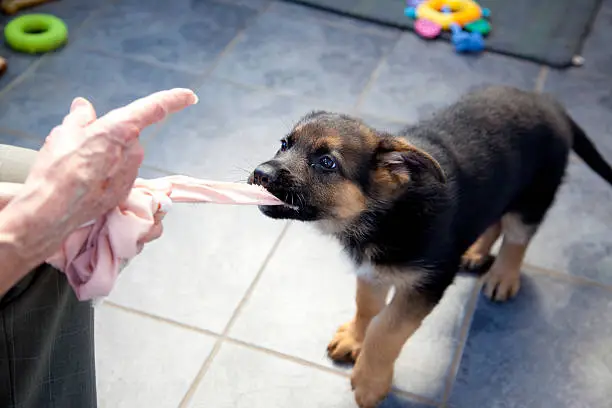
Bringing home a German Shepherd puppy feels exciting. One minute you see a fluffy bundle of energy, and the next you realize you just adopted a future 70 to 90 pound athlete with a sharp brain and endless drive.
That’s why German Shepherd puppy training must start early and follow a clear plan. These dogs rank among the most intelligent breeds in the world. In fact, canine psychologist Stanley Coren lists the German Shepherd as the third most intelligent working breed in The Intelligence of Dogs (1994). The German Shepherd also serves widely in police, military, and search-and-rescue roles, according to the American Kennel Club (AKC).
In simple words: you don’t own a lazy lap dog. You own a working machine with fur.
This guide explains how to train a German Shepherd puppy step by step. It covers obedience, potty training, crate training, and real-life puppy training tips backed by trusted organizations like the American Kennel Club and the American Veterinary Medical Association (AVMA).
Let’s build your pup into a confident, well-mannered companion.
Why Early German Shepherd Puppies Training Matters
German Shepherd puppies grow fast. At 8 weeks, they look harmless. At 6 months, they can pull you down the street like a sled dog.
Early German Shepherd obedience training prevents:
- Leash pulling
- Excessive barking
- Resource guarding
- Destructive chewing
- Aggression due to poor socialization
The AKC stresses that early socialization between 3 and 14 weeks shapes long-term behavior. Puppies exposed safely to different people, sounds, and environments develop more stable temperaments.
Training does not suppress personality. It gives your puppy structure. And structure builds confidence.
Step 1: Start Training the First Week at Home

Many owners wait. That’s a mistake.
Start training a German Shepherd puppy the moment your pup enters your home. Keep sessions short like 5 to 10 minutes, and repeat 2 to 3 times per day.
Focus on:
- Name recognition
- Eye contact
- Sit
- Come
- Gentle leash introduction
Use positive reinforcement. The AVMA strongly recommends reward-based training instead of punishment. Reward-based methods improve learning and reduce fear-based behavior.
Think of it this way: would you work harder for praise and bonuses, or yelling and confusion? Your puppy votes for treats.
German Shepherd Potty Training: Build a Clear Routine
Potty training feels overwhelming at first. Still, consistency solves most problems.

Follow the 3 Key Rules
- Take your puppy outside every 1–2 hours.
- Always go after eating, drinking, playing, or waking up.
- Praise immediately after they finish.
According to the AKC, puppies usually gain bladder control gradually and may need several months before full reliability.
Create a Schedule
- Morning: Immediately after waking
- After every meal
- After naps
- Before bedtime
Avoid punishment for accidents. Clean thoroughly to remove scent markers. Dogs repeat behaviors in areas that smell familiar.
Patience here prevents frustration later.
German Shepherd Crate Training: Safety, Not Prison
Many people misunderstand crate training. A crate should feel like a bedroom, not a jail cell.
The Humane Society of the United States explains that crate training helps with housebreaking and provides security when introduced properly.
How to Introduce the Crate
- Place it in a quiet but social area.
- Add soft bedding.
- Toss treats inside.
- Let your puppy enter voluntarily.
Never force your puppy into the crate. Never use it as punishment.
Limit crate time:
- 8 to 10 weeks old: 1 hour
- 3 months: 2 to 3 hours
- 6 months: 4 to 5 hours
Crate training supports German Shepherd potty training because dogs avoid soiling their sleeping area.
Bonus tip: Feed meals in the crate for positive association.
German Shepherd Obedience Training: Core Commands
German Shepherds thrive on structure. They want jobs. Obedience provides mental stimulation and prevents boredom.
Teach These First:
- Sit
- Stay
- Down
- Come
- Leave it
- Heel
Use consistent verbal cues. Keep commands short and clear. Reward instantly when your puppy performs correctly.
According to the AKC, short daily sessions work better than long, exhausting drills. German Shepherds learn quickly, but they also test boundaries.
Stay calm. Stay consistent. Stay firm without harshness.
Socialization: The Hidden Superpower
Proper gsd puppy training includes controlled social exposure.
Expose your puppy to:
- Different surfaces (grass, tile, gravel)
- Various sounds (traffic, vacuum, doorbell)
- Different people (hats, glasses, children)
- Other vaccinated, friendly dogs
The AVMA highlights that early socialization reduces fear and aggression risks later in life.
Think of socialization as emotional training. It shapes how your dog reacts to the world.
A confident dog makes life easier for everyone.
Mental Stimulation: German Shepherds Need a Job
German Shepherds were bred for herding and protection. Without mental stimulation, they create their own entertainment. Usually, that involves your furniture.
Include:
- Puzzle toys
- Basic scent games
- Obedience drills
- Controlled fetch sessions
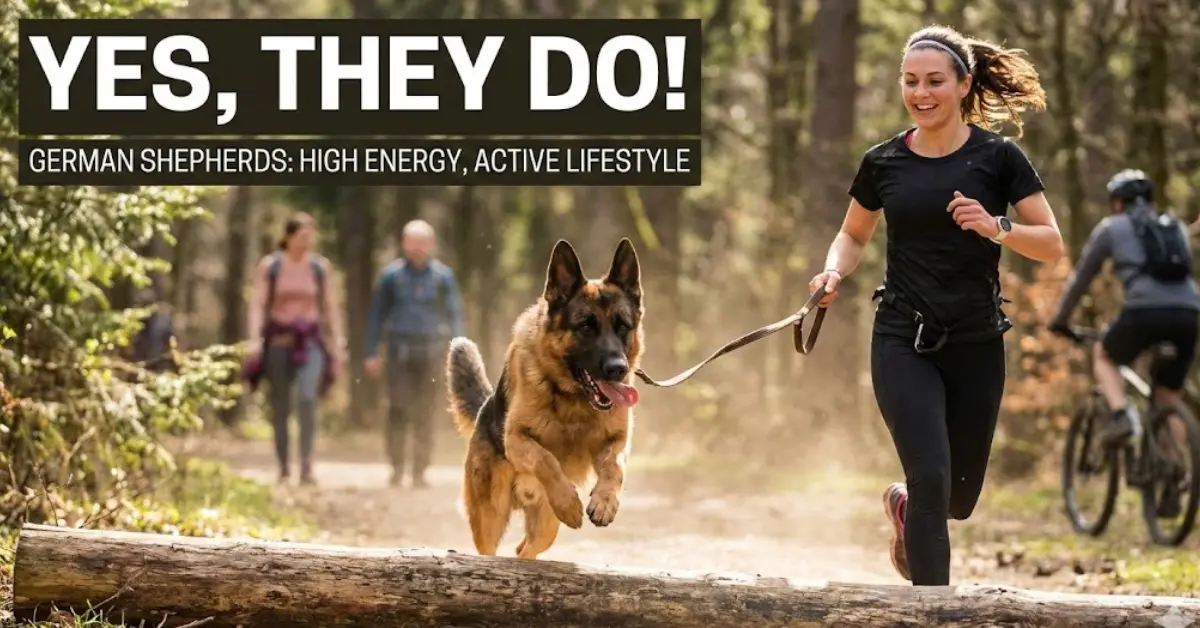
Working breeds perform better when mentally engaged. The AKC emphasizes regular exercise and enrichment for high-energy breeds like the German Shepherd.
A tired puppy behaves better than a bored genius.
Leash Training Without Chaos
Start indoors with a lightweight leash.
- Let your puppy drag it briefly under supervision.
- Reward calm walking beside you.
- Stop walking if pulling begins.
Forward movement becomes the reward. Pulling should never succeed.
German Shepherds grow strong quickly. Teach leash manners early before you need shoulder surgery.
Correcting Common Training Mistakes
Even motivated owners make mistakes.
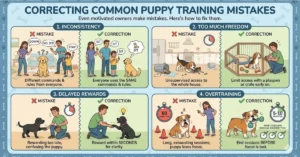
1. Inconsistency
Everyone in the household must use the same commands and rules.
2. Too Much Freedom
Limit unsupervised access early on.
3. Delayed Rewards
Reward within seconds for clarity.
4. Overtraining
End sessions before your puppy loses focus.
Short, frequent sessions win every time.
When to Consider Professional Help
Searches like “german shepherd puppy training near me” increase because many owners seek structured guidance.
Consider professional help if:
- Your puppy shows fear aggression
- You struggle with leash reactivity
- You feel overwhelmed
Look for certified trainers who use positive reinforcement methods. Organizations like the AKC offer directories and training programs.
A professional can accelerate results and prevent long-term behavior problems.
Training Timeline: What to Expect
Realistic expectations build trust.
8–12 Weeks
- Basic commands
- Crate comfort
- Potty routine starts
3–6 Months
- Improved impulse control
- Leash discipline improves
- Socialization expands
6–12 Months
- Adolescence testing phase
- Reinforcement of obedience
- Advanced training possible
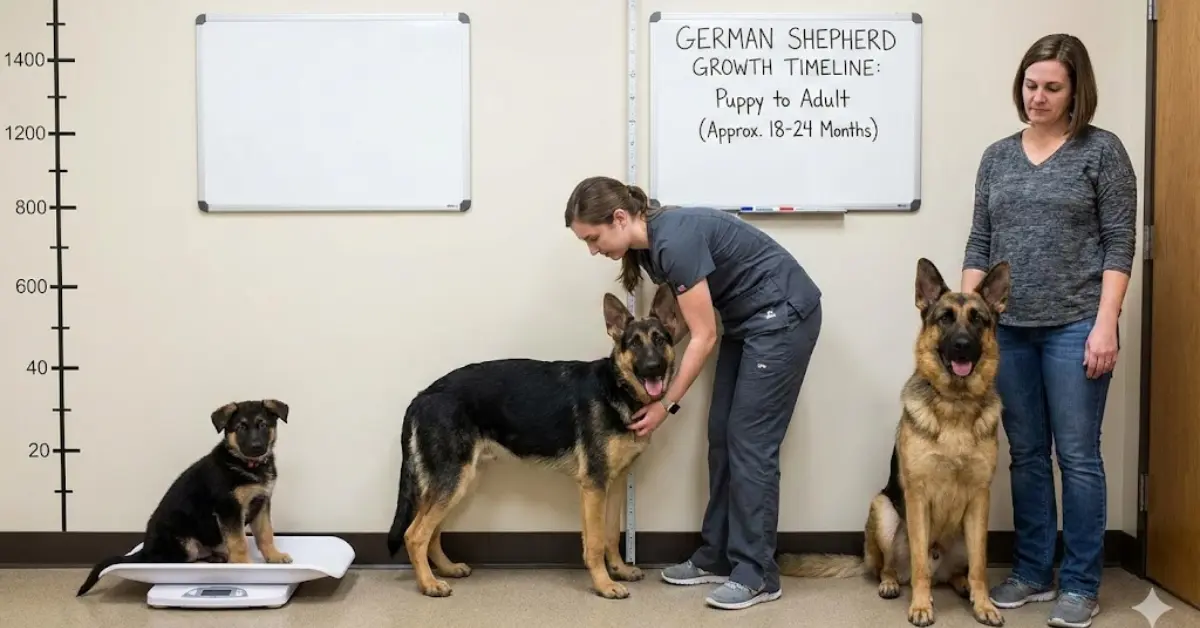
German Shepherds mature mentally around 2–3 years. Training never truly ends.
It evolves.
Reward-Based Training Works Best
The AVMA supports reward-based training because it strengthens trust and reduces fear-based reactions.
Avoid:
- Physical punishment
- Yelling
- Shock collars
Focus on:
- Treats
- Praise
- Toys
- Play
Positive reinforcement strengthens learning. It also strengthens your relationship.
And let’s be honest — building trust beats building resentment.
Nutrition and Exercise Support Training Success
Good behavior connects to physical health.
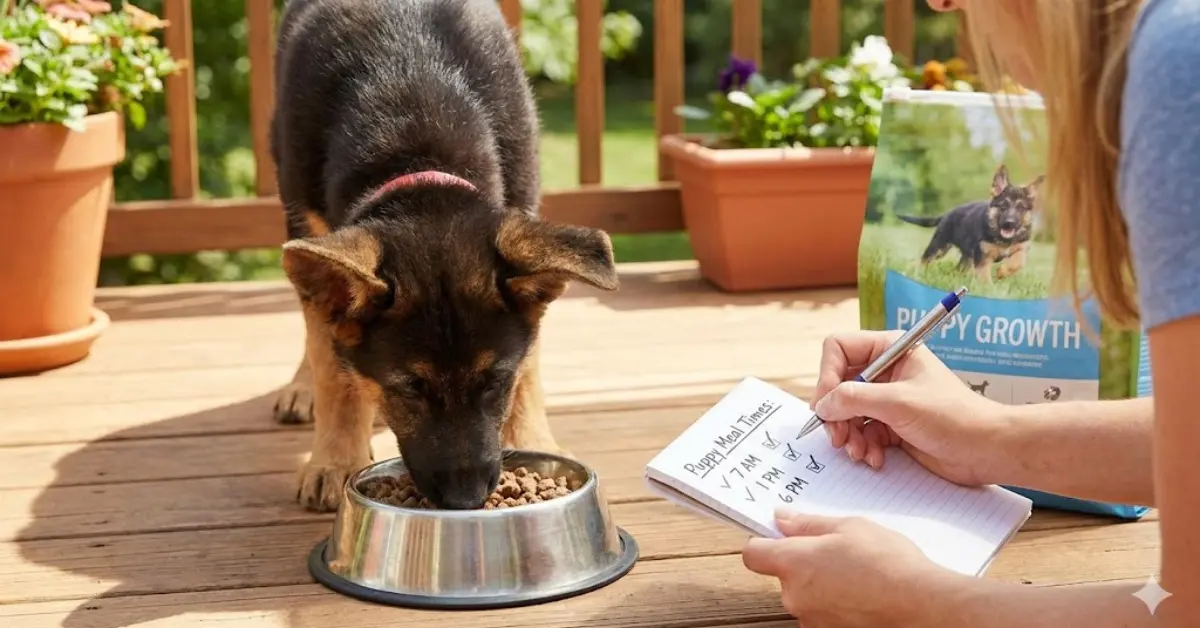
Feed high-quality puppy food approved by veterinary guidelines. Ensure regular veterinary checkups and vaccinations.
Exercise daily but avoid high-impact activities until growth plates close (around 12–18 months). Overexertion can harm developing joints.
Balanced physical and mental activity produces stable behavior.
Building Long-Term Trust and Authority
Training a German Shepherd puppy does not mean dominating your dog.
It means:
- Providing leadership
- Setting clear rules
- Rewarding good behavior
- Redirecting unwanted actions
Dogs follow calm, confident leaders. They ignore chaos.
Consistency builds authority. Authority builds respect. Respect builds lifelong partnership.
Final Thoughts: Raise a Confident Companion
German Shepherd puppy training requires commitment, patience, and structure. These dogs reward your effort with loyalty, intelligence, and protection.
Start early. Stay consistent. Use positive reinforcement. Focus on socialization and obedience. Avoid harsh corrections.
Most importantly, remember this: your puppy does not aim to challenge you personally. They explore, test, and learn.
Guide them well, and you won’t just train a dog.
You’ll shape a confident, disciplined companion for the next decade or more.
And that investment pays off every single day.
Frequently Asked Questions
1. At What Age Should I Start Training a German Shepherd Puppy?
You should begin training your German Shepherd puppy as early as 8 weeks old. Early training builds structure, improves obedience, and prevents bad habits from forming. Start with basic commands like sit, come, and name recognition. Keep sessions short, around 5 to 10 minutes, and repeat them two to three times daily for best results.
2. How Long Does It Take to Train a German Shepherd Puppy?
Basic obedience training usually takes 3 to 6 months with consistent daily practice. However, German Shepherds continue maturing mentally until 2 to 3 years of age. Training should remain ongoing to reinforce behavior, especially during the adolescent phase between 6 and 12 months.
3. What Is the Best Method for German Shepherd Potty Training?
The best method includes a strict routine and positive reinforcement. Take your puppy outside every 1 to 2 hours and immediately after meals, naps, or playtime. Praise your puppy as soon as they finish. Avoid punishment for accidents, as consistency and reward-based training improve long-term success.
4. Is Crate Training Safe for a German Shepherd Puppy?
Yes, crate training is safe when introduced properly. A crate should feel like a secure resting place, not a punishment area. Introduce it gradually with treats and positive experiences. Limit crate time based on age, and never force your puppy inside. Proper crate training also supports housebreaking.
5. Are German Shepherds Easy to Train?
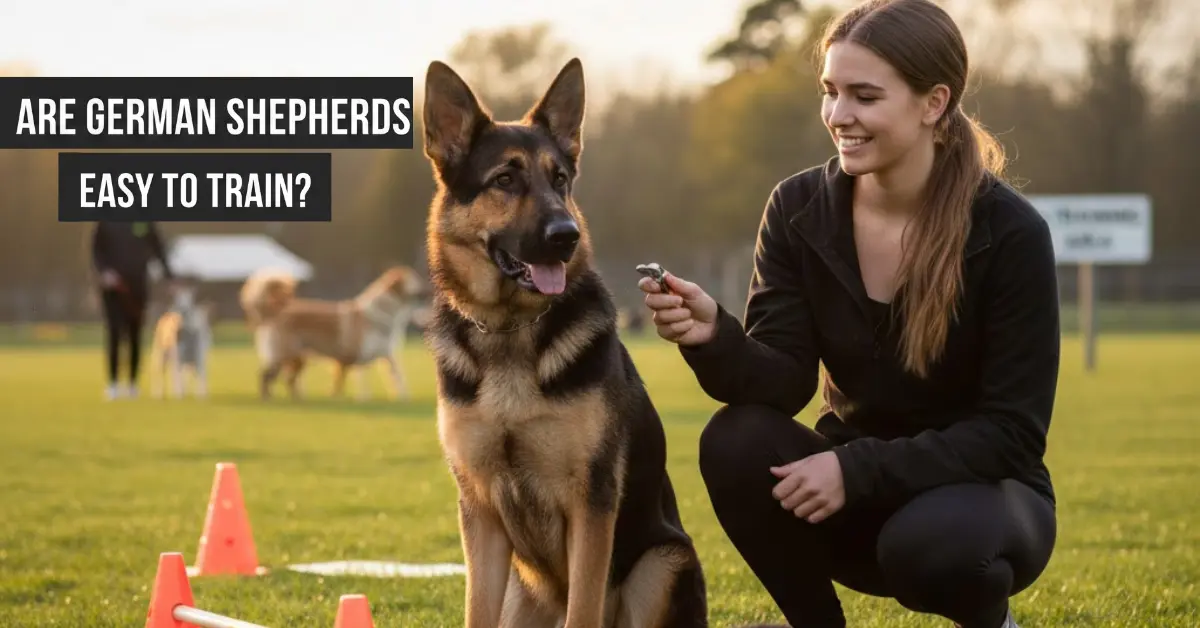
German Shepherds are highly intelligent and respond well to structured, reward-based training. They learn commands quickly and thrive with consistency and leadership. However, they require mental stimulation, daily exercise, and early socialization to prevent behavioral problems.
References
- American Kennel Club (AKC). “German Shepherd Dog Breed Information.” Available at: https://www.akc.org
- American Kennel Club (AKC). “How to Potty Train a Puppy.” Available at: https://www.akc.org
- American Veterinary Medical Association (AVMA). “Humane Dog Training Position Statement.” Available at: https://www.avma.org
- Humane Society of the United States. “Crate Training Your Dog or Puppy.” Available at: https://www.humanesociety.org
- Coren, Stanley. The Intelligence of Dogs. Free Press, 1994.