German Shepherd Puppy Care Basics for New Owners
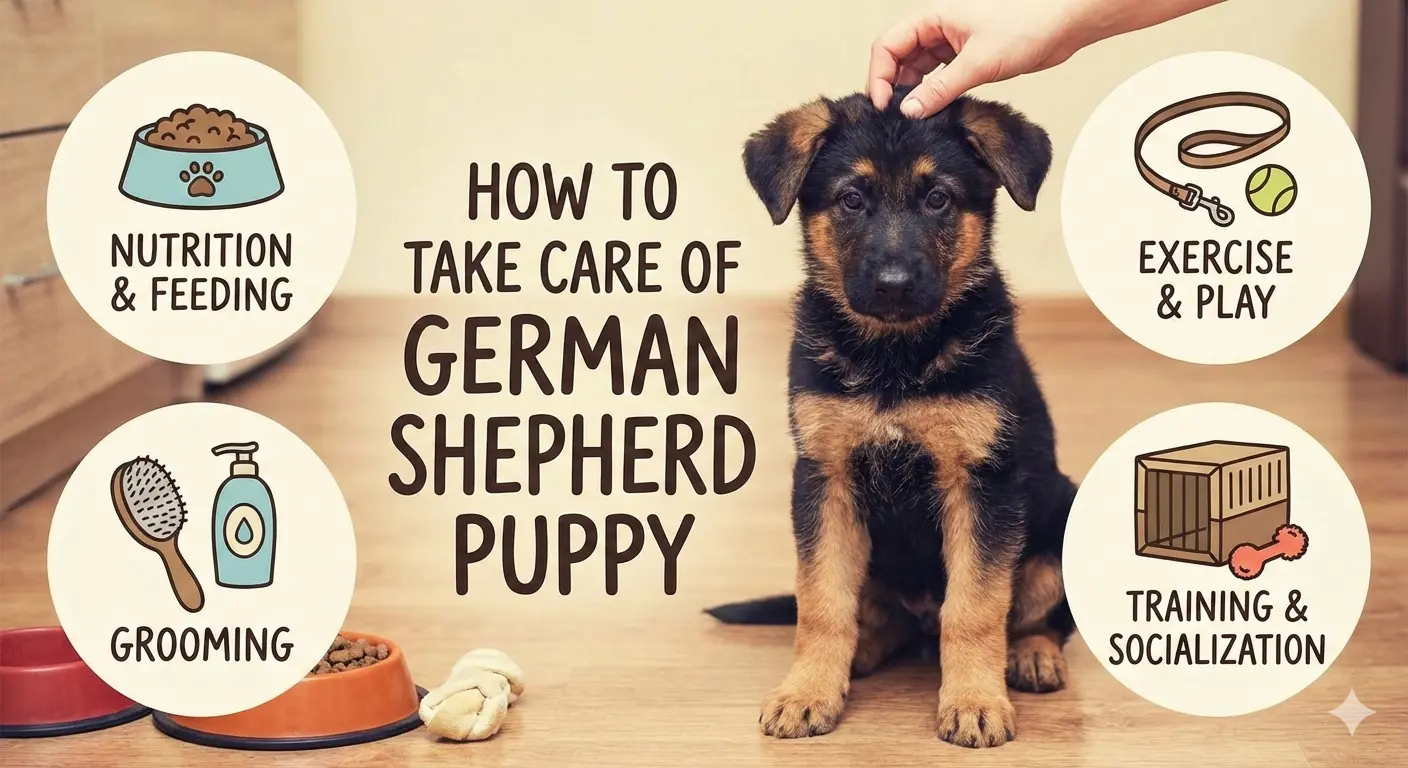
German Shepherd puppy care basics focus on building healthy routines from the very beginning. Understanding how to take care of a German Shepherd puppy helps new owners create structure, patience, and daily involvement from day one. The first few months play a major role in shaping behavior, confidence, and overall health.
German Shepherd puppies are intelligent and energetic, which means they learn quickly but also need guidance. Without clear routines, they can become restless or confused. Consistency in feeding, training, and daily activities helps them feel safe and settled.
Taking care of a German Shepherd puppy is not difficult, but it does require commitment and consistency. When proper care routines are followed, these puppies grow into loyal, confident, and well-balanced adult dogs.
What Makes German Shepherd Puppies Unique
German Shepherd puppies are known for their high intelligence and strong bond with their owners. They are naturally alert and curious, which makes them quick learners. This trait allows them to pick up training early, but it also means they need mental stimulation.
These puppies are emotionally sensitive and respond well to calm leadership. Harsh handling can make them anxious or fearful. Positive reinforcement builds trust and encourages good behavior.
Physically, German Shepherd puppies grow fast, but their joints develop more slowly. Because of this, exercise should be controlled and age-appropriate. Mental activities like basic training are just as important as physical play.
Things Every First-Time Owner Should Know
First-time owners should focus on structure rather than freedom during the early months. Clear routines help puppies understand what is expected of them. This reduces stress and prevents common behavior problems.
Important care basics every owner should follow include:
- Keep feeding and sleeping times consistent
- Start basic training and socialization early
- Use positive reinforcement instead of punishment
- Provide proper nutrition for healthy growth
- Balance playtime with enough rest
Patience is key when raising a German Shepherd puppy. Progress may feel slow at times, but steady effort brings lasting results.
Simple tip: Daily routines and calm guidance make German Shepherd puppy care much easier and more rewarding.
Is a German Shepherd Puppy Right for You and Your Family?
Before bringing a German Shepherd puppy home, it is important to understand whether this breed fits your lifestyle. German Shepherds are loyal, intelligent, and protective, but they also require time, structure, and daily involvement. They do best with owners who are willing to stay consistent and actively participate in their care.
This breed is not a low-maintenance option. A German Shepherd puppy needs attention, training, and mental stimulation to grow into a calm and confident adult dog. Families who are prepared for this commitment usually find the experience very rewarding.
Temperament, Energy Level, and Commitment
German Shepherd puppies are naturally alert, curious, and eager to learn. They form strong bonds with their families and often stay close to their owners. This makes them excellent companions, but it also means they do not do well when ignored or left alone for long periods.
Their energy level is high, especially during the first year. Daily play, short walks, and training sessions are necessary to keep them balanced. Without proper outlets, they may develop unwanted behaviors like excessive barking or chewing.
Owning a German Shepherd puppy is a long-term commitment. Consistent training, patience, and daily interaction are required to help them develop good manners and emotional stability.
Living Space and Time Requirements
German Shepherd puppies can adapt to different living spaces, but they need room to move and explore. A house with a yard is ideal, but they can also live in apartments if exercise and mental stimulation are provided daily.
More important than space is time. These puppies need regular training, playtime, and companionship. Busy schedules or long hours away from home can lead to stress and behavioral issues.
Families who can dedicate time each day for care, training, and bonding are more likely to succeed with a German Shepherd puppy.
Helpful tip: If you can provide time, structure, and daily attention, a German Shepherd puppy can be a wonderful addition to your family.
Types of German Shepherds and Which One Is Best for You
German Shepherds come in different types, and choosing the right one can make puppy care much easier. Each type has unique traits that affect energy level, training needs, and lifestyle compatibility. Understanding these differences helps you select a puppy that matches your expectations and daily routine.
Before deciding, it is important to think about your activity level, experience with dogs, and how much time you can dedicate to training and exercise. The right match leads to a calmer puppy and a more enjoyable ownership experience.
Working Line vs Show Line German Shepherds
Working line German Shepherds are bred for performance and ability. They are highly energetic, driven, and excel in tasks like obedience, protection, and service work. These puppies need daily training and mental challenges to stay balanced.
Show line German Shepherds are bred more for appearance and temperament. They usually have a calmer nature and are easier for families and first-time owners to manage. While they still need exercise and training, their energy levels are generally more moderate.
Choosing between the two depends on your lifestyle. Active owners who enjoy training may prefer a working line, while families looking for a companion often do better with a show line puppy.
Male vs Female German Shepherd Puppies
Male German Shepherd puppies tend to be larger and more playful as they grow. They often show strong attachment to their owners and can be more protective. Males may take slightly longer to mature emotionally but are usually very loyal.
Female German Shepherd puppies are often more independent and focused. They may be easier to train at a younger age and tend to mature faster. Females are sometimes more sensitive and responsive to training cues.
Both male and female German Shepherd puppies can become excellent companions. The best choice depends on personal preference, training style, and household dynamics rather than gender alone.
Helpful tip: Spend time with both types and genders before choosing, as personality matters more than labels.
How to Choose the Right German Shepherd Puppy
Choosing the right German Shepherd puppy is one of the most important steps for new owners. A healthy puppy with a good temperament is easier to train and care for. Taking time to observe and ask the right questions can help you avoid future health and behavior issues.
Do not rush the decision. Whether you are buying from a breeder or adopting from a shelter, careful selection increases the chances of bringing home a confident and well-adjusted puppy.
What to Look for in a Healthy Puppy
A healthy German Shepherd puppy should appear alert, curious, and active. The puppy should move easily without limping and show interest in people and surroundings. Clear eyes and a clean coat are good signs of overall health.
The puppy’s nose should be moist, and ears should be clean without bad odor. The coat should be soft and free from bald spots or excessive shedding. Avoid puppies that appear overly timid or aggressive.
Healthy puppies usually respond well to gentle handling and show balanced energy levels. A calm but playful attitude is ideal for first-time owners.
Questions to Ask Breeders or Shelters
Asking the right questions helps you understand the puppy’s background and care needs. Responsible breeders and shelters should be open and informative.
Important questions to ask include:
- Have the puppy’s parents been health tested?
- What vaccinations and deworming has the puppy received?
- What type of food is the puppy currently eating?
- Has the puppy been socialized with people or other animals?
- Are there any known health or behavior concerns?
Clear answers help you prepare for proper care and reduce unexpected issues later.
Helpful tip: A good breeder or shelter will also ask you questions to ensure the puppy is going to a suitable home.
Bringing a German Shepherd Puppy Home for the First Time
Bringing a German Shepherd puppy home for the first time is an exciting experience, but it can also be overwhelming for the puppy. A new environment, unfamiliar smells, and new people can cause stress. Proper preparation helps make this transition smoother and more comfortable.
The first few days are important for building trust and helping your puppy feel safe. A calm and structured approach allows your puppy to settle in more quickly.
Preparing Your Home Before Arrival
Before your puppy arrives, your home should be safe and organized. Remove items that could be chewed or swallowed, such as loose wires, small objects, and shoes. Set up a quiet space where your puppy can rest without disturbances.
Essential items should be ready in advance. This includes food and water bowls, a comfortable bed, age-appropriate toys, and a crate if you plan to use one. Having everything prepared reduces stress on the first day.
It is also helpful to decide on feeding, potty, and sleep routines before the puppy comes home. Consistency from the beginning helps your puppy adjust faster.
Helping Your Puppy Adjust to a New Environment
When your puppy arrives, allow them to explore their new surroundings at their own pace. Avoid overwhelming them with visitors or too much handling. Gentle introductions help build confidence.
Keep the first few days calm and predictable. Stick to simple routines and offer plenty of reassurance. Positive interactions during this time create a sense of security.
Your puppy may whine or appear unsure at first. This is normal. Patience and consistency help them feel comfortable and relaxed.
Helpful tip: A quiet environment and steady routine during the first week make adjustment much easier for your German Shepherd puppy.
German Shepherd Puppy Training Tips for Beginners
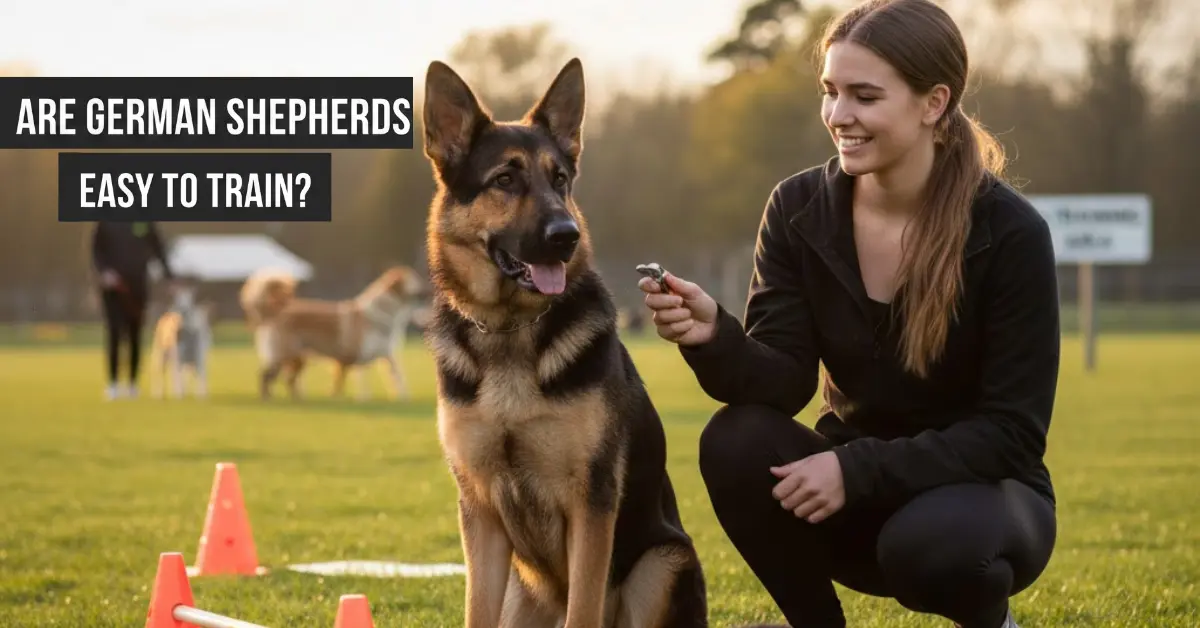
Training is an essential part of raising a well-behaved German Shepherd puppy. German Shepherd Puppy Training should begin early, as this intelligent and eager-to-learn breed responds quickly to guidance. New owners should focus on building trust, teaching basic manners, and keeping training sessions positive and consistent.
Training does not need to be complicated. Short, consistent sessions each day help puppies understand expectations and build good habits without feeling overwhelmed.
When to Start Training a German Shepherd Puppy
Training can begin as soon as your puppy comes home. Simple lessons like responding to their name, sitting calmly, and following you indoors are good starting points. Early training helps prevent bad habits from forming.
Young puppies have short attention spans, so sessions should be brief. Five to ten minutes at a time is enough. Repeating lessons throughout the day works better than long sessions.
The earlier you start, the easier it becomes to guide behavior and build confidence.
Training Methods That Work Best
Positive reinforcement is the most effective training method for German Shepherd puppies. Rewarding good behavior with praise, treats, or toys encourages learning and strengthens your bond.
Harsh corrections or punishment should be avoided. These methods can cause fear and slow progress. Clear guidance and patience lead to better results.
Consistency is essential. Using the same commands and routines helps your puppy understand what is expected.
Helpful tip: Keep training fun and rewarding—happy puppies learn faster and retain lessons longer.
Training a German Shepherd Puppy From 8 to 16 Weeks
The period from 8 to 16 weeks is one of the most important stages in a German Shepherd puppy’s development. During this time, puppies are highly receptive to learning and new experiences. Training should focus on building confidence, creating routines, and introducing basic skills.
At this age, training should be gentle, positive, and consistent. Short sessions throughout the day work best and help prevent confusion or frustration.
Goal: Early Socialization
German Shepherd Puppy Socialization plays an important role in helping your puppy feel comfortable in new situations. Introducing your puppy to different people, sounds, surfaces, and environments builds confidence and reduces fear as they grow.
Socialization should be done gradually and in a safe, positive way. Quality experiences matter more than quantity, and calm introductions help puppies stay relaxed and curious.
Puppies that receive proper socialization are easier to train and adapt more smoothly to changes in their environment.
Goal: Crate Training Basics
Crate training provides a safe and comfortable space for your puppy. When used correctly, a crate helps with rest, routine, and house training.
The crate should feel like a positive place, not a punishment. Start by allowing your puppy to explore it freely and reward calm behavior inside.
Short crate sessions help your puppy learn to relax and feel secure when alone.
Goal: House and Potty Training
House and potty training should begin immediately. Take your puppy outside frequently, especially after eating, playing, and waking up. Consistency is key to success.
Praise and reward your puppy when they go in the correct spot. Accidents will happen, and they should be handled calmly without punishment.
With patience and a regular schedule, most puppies learn potty habits quickly.
Helpful tip: Predictable routines and positive reinforcement make early training much smoother.
Training a German Shepherd Puppy From 3 to 9 Months
Between 3 and 9 months, German Shepherd puppies become more confident and energetic. This stage is ideal for building strong training habits and improving focus. Puppies may also begin testing boundaries, which makes consistency especially important.
Training during this period should remain positive but structured. Clear expectations help puppies understand acceptable behavior and strengthen their bond with their owner.
Goal: Basic Obedience Commands
Basic obedience training teaches puppies how to respond to simple commands. These commands form the foundation for good manners and safety.
Important commands to focus on include sit, stay, down, and leave it. Training sessions should be short and repeated daily. Using rewards such as treats or praise encourages faster learning.
Consistency in commands and tone helps puppies learn more effectively and prevents confusion.
Goal: Reliable Recall Training
Recall training teaches your puppy to come when called. This skill is important for safety and off-leash control. Start recall training in a quiet area with minimal distractions.
Use a happy tone and reward your puppy every time they respond correctly. Gradually increase distance and distractions as your puppy improves.
Avoid calling your puppy for negative experiences, as this can weaken recall. Practice regularly to build reliability.
Helpful tip: A strong recall is built through repetition, rewards, and patience over time.
German Shepherd Puppy Feeding and Nutrition Guide
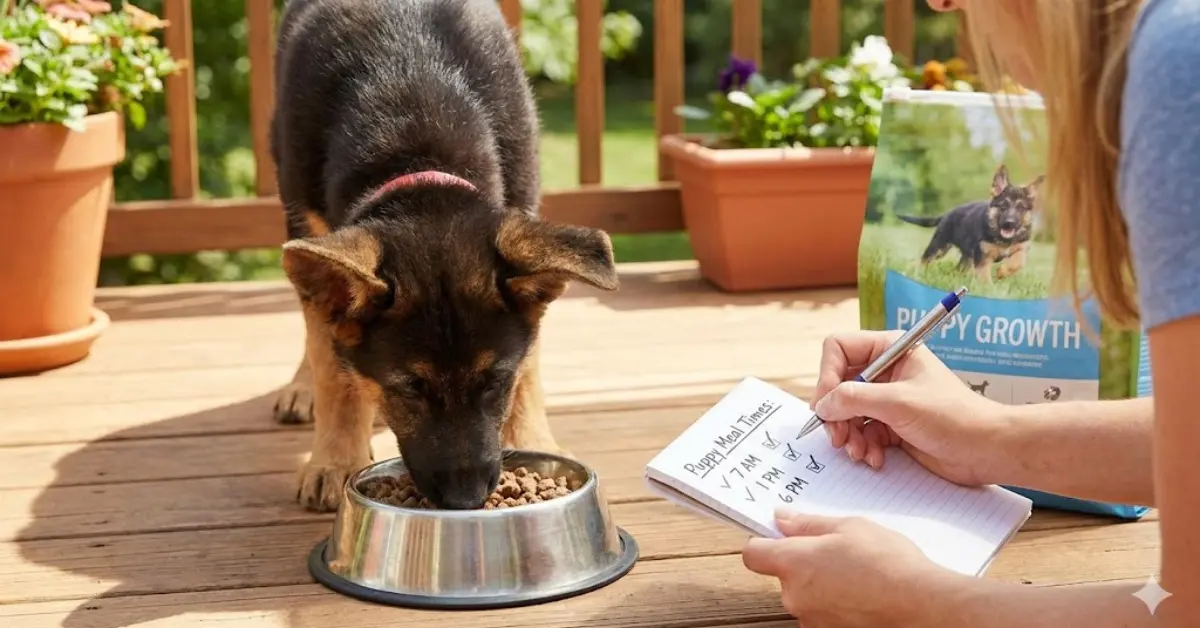
German Shepherd Puppy Feeding is a key factor in supporting healthy growth and development. Providing a balanced diet helps build strong bones, healthy muscles, and steady energy levels. Poor nutrition during the early months can increase the risk of growth and joint problems later in life.
New owners should focus on food quality, consistent feeding times, and proper portion sizes. Feeding routines should encourage slow, steady growth rather than rapid weight gain.
What to Feed a German Shepherd Puppy
German Shepherd puppies need food that is specially formulated for large-breed puppies. This type of food provides the right balance of protein, fats, and minerals needed for controlled growth.
High-quality puppy food should contain real animal protein as the main ingredient. Avoid foods with excessive fillers, artificial colors, or low-quality by-products.
Fresh water should always be available. Treats can be used for training but should be given in moderation and counted as part of daily intake.
How Much and How Often to Feed
The amount of food depends on your puppy’s age, size, and activity level. Young puppies usually need to eat more frequently than older ones.
General feeding guidelines include:
- 8 to 12 weeks: 3 to 4 small meals per day
- 3 to 6 months: 3 meals per day
- 6 to 12 months: 2 meals per day
Portion sizes should follow the food manufacturer’s recommendations and be adjusted as your puppy grows. Overfeeding should be avoided, as it can strain developing joints.
Helpful tip: Stick to regular feeding times to support digestion and establish a healthy routine.
German Shepherd Puppy Growth Stages and Weight Guide
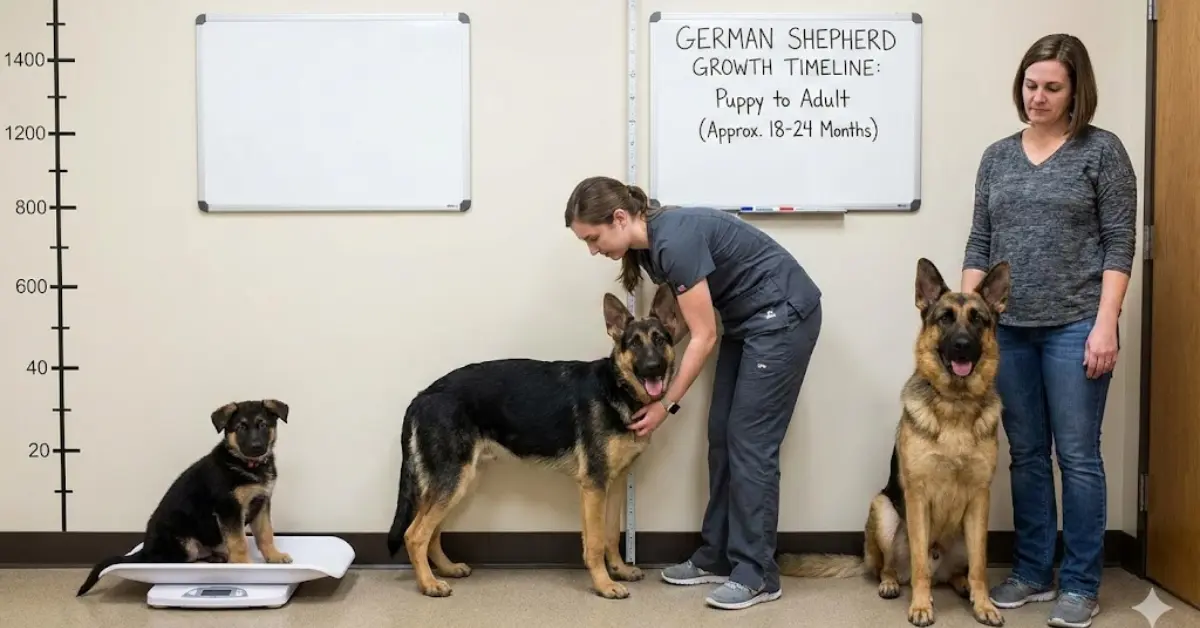
German Shepherd puppies grow quickly during their first year, but healthy growth should be steady rather than fast. Monitoring growth stages and weight helps owners ensure their puppy is developing properly. Balanced nutrition and controlled exercise support strong bones and joints.
Each puppy grows at a slightly different pace. Genetics, diet, and activity level all influence size and weight.
Average Weight by Age
German Shepherd puppy weight changes rapidly during the early months. While exact numbers can vary, general weight ranges help owners track progress.
Typical weight ranges include:
- 8 weeks: 8 to 12 pounds
- 3 months: 18 to 25 pounds
- 6 months: 45 to 60 pounds
- 12 months: 65 to 85 pounds
Puppies may fall slightly above or below these ranges and still be healthy. Consistent weight gain over time is more important than exact numbers.
Signs of Healthy Growth
A healthy German Shepherd puppy shows steady weight gain, good energy levels, and strong coordination. The puppy should move comfortably without stiffness or limping.
Healthy growth signs also include a shiny coat, clear eyes, and a good appetite. Puppies should feel solid but not overweight, with ribs that can be felt but not easily seen.
Regular vet checkups help confirm proper growth and catch potential issues early.
Helpful tip: Focus on gradual growth, not rapid size increase, to protect your puppy’s developing joints.
German Shepherd Puppy Sleep Schedule and Daily Routine
A consistent German Shepherd Puppy Sleep Schedule is essential for healthy development. Puppies need plenty of rest to support growth, learning, and emotional balance. A predictable routine also helps reduce anxiety and makes training more effective.
New owners should aim to balance sleep, play, training, and meals throughout the day. A structured daily routine helps puppies understand what to expect and feel more secure.
How Much Sleep a German Shepherd Puppy Needs
German Shepherd puppies sleep a lot, especially during the first few months. On average, puppies need 18 to 20 hours of sleep each day. This includes nighttime sleep and several naps during the day.
Sleep helps support brain development and physical growth. Overtired puppies may become restless, overly energetic, or difficult to train.
Providing a quiet and comfortable sleeping area helps puppies rest properly and wake up refreshed.
Sample Daily Routine for Puppies
A daily routine helps manage energy levels and supports healthy habits. While schedules can vary, consistency is more important than exact timing.
A simple daily routine may include:
- Morning potty break and feeding
- Short training session and playtime
- Midday nap and light activity
- Afternoon feeding and gentle exercise
- Evening calm play and bedtime routine
As puppies grow, routines can be adjusted to match their energy and training progress.
Helpful tip: Consistent sleep and activity times help your puppy stay calm, focused, and easier to manage.
German Shepherd Puppy Exercise Needs by Age
Exercise is important for a German Shepherd puppy, but it must be adjusted based on age and development. Proper exercise helps build muscle, improve coordination, and support mental health. Too much activity too early can harm growing joints.
Owners should focus on controlled movement and mental stimulation rather than intense physical exercise during the early months.
Safe Exercise for Young Puppies
Young German Shepherd puppies benefit from gentle and short exercise sessions. Playtime indoors or in a safe outdoor area allows them to move naturally without strain.
Good exercise options include short walks, light play with toys, and basic training sessions. Mental activities, such as learning commands, help tire puppies without overworking their bodies.
A good rule is to keep exercise brief and spread throughout the day rather than long sessions.
Activities to Avoid During Growth
Certain activities should be avoided while your puppy is still growing. High-impact exercises can put stress on developing bones and joints.
Avoid activities such as:
- Long-distance running
- Jumping from heights
- Repeated stair climbing
- Forced or intense exercise
- Rough play on hard surfaces
Limiting these activities helps reduce the risk of joint problems later in life.
Helpful tip: Gentle, controlled exercise supports healthy growth better than intense physical activity during puppyhood.
German Shepherd Puppy Grooming and Coat Care
German Shepherd Puppy Grooming is important for keeping your puppy clean, comfortable, and healthy. Grooming supports skin health, reduces shedding around the home, and helps you spot potential issues early. Introducing grooming routines at a young age also helps puppies become comfortable with handling.
Simple and consistent grooming habits make coat care easier and more manageable as your puppy grows.
Brushing and Bathing Basics
German Shepherd puppies should be brushed regularly to remove loose hair and dirt. Brushing also helps distribute natural oils, keeping the coat healthy and shiny.
A soft brush or slicker brush works well for puppies. Brushing two to three times a week is usually enough. Bathing should be done only when needed, such as when the puppy is dirty or has an odor.
Use a mild puppy shampoo and avoid frequent baths, as overbathing can dry out the skin.
Managing Shedding and Skin Health
Shedding is normal for German Shepherd puppies, especially as their coat changes. Regular brushing helps control loose hair and prevents matting.
Healthy skin depends on proper nutrition, hydration, and grooming. Dry or itchy skin may be a sign of dietary issues or allergies.
Checking your puppy’s skin during grooming helps catch problems early.
Helpful tip: Consistent brushing reduces shedding and keeps your puppy’s coat and skin in good condition.
German Shepherd Puppy Health Care and Vet Visits
Proper health care is essential during a German Shepherd puppy’s early months. Regular vet visits help monitor growth, prevent illness, and address problems before they become serious. A proactive approach supports long-term health and well-being.
New owners should work closely with a veterinarian to create a health plan that fits their puppy’s needs.
First Vet Visit and Vaccination Timeline
The first vet visit should take place within the first week of bringing your puppy home. During this visit, the vet checks overall health, weight, and development.
Vaccinations usually begin around six to eight weeks of age and continue in a series over several months. These vaccines protect puppies from serious diseases and help build immunity.
Your vet may also discuss deworming, flea prevention, and nutrition during early visits.
Common Health Issues to Watch For
German Shepherd puppies can be prone to certain health concerns. Digestive issues, skin sensitivities, and ear infections are common during puppyhood.
Limping, excessive itching, low energy, or changes in appetite should not be ignored. Early detection allows for faster treatment and better outcomes.
Regular checkups and daily observation help catch potential problems early.
Helpful tip: Keep a record of vet visits, vaccinations, and health changes to stay organized and informed.
German Shepherd Puppy Essentials and Supplies Checklist
Having the right supplies ready makes caring for a German Shepherd puppy much easier. Proper preparation helps your puppy feel safe and allows you to focus on training and bonding rather than last-minute shopping. Essentials should support comfort, feeding, training, and safety.
Choosing quality items from the start reduces stress and creates a smooth transition into your home.
Must-Have Items Before Bringing Your Puppy Home
Some items are necessary from day one to meet your puppy’s basic needs. These essentials help establish routines and provide comfort.
Important must-have items include:
- Food and water bowls
- High-quality puppy food
- Comfortable bed or crate
- Collar with ID tag
- Leash for short walks
- Safe chew toys
Having these items ready helps your puppy settle in quickly and feel secure.
Optional Accessories for Training and Comfort
Optional accessories can improve training and make daily care more enjoyable. While not required, they can be helpful depending on your lifestyle.
Useful optional items include:
- Training treats and treat pouch
- Harness for leash training
- Grooming tools like brushes and nail clippers
- Interactive toys for mental stimulation
- Puppy-safe cleaning products
These items add convenience and support long-term care and training goals.
Helpful tip: Start with the basics and add accessories gradually as you learn your puppy’s needs.
Common German Shepherd Puppy Care Mistakes to Avoid
Raising a German Shepherd puppy is rewarding, but small mistakes can lead to long-term problems. Many issues come from lack of information rather than lack of effort. Understanding common care mistakes helps owners avoid unnecessary stress and setbacks.
Being aware of these mistakes early allows you to raise a healthier and better-behaved puppy.
Feeding and Exercise Mistakes
One of the most common mistakes is overfeeding. Giving too much food can cause rapid weight gain, which puts stress on growing joints. Large-breed puppies need controlled portions to support healthy development.
Another mistake is over-exercising young puppies. Long walks, running, or jumping can damage developing bones. Exercise should be gentle and suited to your puppy’s age.
Feeding table scraps or unhealthy treats can also cause digestive issues and poor eating habits.
Training and Socialization Errors
Delaying training is a common error. German Shepherd puppies benefit from early guidance, even if training is simple at first. Waiting too long can allow bad habits to form.
Inconsistent rules and commands confuse puppies. Everyone in the household should follow the same routines and training methods.
Skipping socialization or exposing puppies to overwhelming situations can lead to fear or anxiety. Gradual and positive experiences work best.
Helpful tip: Avoid rushing progress—steady training and consistent care lead to lasting results.
Conclusion
Caring for a German Shepherd puppy takes time, patience, and consistency, but the effort is well worth it. When puppies receive proper nutrition, German Shepherd training, regular exercise, and health care, they grow into confident and well-balanced dogs.
The first year is especially important. Establishing routines, providing positive guidance, and focusing on early German Shepherd training help prevent common problems later in life. Small daily habits make a big difference over time.
Every German Shepherd puppy is unique, so it is important to observe, adjust, and learn as your puppy grows. With calm leadership, consistent training, and proper care, you build trust and strengthen your bond.
By following the right care practices from the start, you give your German Shepherd puppy the best chance to live a healthy, happy, and fulfilling life.
FAQs
1. How hard is it to take care of a German Shepherd puppy?
Taking care of a German Shepherd puppy is manageable with consistency and daily involvement. They need structured routines, early training, proper feeding, and regular exercise. With clear guidance, most owners find them rewarding and easy to handle.
2. Are German Shepherd puppies good for first-time owners?
German Shepherd puppies can be good for first-time owners who are willing to invest time in training and care. They are intelligent, loyal, and responsive but require consistency, patience, and daily engagement.
3. How much time should I spend with my German Shepherd puppy each day?
You should spend at least 3 to 4 hours daily on feeding, training, play, and bonding. Time should be spread throughout the day in short, consistent sessions rather than long periods at once.
4. When should I start training my German Shepherd puppy?
Training should start as soon as your German Shepherd puppy comes home. Basic lessons like name recognition, potty routines, and simple commands can begin at 8 weeks of age.
5. How often should I feed a German Shepherd puppy?
German Shepherd puppies should be fed 3 to 4 times per day when young. As they grow, feeding can be reduced to 2 meals per day to support healthy digestion and growth.
6. How much exercise does a German Shepherd puppy need?
German Shepherd puppies need short, age-appropriate exercise sessions spread throughout the day. Gentle play, short walks, and training activities are better than long or intense exercise.
7. How long do German Shepherd puppies sleep?
German Shepherd puppies sleep between 18 and 20 hours a day. This includes nighttime sleep and multiple naps, which are essential for healthy growth and brain development.
8. What is the best age to bring a German Shepherd puppy home?
The best age to bring a German Shepherd puppy home is between 8 and 10 weeks. At this age, puppies are ready for bonding, training, and adjusting to a new environment.
9. How do I stop my German Shepherd puppy from biting?
To stop puppy biting, redirect your German Shepherd puppy to chew toys, avoid rough hand play, and reward calm behavior. Consistent training and patience reduce biting as puppies mature.
10. What are common mistakes new German Shepherd puppy owners make?
Common mistakes include overfeeding, over-exercising, delaying training, inconsistent rules, and lack of socialization. Avoiding these helps raise a calm and well-behaved dog.